

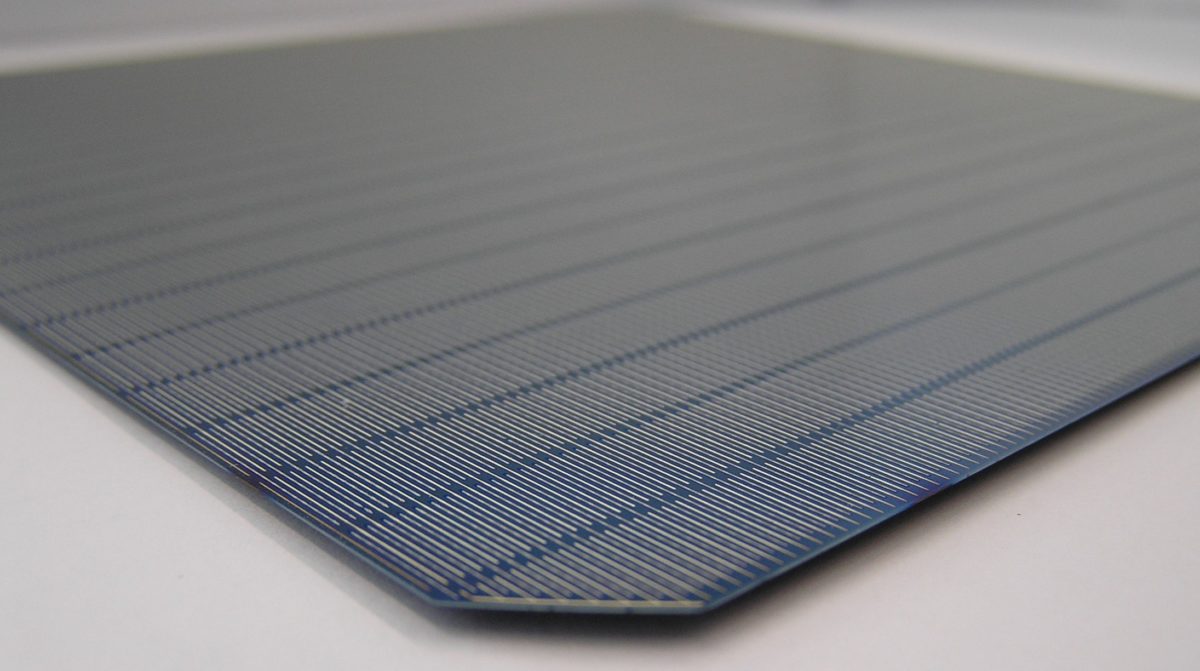
A German research team conducted a techno-economic analysis of POLO back-junction (BJ) solar cells in Germany, finding that they can offer significant cost and efficiency advantages over PERC technology. Their results show that POLO BJ enables lower production costs, reduced silver usage and lower differentiated electricity costs, making it a promising candidate for competitive European PV production.
Researchers from the German Aerospace Center (DLR) have conducted techno-economic analyzes of the production of n+-type polysilicon on oxide (POLO) back-junction (BJ) solar cells in Germany and have concluded that the associated costs and benefits can be significant compared to photovoltaic cells manufactured using passivated emitter and back cell (PERC) technology.
“We conducted the study in collaboration with the Institute for Solar Energy Research Hamelin (ISFH), Centrotherm and the German technology company LPKF,” says the lead author of the study. Juan Camilo Gomez Trillostold pv magazine. “We analyzed the production costs and the minimum sustainable price of the emerging POLO BJ cells with n+-type passive poly-Si on oxide (POLO) back contacts, assuming their production under industrial conditions and analyzing from the cell production costs to the electricity generation costs. The POLO BJ concept enables higher efficiency for photovoltaic cells compared to concepts without passive contacts. In addition, the POLO BJ concept has certain advantages compared to the cell concepts on the market, such as a lower silver consumption, which allows for lower production costs, or a leaner process flow.”
The scientists explained that although PERC has been largely replaced by tunnel oxide passivated contact technology (TOPCon), the POLO BJ concept offers advantages over TOPCon. These include the use of aluminum-based metallization in place of large amounts of silver and a shift to full back contact designs. “The value of the next generation of solar cell concepts must be assessed not only in terms of efficiency, but also in terms of manufacturability and system impact,” said Gómez Trillos. “POLO BJ shows potential as a highly efficient technology with tangible economic benefits across the value chain.”
In the study “The cost of ownership and minimum sustainable price of POLO BJ cells produced in Germany”, published in Advanced energy and sustainability researchthe research team explained that POLO BJ cells can be easily produced with existing and slightly modified PERC production lines, requiring only one additional laser step.
The production process starts with a cleaned p-type silicon wafer, followed by the formation of a thin layer of silicon dioxide (SiO₂) on both sides. Next, a heavily doped n⁺-polysilicon layer is deposited using low-pressure chemical vapor deposition (LPCVD) and then thermally oxidized. The silica layer on the front side is selectively removed using wet chemical processing or laser ablation, while the back side remains protected during the texturing step. Passivation layers are applied using plasma-enhanced chemical vapor deposition (PECVD), and the process is completed with laser contact opening and screen printing to form the solar cell’s electrical contacts.
For their modelling, the academics assumed a production capacity of 5 GW and noted that at this scale a single plant could meet around 30% of Germany’s photovoltaic demand of 16.2 GW in 2024. A baseline POLO BJ cell efficiency of 24.2% was assumed, based on demonstrated industrial performance in M2 size devices, with a maximum scenario of 25% considered for sensitivity analysis. The plant’s production was evaluated at constant annual cell throughput, meaning higher efficiency directly increases total peak power capacity. For comparison, the PERC technology was modeled under identical conditions, including the same wafer size and plant size, but with a maximum efficiency of 23.1%.
The cost analysis was carried out using a bottom-up cost of ownership model, based on the guidelines of the Semiconductor Equipment and Materials International (SEMI) association and the German mechanical engineering association VDMA. The model included the costs of production tools, throughput, materials and energy consumption. The minimum sustainable price was calculated to translate production costs into market-relevant prices, including capex, operating costs, taxes, working capital, depreciation and a weighted average cost of capital of 8%. Finally, the levelized cost of electricity (LCOE) was estimated for utility-scale systems using POLO BJ and PERC modules.
The analysis found that the total investment costs between the two cell concepts differ moderately, ranging from $171.0 million for PERC to between $177.5 million and $182.1 million for POLO BJ. The main cost driver is the higher tooling requirement for POLO BJ processes. When net working capital is included, total investments increase significantly, with POLO BJ-L becoming the most cost-efficient option. Variable and operating costs were also lowest for POLO BJ, with the main cost contributions coming from wafers and process materials, followed by labor and energy bills. The higher PERC costs, meanwhile, appeared to be caused by lower efficiency and higher demand for cells.
Cost of ownership (CoO) analysis also showed clear benefits for POLO BJ concepts, with values of $0.0579–0.598/W compared to $0.0631/W for PERC. The minimum sustainable price (MSP) followed a similar pattern, with POLO BJ-L reaching a low of $0.0716/W, while PERC reached $0.0775/W. Additional financial components such as taxes, capital costs and operating costs contribute significantly, but do not change the relative ranking. Overall, POLO BJ became economically superior to PERC above certain efficiency thresholds. Finally, a levelized cost of electricity (LCOE) analysis showed that POLO BJ-based systems reduce electricity costs compared to PERC in both Germany and Spain.
“The higher efficiency translates into a lower LCOE at the system level, which varies regionally,” says Gómez Trillos. “Under Southern European conditions, values of $0.0332¢/kWh were obtained for monofacial glass-backsheet modules and $0.0302/kWh for bifacial glass-glass modules. In addition, several aspects can influence the production costs and the minimum sustainable price of the photovoltaic cells. Local factors, such as electricity prices, labor costs, logistics costs, local corporate taxes or capital costs, can to some extent influence the production costs in different locations. According our analysis, labor and electricity costs alone would together account for 23% of the minimum sustainable price of POLO BJ cells in Germany. These factors can fluctuate significantly from country to country, leading to lower or higher results depending on the location.
The researchers are convinced that POLO BJ cells are a potential candidate for the local production of PV cells in Europe. “During the project we have not worked on a concrete time frame for a possible implementation, but we are aware of projects related to the transfer of the knowledge of POLO technologies to the industry, which could result in a concrete implementation in the coming years,” concluded Gómez Trillos.
This content is copyrighted and may not be reused. If you would like to collaborate with us and reuse some of our content, please contact: editors@pv-magazine.com.
