

May 26, 2026
Canada’s solar and storage industry is growing by leaps and bounds and is expected to grow by a third or more in the coming year. Training enough solar installers to keep pace with this growth is a new challenge for the Canadian solar industry. An important program to help meet this training demand is National Resources Canada‘s revived Science and Technology Internship Program (STIP), which in April provided about $30 million for a new round of training in 2026 and 2027.
The solar workforce in Canada is already significant. There are an estimated 100,000 people employed in the country’s solar industry, in roles ranging from construction to manufacturing to engineering. A national directory of solar installation companies is maintained by the Canadian Renewable Energy Association (CanREA), with a list of professionals who have signed a code of conduct.
Although CanREA’s database lists only 60 solar installation companies, there could be as many as 885 solar installation companies in the country, according to solar energy database ENF. Toronto-based Polaron, which claims to be the country’s largest solar installation company, has installed a total of more than 13,200 residential and commercial installations across the country, generating about 116 MW of electricity. Nationally, approximately 96,000 solar installations had been completed by all installers combined by early 2025, indicating that in Canada there is approximately one solar installation for every solar worker in the country.
Private sector groups lead training programs
The STIP Green Jobs program, as it is commonly called, has been active for almost two decades and has achieved impressive success: “Since 2017, the program has created more than 6,000 jobs,” according to the program’s website. According to STIP, “80% of young people find full-time work, 50% of employers are small to medium-sized enterprises, 80% of placements are in clean technology and 60% of young people belong to one or more employment groups.”
Part of STIP’s success is the result of collaboration with teachers. One training entity that will help add more solar installers to the national list is Upskill Canada, a division of technology training leader Palette Skills. Upskill offers accelerated, industry-led training, including solar installation and technology programs, at rates as low as $200 thanks to government grants, depending on the local university or institution hosting the classrooms. The tanning training is often part-time, online or hybrid to accommodate working professionals, Upskill notes.
Another major solar energy training institute in Canada is North American Board of Certified Energy Practitioners (NABCEP), based in Clifton Park, New Jersey. Several training institutes in Canada offer NABCEP courses, including Solar Canada, Stardust Solar Technologies, eLearn Canada College and EP Cube Installation Training. Yet Canadian certified solar professionals make up a small percentage of the estimated 18,000 professionals NABCEP has certified in North America.
STIP provides internal solar training
An innovative element of the STIP solar training initiative is the grant offered to solar companies to train and hire workers for up to one year, aimed at 15 to 30 year olds. STIP offers up to $30,000 to hire “indigenous, racialized, disabled or northern/remote youth,” according to the program. The more basic subsidy to solar companies is “up to 75% or $18,000 – $24,000 for standard placements.”
There is one solar energy company that has recruited and trained employees as part of the STIP program Solve solar energylocated in Whitehorse, Yukon.
“When you bring in a student or young person, there is always a risk because they have no experience, but when they do come on board, you have someone who is enthusiastic and wants to learn all day,” said Michael Schultz, operations manager for Solvest, in a testimonial video.
Solvest completed a renewable energy project at the Colomac Gold Project Site in the Northwest Territories in September 2025. Funding for the project was provided by the Canadian Northern Economic Development Agency (CanNor), along with an investment from First Nation Tlicho Investment Corp. The project included the purchase and installation of a solar energy generation and battery storage system, as well as local training for operation and maintenance. The project is expected to reduce the mine’s dependence on diesel fuel.
Another sustainable energy company that participates in STIP is Barkley Resource Groupa clean energy consultancy. One recruit “has been able to adapt to different types of work, from field projects to office meetings, which has given her good exposure,” says Nigel Moore, the company’s project manager. Barkley provides community energy solutions, renewable energy project management, technical assistance and economic development work exclusively with First Nations in British Columbia and Yukon. Barkley’s headquarters are located on the traditional lands of the Coast Salish People, including the Snuneymuxw and Snaw-naw-as First Nations.
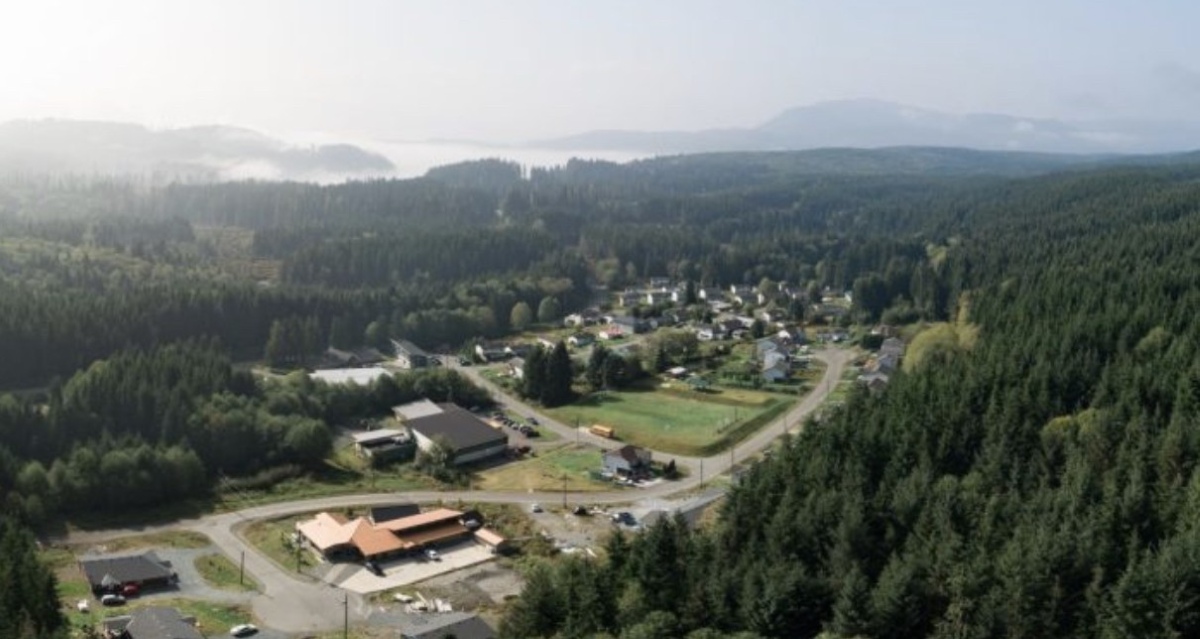
Barkley began working with the Quatsino First Nation on Vancouver Island in 2017 to develop a community energy plan. That start led to the development of a solar energy project that is expected to save the community $18,000 annually in energy costs. Quatsino obtained funding from New Relationship Trust – supported by the province of BC – and Natural Resources Canada. It also applied to B.C.’s First Nations Clean Energy Business Fund, which has allocated $1.49 million to twelve First Nations to date. Quatsino was also accepted into the Accelerating Community Energy Transformation initiative at the University of Victoria.
Federal support continues
Although the STIP program is administered by NRC, there are numerous other government, non-profit and other portals through which prospective solar energy students can apply for the program. STIP indicates that applications can be processed through the following 10 organizations:
- Clean Nova Scotia Foundation
- Electricity Human Resources Canada
- Environmental Careers Organization of Canada
- Indigenous social enterprise for clean energy
- First Nations of Quebec and Labrador Sustainable Development Institute
- Mining Industry Human Resources Council
- Pinnguaq Association
- Project Learning Tree Canada
- Student energy
- United Nations Association in Canada
In announcing the new round of STIP funding in April, Tim Hodgson, Minister of Energy and Natural Resources, said: “Canada’s climate competitiveness depends on our youth. At the same time, young Canadians deserve good jobs that help them gain marketable skills. Through the Science and Technology Internship Program – Green Jobs, we are doing both: helping young Canadians gain hands-on experience in the natural resources sector while building the skills needed for the future low-carbon economy.”
Charles W. Thurston makes a contribution Solar builder.
Tags: Canada, installation, Installer Programs, Solar Training Programs
