

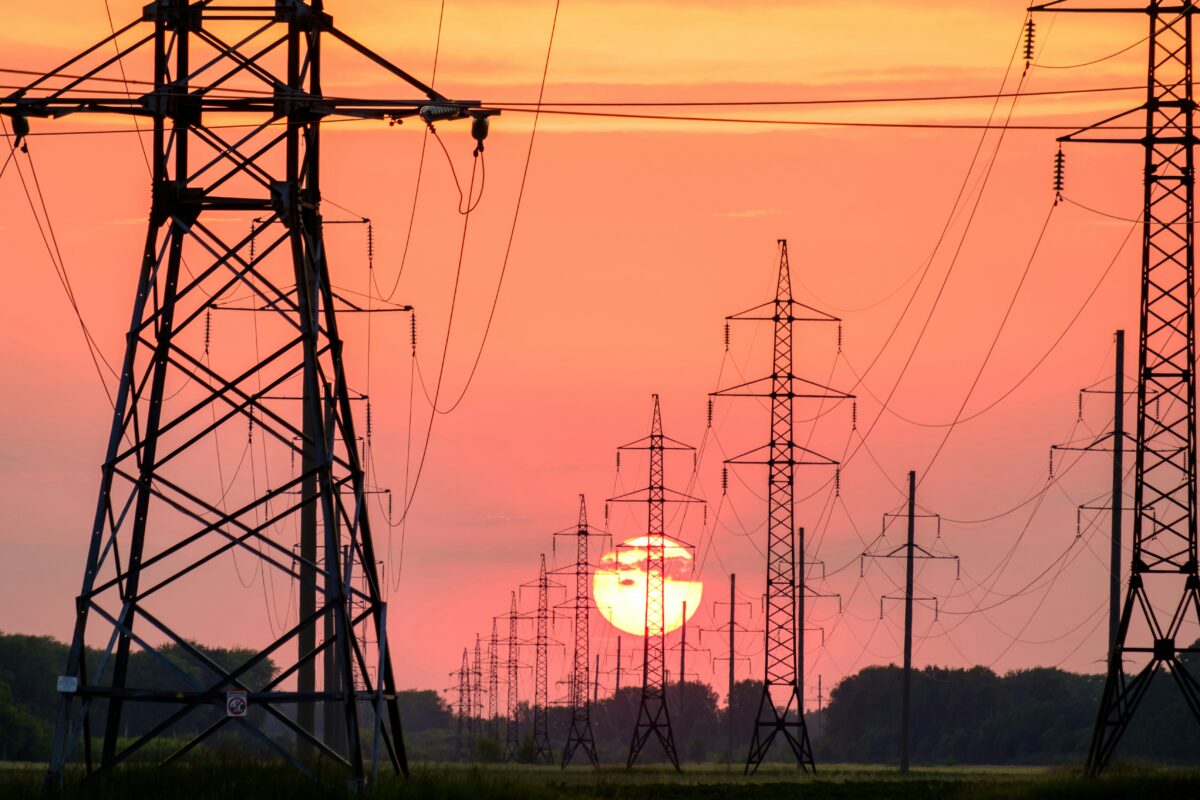
Redeia used advanced simulation to test anti-cascade cell towers under extreme multi-tower collapse scenarios. The results confirm that current Spanish network design standards effectively prevent cascading failures and support overall network resilience.
Spanish high-voltage grid operator Redeia has announced that its technology subsidiary Elewit has teamed up with engineering software company Akselos to develop an advanced simulation project that assesses the structural behavior of anti-cascade towers in overhead transmission lines under extreme, sequential collapse scenarios.
The initiative has validated the existing design criteria used in the Spanish transmission network and strengthened the technical assessments of infrastructure resilience under exceptional load conditions.
The project focused on the dynamic analysis of structures reinforced with anti-cascade towers strategically installed along power lines to limit the spread of structural failures. These towers are designed to act as containment points when one or more adjacent towers collapse due to extreme weather conditions, external influences or other critical incidents.
Unlike conventional suspension or tension towers, anti-cascade structures are designed to withstand significantly higher mechanical loads. Their function is to absorb increased conductor voltages after an unexpected fault and prevent progressive collapse across line sections.
The study was driven by the limitations of traditional static simulation methods commonly used in transmission infrastructure design. Such approaches are not suitable for capturing the dynamic effects of multi-tower collapses, which involve transient loads, complex vibrations, and rapid stress redistribution.
To address this, the project employed finite element modeling using Akselos software, enabling high-fidelity simulation of complex mechanical behavior while reducing computation time and resource demand. The analysis was carried out in collaboration with Redeia’s unit Red Eléctrica de España’s Lines Department, together with Elewit and Akselos, developing a special model to simulate the response of anti-cascade towers under scenarios of adjacent tower failure.
The results confirm that the current design standards applied within the Spanish electricity transmission network are sufficient to effectively reduce cascading failures. This provides further evidence of the system’s structural robustness and its ability to maintain grid integrity under extreme conditions.
In addition to validating tower performance, the project underlines the value of advanced simulation tools for critical infrastructure assessment. Elewit notes that improved modeling of dynamic asset behavior could support future optimizations in structural design, maintenance planning and grid resilience strategies.
This content is copyrighted and may not be reused. If you would like to collaborate with us and reuse some of our content, please contact: editors@pv-magazine.com.
