

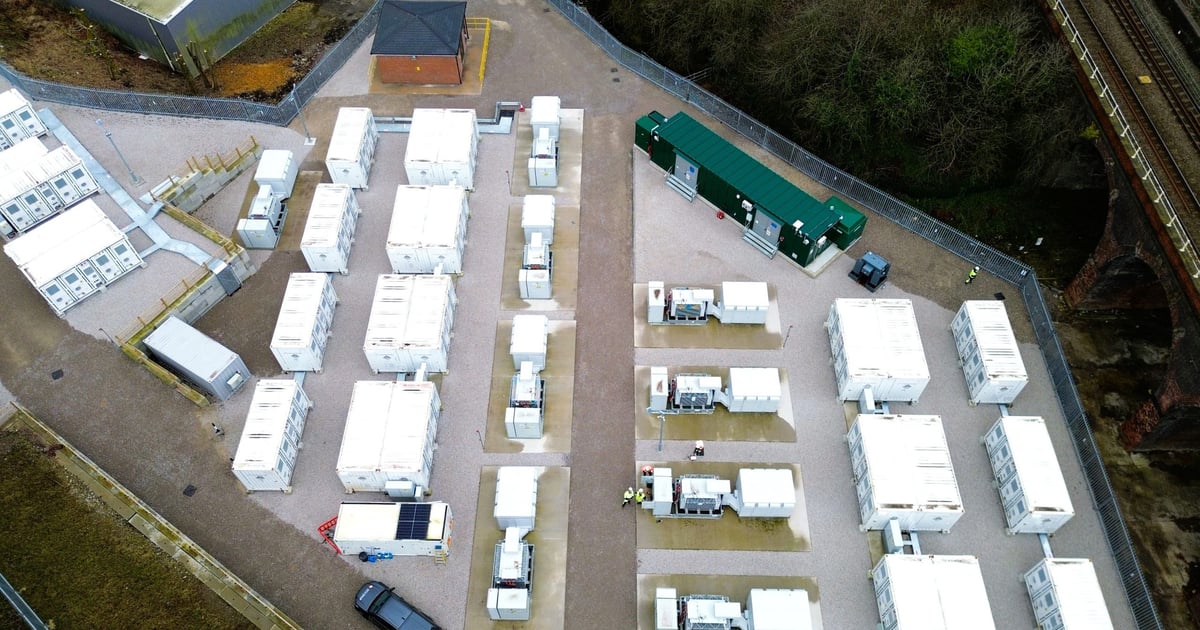
Investor interest in battery energy storage projects is high and growing. To attract that capital, developers must be able to de-risk, build and operate reliably, says Trevor Willis, CEO of Pulse Clean Energy, the developer of battery energy storage systems (BESS).
Willis will speak at the Clean Energy Summit 2030which includes the UK Solar Summit 2026 in London at the end of this month. In a chat by the fireside, ‘Storage integration and unlocking value in a constrained system‘, the discussion will explore the strategic and operational choices developers must make to maximize value.
Solar energy portal spoke Willis prior to the event. The CP2030 Summit brings together policymakers, developers, investors and network operators to discuss the whole systems approach needed to meet the UK Government’s Clean Power 2030 target. View the agenda And book tickets to get involved.
Solar Power Portal: How has the business case for BESS developed over the past 12-24 months?
Trevor Willis: The structural business case for BESS is stronger than ever. Over the past 24 months we have seen battery prices continue to decline and revenues stabilize and improve. We have also been reminded of the strong link between energy sovereignty and keeping the costs of the energy system affordable for consumers. BESS plays a key role in achieving energy sovereignty and ultimately reducing costs as part of a modern, efficient energy system.
Investors and lenders are realizing this and are increasingly looking to partner with companies that have demonstrated a consistent ability to execute while managing market dynamics. The BESS market has evolved from a nascent market to one where investor interest is high and growing.
At Pulse, we believe that execution and consistency are differentiators. To raise capital, you must be able to mitigate risk, build, and operate reliably. A few years ago, speed and pipeline size were in high demand. With full pipelines and long queues for grid connections across Europe, we now see an emphasis on converting opportunities into cash flow. As the need for energy balancing and network services continues to grow, we believe that the opportunity for structural revenue supports the case for BESS and will benefit those who have invested in and proven the ability to deliver high quality projects, without risk, on time and on budget.
Ensure reforms in the grid connection queue—meaning new projects are unlikely to connect before 2035—did that have any influence?
It is important to recognize that reform of the electricity grid was desperately needed. Having a clearer idea about which projects are real and will be built in the near term will benefit businesses, investors and consumers. The broader electricity grid and energy market reform process is something we are sincerely encouraged by and eager to participate in.
Once grid applications reopen, we have every reason to believe that high-quality projects with capable owners will be able to connect much sooner than 2035. This is precisely because queuing reforms have removed projects that were not ready for construction and may have served as barriers to projects that are. Although there is still a lot of work to be done, the collaboration between project owners, NESO and the distribution and transmission network operators can ensure that we get the projects that are now ready for delivery into construction as quickly as possible.
Interconnection reform is critical to lower energy system costs and improved system operability and safety. Ultimately, the work done to address bottlenecks in the electricity grid will provide greater certainty for investors in a market that depends on it, and we support the efforts to achieve this.
The size of the connection queue shows how much interest there is in this sector. The challenge is to create a connection process that supports a modern energy system at the pace and scale required. We would like to work with the government and network administrators to make this happen.
What does effective coordination with NESO and DNOs look like from your perspective? Where are the friction points?
We need to establish incentives that promote the availability of connections and then encourage responsibility for the provision of connections. These must be measured against performance standards that enable us to achieve our broader system goals.
This includes collaboration across the ecosystem, ensuring representation from all generation, load and energy management technologies is included early in the planning conversations. There is an opportunity for generations to redesign and improve the energy system, which depends on taking a whole systems view and moving beyond isolated thinking. We also need policy makers in this conversation, ensuring that the grid code and legislation keep pace with the requirements set by NESO, distribution and transmission network operators, industry and consumers.
Friction can arise when decisions are made in isolation, or when policy and regulatory changes are implemented before the appropriate level of consultation has taken place. This is a crucial step in allowing potential unintended consequences to surface and preventing domino effects. However, it will be necessary to take decisive action that will collectively benefit the system. We cannot afford to wait for one hundred percent consensus on all issues.
As a society, we are all working toward the same goal: access to abundant, safe, cheap energy. To get there, we must come together and openly discuss what it will take. Once we have our goals, we need to rigorously drive and measure them.
What policy or regulatory changes would most help unlock the value of storage and support further implementation?
It is of utmost importance that policies and regulations enable open competition on a level playing field. We must refrain from interventions that create excessive complexity or undermine competition, as this will hinder investment and slow down progress.
Policy and regulatory changes must be structured in a way that addresses problems at their root, not their symptoms. The recent proposals from the Minister of Energy to lower consumer costs by decoupling gas and electricity prices were well-intentioned, but in practice they are likely to reduce price transparency and damage investor confidence.
Another way of saying this is that we should consider policy and regulatory changes that help unlock the most value. They do not necessarily have to consider specific technologies; they must create the framework that allows these technologies to compete and provide a business model that is efficient and dynamic. BESS serves as a cornerstone in this paradigm.
The right policies will reduce overall system costs, boost investor confidence and ensure we build at pace to an improved, modern UK electricity system that cuts bills for good.
Policy and regulatory reforms should also seek to maximize the use of existing infrastructure (for example, more efficient use of existing transmission and distribution networks), while appropriately sizing the amount we need to invest in new infrastructure. Exploring issues such as how to better use data, reviewing incentives for network operators, ensuring that the network code allows for efficient competition between technologies and ensuring market price structures that promote maximum competition would be a good place to start. However, these are not small tasks. We have the technology, the knowledge and the will. We just need the focus and conviction to see through what we have already started.
Looking ahead over the next three to five years, how do you see the role of storage evolving in the UK energy system?
The penetration of renewable energy sources has increased dramatically over the past decade. Wind and solar energy have generated more than 50% of Britain’s electricity in the past two years. This has saved us billions in avoided fuel costs, a figure that will only continue to rise as we move forward. In the long run, this will lead to lower costs for bill payers.
However, as the penetration of solar and wind energy has increased, it has become clear that you cannot profitably run a modern energy system without storage. With the backlog of new gas turbines at five years and growing, we need a solution today that can help manage our system. This will ensure that we reduce costs and continue to produce enough energy to fuel the growth of data centres, manufacturing and industrial activity here in Britain.
Storage started as a niche player and has quickly become a cornerstone investment for global energy markets. It is flexible, cheap and projects can be delivered quickly to meet our current needs. As the system has evolved, the value of energy management has continually increased and that is exactly the value that storage brings.
The storage use case will only gain in importance in the coming years. Storage plays a critical role in providing secure, low-cost energy and will continue to provide increasingly important energy management services to consumers and grid operators.
