

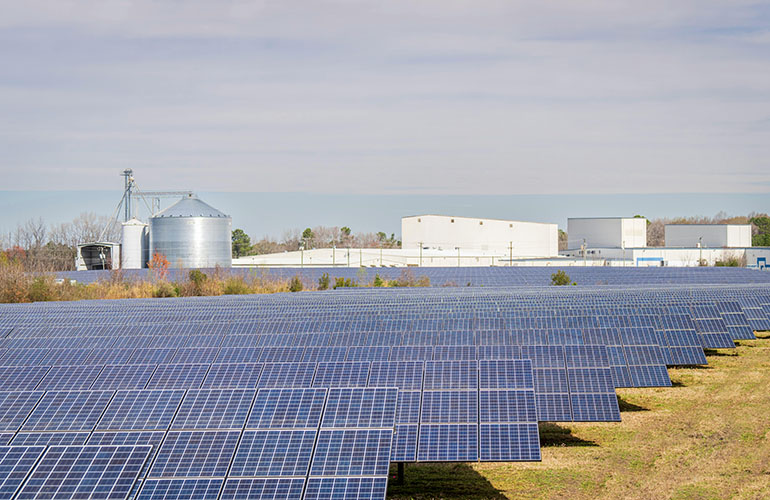
The Solar Energy Industries Association (SEIA) found that solar energy takes up just 0.07% of U.S. farmland. an interactive map the organization published today.
The new tool comes amid Farm Bill negotiations in Congress and increasing misinformation and targeted research surrounding solar energy development and agricultural land use. The map shows that solar energy takes up a small portion of U.S. farmland, especially compared to suburban sprawl and recreational use.
Across the country, many solar projects support dual-use agricultural practices such as grazing and pollinator habitats.
“America depends on our lands to grow our food, build our communities and power our lives,” said Tim Pawlenty, president and CEO of SEIA. “Responsible land use means balancing all of these needs. This map helps provide important context by showing that solar energy and agriculture can thrive together. Solar energy development uses a very small amount of agricultural land compared to many other community land uses, while also providing affordable energy, local tax revenue, and reliable income for farmers and landowners.”
Solar energy currently uses only 0.04% of the total US land area, and there are zero states where solar energy uses more than 0.5% of prime agricultural land. According to SEIA’s findings, almost every state has more abandoned farmland than solar-developed farmland. Nationally, there are 43 hectares of abandoned farmland for every hectare of solar energy on prime farmland.
Golf courses use 2.6 times as much prime agricultural land as solar energy. Since 2014, suburban development has used roughly six times as much agricultural land as solar energy.
News item from SEIA
