

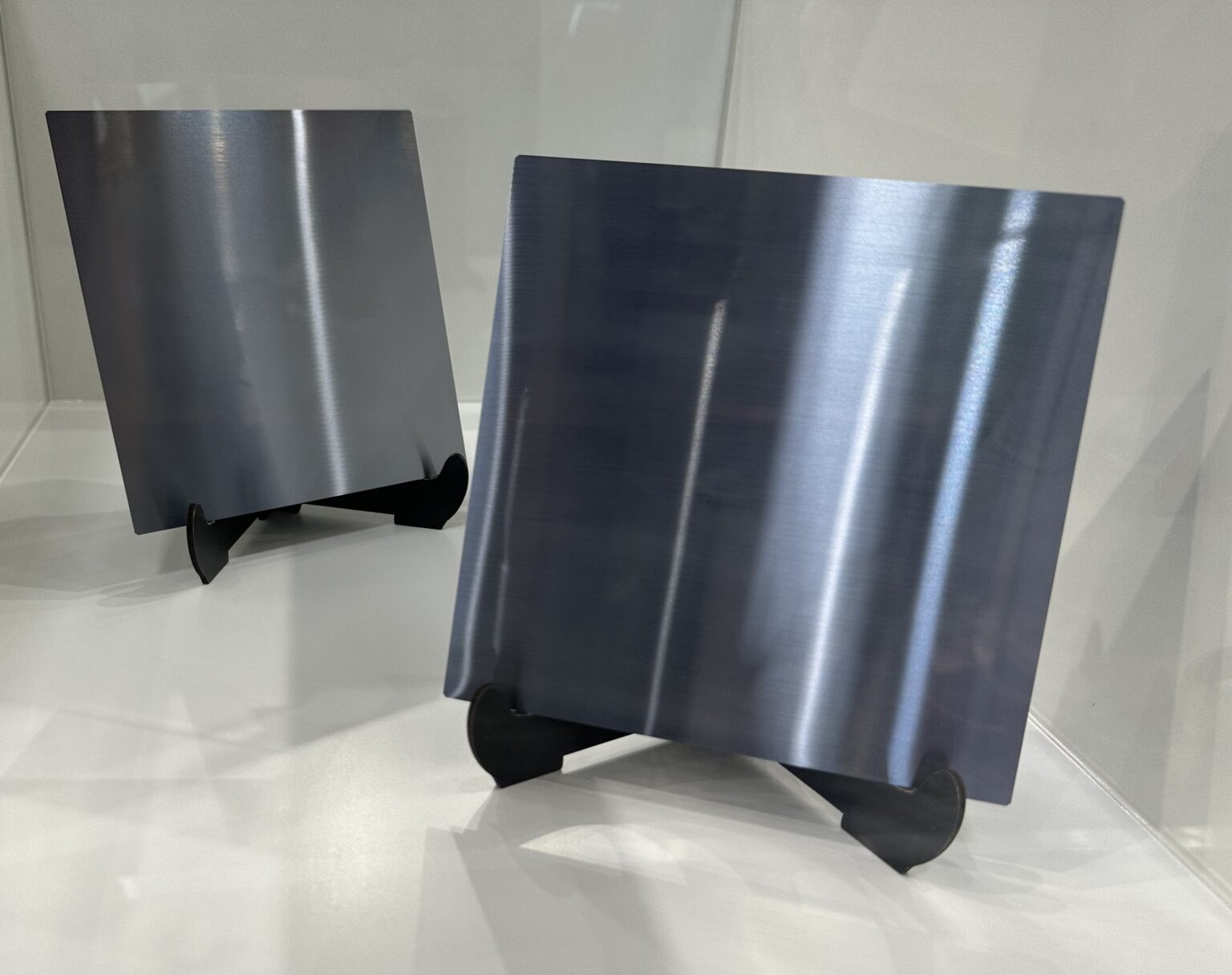
Free-On-Board (FOB) Chinese M10, 210R and G12 wafer prices remained stable at $0.138/pc, $0.147/pc and $0.169/pc respectively, unchanged from the previous week, according to the OPIS Global Solar Markets Report published on June 13.
The fundamentals of the wafer market continue to mirror those of the polysilicon sector, with bearish sentiment, weak demand and continued inventory accumulation remaining the dominant themes according to market participants. Based on manufacturers’ production schedules, industry sources estimate that wafer production was close to 50 GW in May and could rise further to around 55 GW in June.
One market participant noted that the increase in production is mainly driven by vertically integrated manufacturers and large specialty wafer producers. Leading tier one wafer manufacturers typically maintain utilization rates below 50%, while financially weaker specialty manufacturers operate at extremely low levels. Market reports have also emerged indicating that some producers have started selling off parts of their block pulling equipment as part of efforts to cope with financial pressures.
On the export front, industry participants said demand has weakened in recent months as significant quantities of wafers have been shipped to bonded warehouses in India, Southeast Asia and Africa ahead of the cancellation of China’s export tax rebate, which came into effect on April 1. These earlier shipments have reduced the urgency for immediate procurement. Nevertheless, a leading wafer manufacturer expects demand from overseas markets to improve in the second half of the year, especially as domestic cell production capacity increases in India.
However, the expansion of foreign production has not been smooth in all regions. A manufacturer that had previously announced plans to produce wafers in the Middle East is reportedly facing challenges and delays in progressing the project due to financing and partnership issues.
Still, improving geopolitical conditions in the Middle East are beginning to support expectations for smoother logistics and project execution elsewhere in the region. One market source highlighted a solar cell manufacturing project in the Middle East, which began initial production earlier this year.
The facility reportedly operated at low occupancy in the first half of 2026 due to production ramp-up issues and geopolitical conflicts. However, following a easing of tensions, the project is now targeting a much higher exploitation rate in the third quarter.
Suppliers supporting the project have already received corresponding orders and have started arranging shipments, the source said. As the facility gradually matures and expands production, a new trade flow for internationally traded wafers will begin to emerge, potentially creating additional demand channels beyond traditional markets, the source said.
pv magazine Webinar+
 This PV magazine Webinar+ will provide a detailed market analysis of how geopolitical developments are creating regional price differences across the photovoltaic value chain, from polysilicon to modules and critical materials such as soda ash, EVA and POE. More information
OPIS, a Dow Jones company, provides energy prices, news, data and analysis on gasoline, diesel, jet fuel, LPG/NGL, coal, metals and chemicals, as well as renewable fuels and environmentally friendly feedstocks. It acquired price data assets from Singapore Solar Exchange in 2022 and now publishes the OPIS APAC Solar Weekly Report.
