

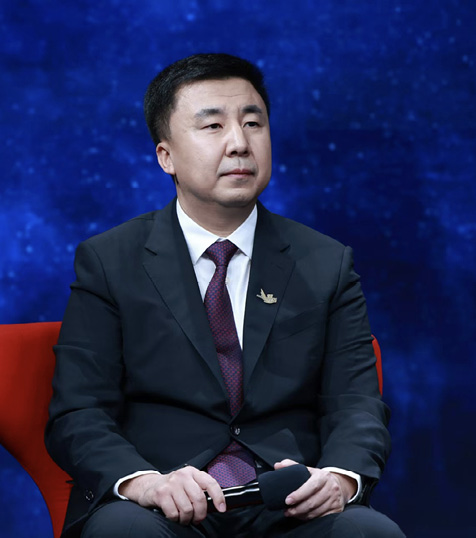
Chinese battery integrator HyperStrong has signed an agreement with CATL for the supply of 60 GWh sodium-ion battery cells over three years. This represents the largest deal yet for the emerging battery technology. pv magazine spoke with HyperStrong Chairman and CEO Jianhui Zhang to discuss the company’s plans for the implementation of sodium-ion battery systems.
HyperStrong recently signed one of the first supply agreements for gigawatt-scale sodium-ion batteries – what can you tell us about this deal??
This agreement with CATL, which includes 60 GWh sodium ion batteries over the next three years, is a significant milestone for both companies and for the broader energy storage industry. It reflects a clear signal that sodium ion technology is moving beyond early-stage validation and into the early stages of large-scale commercial application.
At HyperStrong, we don’t see this as a shift from lithium to sodium, but as a step toward a more diversified storage technology landscape. The future of energy storage will not be defined by a single chemistry, but by multiple technologies optimized for different applications and life cycle requirements. Our commitment to sodium ion technology also builds on several years of technical preparation, allowing us to accelerate its application at the system level in real projects.
What type of systems do you build with these batteries? Do they require a different design approach compared to lithium?
We focus on sodium ion applications on use cases where safety, long-term use and high cycle performance are critical. These include utility-scale storage, long-term energy shifting, data centers, and emerging high-load digital energy infrastructure.
From a systems perspective, sodium ion does not require an entirely new architecture. It can be integrated into existing storage platforms, but requires targeted system-level optimization to reflect its electrochemical properties. What’s more important is not redesigning everything, but developing existing platforms to support multiple battery chemistries in a unified system architecture.
How do you expect them to initially compare to lithium products in terms of cost, performance and longevity?
At this early stage, lithium-based technologies – especially LFP – still offer advantages in terms of cost and supply chain maturity. However, sodium ion already shows great potential in areas that matter more throughout the life cycle of a system: safety, temperature adaptability and long-cycle operation.
The most significant shift we’re seeing in the industry is that storage media purchasing decisions are not only optimizing upfront costs, but also optimizing lifecycle value. For long-term assets, the total cost of ownership, operational stability and asset lifespan become more important than just the initial investment. This is where sodium ion is expected to build its long-term value proposition as the technology matures.
How do you expect the market to divide between sodium and lithium-based storage systems in the longer term?
We do not see this as a competition where one technology replaces another. Lithium-ion systems will continue to dominate many mainstream applications due to their maturity and cost-efficiency. Sodium ion, on the other hand, will gradually find its place in applications where safety, long life and high cycle intensity are important requirements. Over time, the market will likely become more clearly segmented by applications rather than by a single dominant chemistry.
What challenges remain for sodium batteries, and what areas will you focus on improving as part of HyperStrong’s partnership with CATL?
Sodium ion technology is still in the early stages of industrial scale-up. Today’s key challenges relate to large-scale production consistency, long-term operational validation and further cost optimization as production volumes increase.
For energy storage, the most important question is always financeability: long-term reliability, predictable performance and proven real-world data. Our collaboration with CATL focuses on accelerating this process through system integration, technical validation and early implementation experience. The goal is to move from technology readiness to full commercial confidence.
Are there any other battery chemistries or storage technologies on your roadmap for the coming years?
We don’t limit ourselves to a single technological path. In addition to sodium ion, we are actively developing system-level capabilities in grid-forming storage, high-voltage cascade architecture, advanced energy conversion system, and AI-driven energy management and trading optimization.
The future of energy storage is not just about the battery itself, but about the integration of hardware, software and different technologies into a unified energy system.
Where are the most important markets for HyperStrong in 2026?
In 2026, our focus will remain global. Europe, North America and Asia are the most important strategic markets for us. Each of these regions is at a different stage of the energy transition, but they all share a common direction: an increasing reliance on large-scale storage to ensure the stability of the electricity grid.
We continue to strengthen local delivery capabilities, technical support and long-term service structures in each region, because storage is essentially a long-cycle infrastructure activity.
Last year, China introduced a major change in the way energy markets and energy storage systems are managed. How has this affected your business?
China’s energy market reform is fundamentally changing the way storage is valued and managed. The sector is evolving from policy-driven implementation to market-driven operations, where real system performance determines economic returns.
This shift increases the importance of operational capabilities – grid responsiveness, dispatch performance and lifecycle optimization. For companies like HyperStrong, this transition is positive because it rewards those who can deliver not only systems, but also long-term operational value.
How do you see the markets in Europe developing? Do you see more growth in the large-scale or commercial battery segment?
Europe is entering a strong growth phase for energy storage in both the utility-scale and commercial segments. At the network scale, we see increasing demand, driven by the integration of renewable energy sources and evolving market mechanisms, especially in countries such as Germany.
At the same time, commercial and industrial storage is rapidly expanding in high electricity price environments, where energy cost optimization and supply stability are becoming critical. We believe both segments will grow in parallel, but large-scale storage will remain the backbone of network flexibility, while C&I storage will increasingly address distributed energy optimization needs.
The post Scaling sodium storage first appeared on pv magazine Global.
