
Close Menu
  • News
  • Industry
  • Solar Panels
  • Commercial
  • Residential
  • Finance
  • Technology
  • Carbon Credit
  • More
    • Policy
    • Energy Storage
    • Utility
    • Cummunity
What's Hot

Why the UK solar industry needs to own its safety story

April 23, 2026

Fraunhofer ISE develops colored film technology for patterned solar panels

April 23, 2026

Thermoacoustic heat pumps are on the verge of commercial breakthrough – SPE

April 23, 2026
Facebook X (Twitter) Instagram
Solar Energy News
Thursday, April 23
  • News
  • Industry
  • Solar Panels
  • Commercial
  • Residential
  • Finance
  • Technology
  • Carbon Credit
  • More
    • Policy
    • Energy Storage
    • Utility
    • Cummunity
Solar Energy News
Home - Commercial & Industrial - Solar park strengthens the research capabilities of the University of York
Commercial & Industrial

Solar park strengthens the research capabilities of the University of York

solarenergyBy solarenergyMay 8, 2024No Comments3 Mins Read
Facebook Twitter Pinterest LinkedIn Tumblr Email
Share
Facebook Twitter LinkedIn Pinterest Email
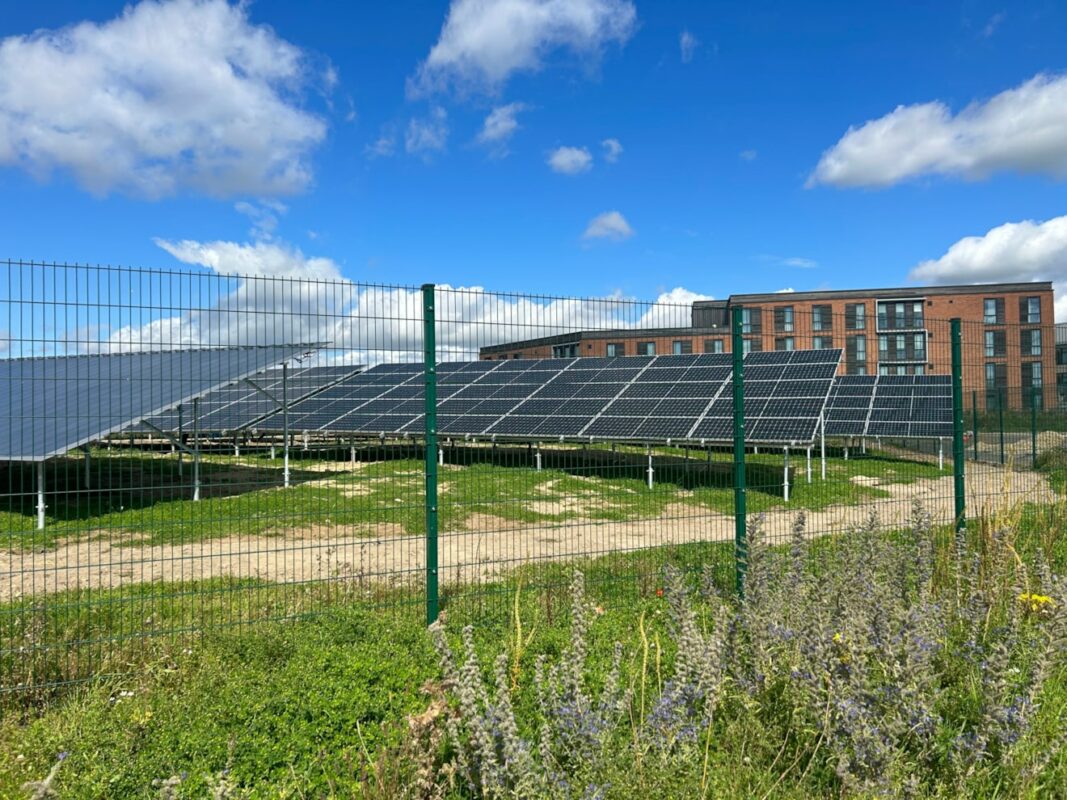
Siemens has completed work on a 200 kWp solar farm located at the University of York’s new Institute for Safe Autonomy. Image: Siemens.

Siemens has completed a solar farm that is part of a £1.5 million project to improve the University of York’s research capabilities.

The project, which will generate 200 kWp for the University of York’s new Institute for Safe Autonomy, aims to increase the university’s research capabilities in developing and testing robots and other autonomous systems for inspecting and maintaining solar panels. The purpose-built Institute for Safe Autonomy provides collaborative work and testing spaces for more than 100 researchers from various disciplines.

The solar farm is funded by the UK Research Partnership Investment Fund (UKRPIF) and will create a ‘living lab’ for the institute, providing landowners and solar farm operators with insight into the best way to integrate robotic technology into the field. It is one of nine projects to receive almost £19 million in funding from UKRPIF.

The solar energy generated will also provide 80% of the building’s expected daily use of 600 kWh, meaning the institute itself will be energy neutral by 2025.

The Siemens team supported the development by providing consultancy services and helping to design, commission and optimize the solar panels for the robotic technology used in the institute’s research.

It has also established a data collection system for the panels that will support the institute’s research projects. LYNX Sustainable Solutions installed the solar panels.

The farm, which covers over 1,400 square meters, consists of various panel configurations, including static ground installations and a sun tracking array. Some solar panels are also mounted on the side of the Institute’s building and on the roof as building-integrated solar photovoltaics (BIPV) to achieve a wide range of installation positions.

See also  JLR will install 18,000 PV panels in a flagship factory

Professor Miles Elsden, Director of the Institute for Safe Autonomy, said: “Robotics, autonomous systems and AI have the potential to transform the way we live, travel and work in the future. Its integration with renewable energy production will ultimately play a key role in the journey to net zero.

“This innovative research project marks an important milestone for the institute since we opened earlier this year and reaffirms our commitment as a university to sourcing sustainable energy.”

Solar Power Portal’s publisher, Solar Media, will host the British Solar Summit on June 4 and 5, 2024 in London. The event will explore the new UK utility and rooftop solar landscape, look at the opportunities within a GW+ annual market and much more.

Source link

capabilities park Research solar strengthens University York
Share. Facebook Twitter Pinterest LinkedIn Tumblr Email
solarenergy
  • Website

Related Posts

Why the UK solar industry needs to own its safety story

April 23, 2026

Fraunhofer ISE develops colored film technology for patterned solar panels

April 23, 2026

The federal court has halted Trump administration orders that hinder solar and wind energy development

April 23, 2026
Leave A Reply Cancel Reply

Don't Miss
Technology

PVRadar provides risk assessments for solar projects, taking into account historical climate data – SPE

By solarenergyJune 1, 20240

PVRadar Labs has expanded its software platform to include PV project risk assessment functionality, reportedly…

Buildings can offer gigawatts of new peak capacity as ‘batteries’ – SPE

May 8, 2024

Lowering the temperature of PV panels with cooled air from the ground – SPE

June 24, 2024

The energy storage market of Latin -America reached 23 GW by 2034 – PV Magazine International

September 12, 2025
Stay In Touch
  • Facebook
  • Twitter
  • Pinterest
  • Instagram
  • YouTube
  • Vimeo
Our Picks

Why the UK solar industry needs to own its safety story

April 23, 2026

Fraunhofer ISE develops colored film technology for patterned solar panels

April 23, 2026

Thermoacoustic heat pumps are on the verge of commercial breakthrough – SPE

April 23, 2026

The federal court has halted Trump administration orders that hinder solar and wind energy development

April 23, 2026
Our Picks

Why the UK solar industry needs to own its safety story

April 23, 2026

Fraunhofer ISE develops colored film technology for patterned solar panels

April 23, 2026

Thermoacoustic heat pumps are on the verge of commercial breakthrough – SPE

April 23, 2026
About
About

Stay updated with the latest in solar energy. Discover innovations, trends, policies, and market insights driving the future of sustainable power worldwide.

Subscribe to Updates

Get the latest creative news and updates about Solar industry directly in your inbox!

Facebook X (Twitter) Instagram Pinterest
  • Contact
  • Privacy Policy
  • Terms & Conditions
© 2026 Tsolarenergynews.co - All rights reserved.

Type above and press Enter to search. Press Esc to cancel.