
Close Menu
  • News
  • Industry
  • Solar Panels
  • Commercial
  • Residential
  • Finance
  • Technology
  • Carbon Credit
  • More
    • Policy
    • Energy Storage
    • Utility
    • Cummunity
What's Hot

Dutch solar owners asked to switch off during peak periods to ease the distribution crisis

June 7, 2026

The hydrogen flow: Toyota demonstrates its racing prototype on liquid hydrogen

June 7, 2026

Era of electrification exposing Australia’s weakest link

June 6, 2026
Facebook X (Twitter) Instagram
Solar Energy News
Monday, June 8
  • News
  • Industry
  • Solar Panels
  • Commercial
  • Residential
  • Finance
  • Technology
  • Carbon Credit
  • More
    • Policy
    • Energy Storage
    • Utility
    • Cummunity
Solar Energy News
Home - Technology - Solar energy and wind completely replace diesel at South Pole Station – SPE
Technology

Solar energy and wind completely replace diesel at South Pole Station – SPE

solarenergyBy solarenergyMay 13, 2024No Comments3 Mins Read
Facebook Twitter Pinterest LinkedIn Tumblr Email
Share
Facebook Twitter LinkedIn Pinterest Email

Researchers at Argonne National Laboratory have concluded that renewable energy could partially replace diesel fuel to power instruments and provide heat at the South Pole. They have proposed a hybrid solar, wind and energy storage that could reduce diesel consumption by 95% and save approximately $57 million over 15 years, after an initial investment of $9.7 million.

May 13, 2024 Patrick Jowett

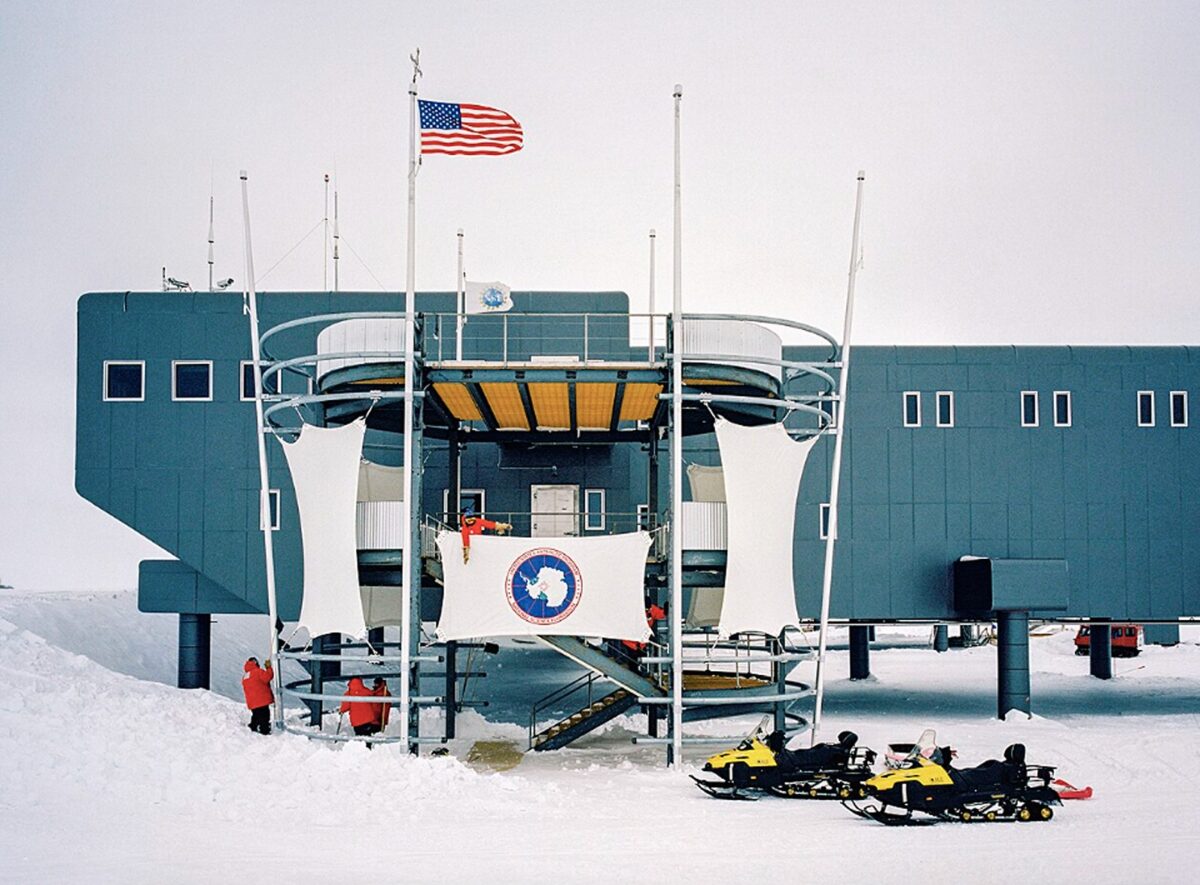
Scientists from Argonne National Laboratory and the U.S. Department of Energy’s (DOE) National Renewable Energy Laboratory (NREL) have investigated the feasibility of using renewable energy to power the Amundsen-Scott South Pole Station in Antarctica.

The facility, where climate change and cosmology studies are conducted, uses only non-renewable energy sources to power instruments and keep scientists warm.

“All energy at the South Pole is currently generated by diesel fuel and a generator,” said Amy Bender, a physicist in the Department of High Energy Physics at Argonne and the corresponding author of the research paper. “We wondered whether it was possible to switch to renewable energy sources. This study is the beginning of an attempt to prove that.”

The new research explores the possibility of solar energy, wind turbine generators, lithium-ion energy storage and long-term energy storage on site in various combinations, with and without existing diesel energy generation.

“We did a detailed analysis of which type of battery works best depending on whether you use solar or wind energy or both for power,” said Sue Babinec, stationary storage program leader at Argonne. ​“The types of batteries you need for power with renewable energy must not only last for years, they must provide energy for a very long time.”

See also  Radiation cooling technology based on polydimethylsiloxane film increases PV module production by as much as 3.72% – SPE
The solar panels are aligned to capture sunlight along the horizon at virtually any time of day during the Australian summer.

Image: Argonne National Laboratory

The team concluded that the cheapest system includes three sources of energy generation and lithium-ion energy storage. To provide the 170 kW of energy the station needs, it proposes a hybrid system consisting of 180 kW of solar panels, 570 kW of wind turbines and an energy storage system with 3.4 MWh lithium-ion batteries.

The researchers estimate that this system could reduce diesel consumption by 95% compared to an all-diesel configuration, resulting in an annual avoided carbon footprint of approximately 1,200 tons. Using NREL’s Renewable Energy Integration and Optimization software, the researchers estimated that the system would require an initial investment of $9.7 million. They say the investment would pay for itself in just over two years through fuel cost savings, ultimately saving approximately $57 million over 15 years.

The analysis, Techno-economic analysis of renewable energy generation at the South Polewas published in Renewable and sustainable energy assessments.

“The DOE and universities around the world have been trying to decarbonize our six continents,” he said Ralph Muehleisen, chief building scientist and group manager for Buildings & Industrial Technologies at Argonne, “They’re just starting to reach Antarctica, so for the first time we’re really talking about decarbonizing the world.”

This content is copyrighted and may not be reused. If you would like to collaborate with us and reuse some of our content, please contact: editors@pv-magazine.com.

Source link

completely diesel Energy Pole replace solar South SPE Station wind
Share. Facebook Twitter Pinterest LinkedIn Tumblr Email
solarenergy
  • Website

Related Posts

Dutch solar owners asked to switch off during peak periods to ease the distribution crisis

June 7, 2026

Britain’s next energy dependency is already taking shape

June 5, 2026

Letter from China’s PV Industry: Arctech wins 2.1 GW solar deal

June 5, 2026
Leave A Reply Cancel Reply

Don't Miss
Solar Industry

The Belgian grid operator is releasing a tool that allows owners of residential PV systems to detect inverter failures

By solarenergyMay 3, 20240

With the so-called “network checker”, residential PV customers in Belgium can check whether there have…

Tests 54 different combinations of heat pumps-PV Magazine International assisted by solar energy

June 9, 2025

Enborne Solar Farm obtains building permit

June 2, 2024

The NTU team finds a new way to make perovskite cells greener

May 6, 2024
Stay In Touch
  • Facebook
  • Twitter
  • Pinterest
  • Instagram
  • YouTube
  • Vimeo
Our Picks

Dutch solar owners asked to switch off during peak periods to ease the distribution crisis

June 7, 2026

The hydrogen flow: Toyota demonstrates its racing prototype on liquid hydrogen

June 7, 2026

Era of electrification exposing Australia’s weakest link

June 6, 2026

‘Come out from behind your screen, our industry is ultimately about people’

June 6, 2026
Our Picks

Dutch solar owners asked to switch off during peak periods to ease the distribution crisis

June 7, 2026

The hydrogen flow: Toyota demonstrates its racing prototype on liquid hydrogen

June 7, 2026

Era of electrification exposing Australia’s weakest link

June 6, 2026
About
About

Stay updated with the latest in solar energy. Discover innovations, trends, policies, and market insights driving the future of sustainable power worldwide.

Subscribe to Updates

Get the latest creative news and updates about Solar industry directly in your inbox!

Facebook X (Twitter) Instagram Pinterest
  • Contact
  • Privacy Policy
  • Terms & Conditions
© 2026 Tsolarenergynews.co - All rights reserved.

Type above and press Enter to search. Press Esc to cancel.