

Researchers from Iraq have used computational fluid dynamics to simulate the operation of a 100W panel with ground cooling. The proposed technique was reportedly able to reduce panel temperatures by as much as 28% while increasing power generation by as much as 6.5%.
A group of Iraqi scientists have investigated the use of energy from the ground to cool PV panels and found that this solution could result in a significant reduction in the module’s operating temperature.
The researchers simulated a setup with computational fluid dynamics (CFD) algorithms. CFD is a branch of fluid mechanics that uses numerical methods and algorithms to analyze fluid flow problems.
“After reviewing previously published scientific articles, it is clear that there is a lack of research into the use of cooled air from the ground to cool PV panels,” the group said. “Most previous studies have focused on using ground-cooled water for this purpose, which may not be feasible in many regions, especially in desert areas. Current research addresses this gap by focusing on using cooled air circulating through underground pipes to cool photovoltaic panels.”
The CFD was simulated using the Ansys Fluent 2023 R1 software, taking into account variables such as axial position, turbulent energy, axial velocity, turbulent viscosity, and turbulent kinetic energy (TKE) production due to mean velocity shear. They also assumed that the system has a stable method of fluid flow and heat transfer and that the air flow is turbulent.
“The PV panel is 100 cm long and 60 cm wide, with a maximum power of 100 W. The ground surface, with a length of 12 m, a width of 3 m and a height of 3.6 m, was modeled as a rectangular panel. area,” the team said in describing the setup. “Two PVC pipes, each with a diameter of 10 cm, were designed, buried underground and integrated with the ground source system to improve heat absorption.”
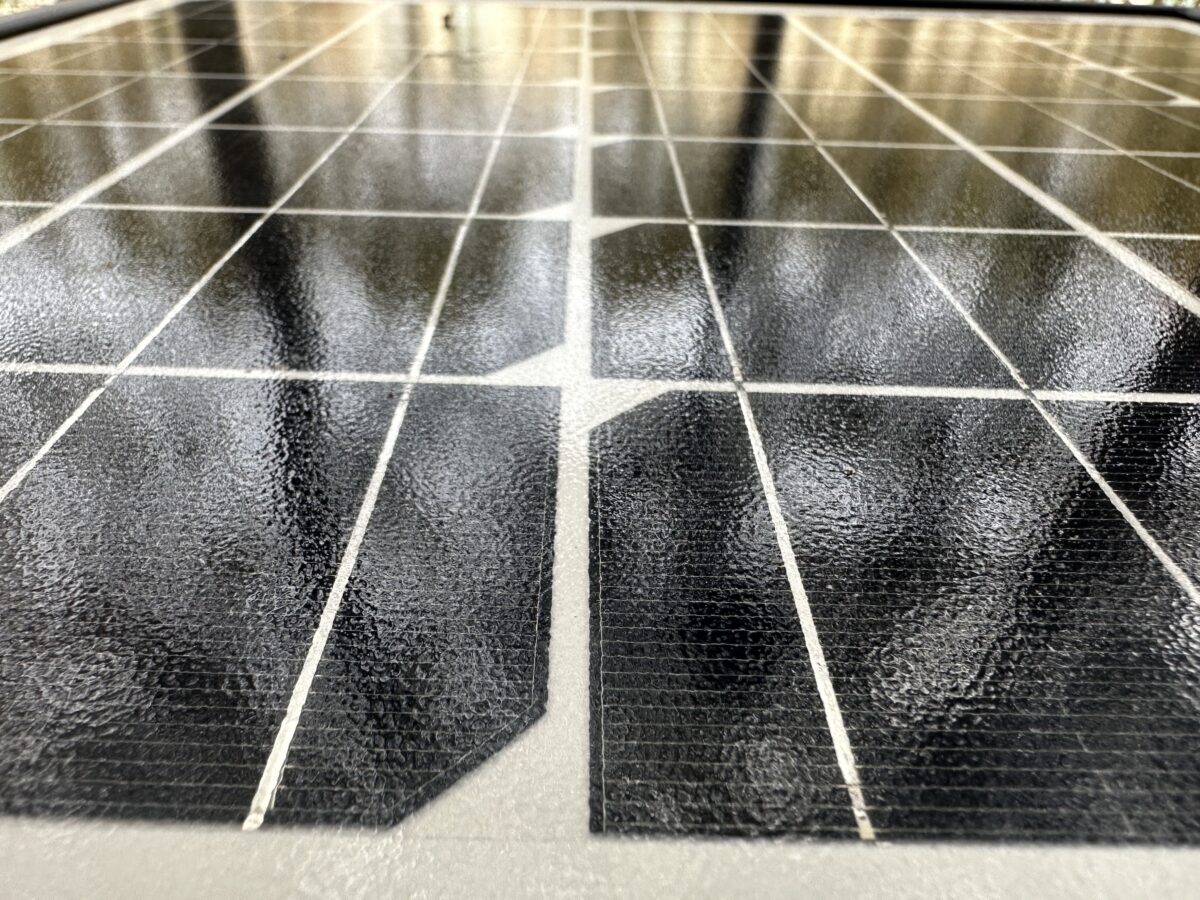
The PV panel was based on monocrystalline silicon, a glass cover, an aluminum frame and ethylene vinyl acetate (EVA) encapsulant. A similar system, without bottom cooling, was created as a reference.
Both the experimental setup and the control setup were simulated to operate for ten hours, from 8:00 AM to 5:00 PM, in Kirkuk City, Northern Iraq. The peak solar radiation of 950 W/m2 was recorded at noon, while the lowest value, 360 W/m2, was recorded at 5 p.m. The air temperature peaked at 45 C at 1 p.m.
“The results demonstrate a remarkable improvement in PV performance with the implementation of the cooling system,” the scientists said. “Specifically, the temperature dropped from 53.8 C to approximately 42.8 C at 1 p.m. This represents a significant improvement, reducing the temperature by approximately 28% compared to the PV-only case.
The simulation also showed that the PV-ground case consistently outperformed the PV-only case. The air-cooled configuration improved power generation by approximately 6.5%, compared to the PV-only setup, and the maximum output power was 88 W.
“At 8am, the maximum efficiency was recorded as 16.53% for the PV-ground case and 16.14% for the PV-only case. At 1:00 PM, the efficiency had dropped to 15.49% and 14.54% for the PV-ground and PV-only cases, respectively,” the researchers said.
The results are presented in “Cooling of photovoltaic panels using energy from the ground: CFD simulation,” published on Results in technology. The research team was formed by academics from the Iraqi Ministry of Science and Technology, the Ministry of Oil, Al-Kitab University and the Northern Technical University.
This content is copyrighted and may not be reused. If you would like to collaborate with us and reuse some of our content, please contact: editors@pv-magazine.com.
