

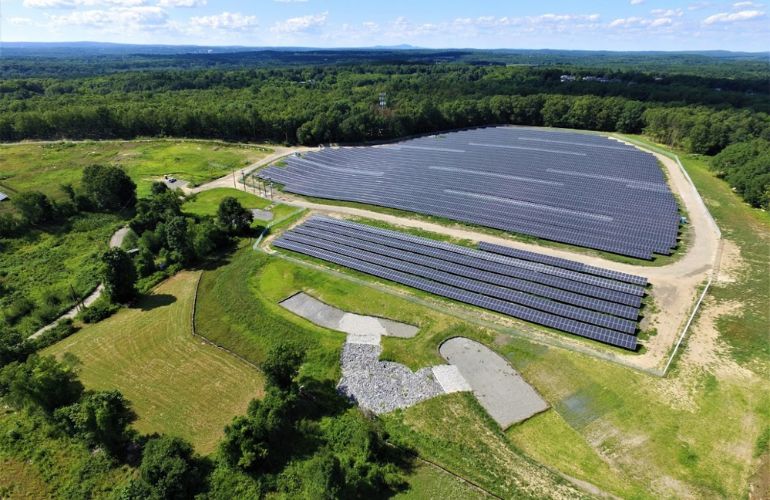
Travel around the country, or even your own country, and you will see beautiful silicon fields that were not there decades ago. There is no doubt that we are in the trenches of a momentous energy transition. As the transition continues and the impact on our existing energy generation network and environment grows, calls for this transformation to do more than just provide clean energy will increase.
In addition to a cleaner electricity grid, we can provide a fairer energy distribution solution for everyone. Fortunately, that’s what many states and the federal government are trying to accomplish with community solar.
Community Solar is a shared solar farm where renters, homeowners, businesses, hospitals, schools – virtually anyone who pays an electric bill – can subscribe to and receive renewable energy credits, which in most states results in a 5 to 20% discount on the electricity costs. .
Tens of thousands of households and businesses have already subscribed to community solar projects, saving money on their electricity bills and contributing to an energy system that is less dependent on fossil fuels. Backed by prevailing construction wage requirements and guaranteed savings for participants, our industry is democratizing solar energy by making it accessible to more economic classes, including those without the space or resources to invest in panels themselves while creating well-paying jobs.
Critically, community solar programs are increasingly focused on ensuring that these energy bill savings are shared with low-income households, with many states reserving capacity for them. The average household spends about 3% of its annual income on energy costs, while lower-income households sometimes do this pay no less than 14%. For these LMI households, community solar is an effective policy tool that provides breathing space in the household budget where it is needed most.
But it’s not all sunshine and roses yet. Inflation has remained persistent, putting pressure on low-income households on every front. Although low-income households are beginning to participate more than in the early years of community solar, a glaring access gap remains: millions of extremely low-income (ELI) families living in affordable, master-metered homes are structurally excluded from the use of community housing. solar energy in many jurisdictions. These are households with an annual income of 30% or less of the median income in the region.
In most community solar programs, there is a clear preference for individual applications. But there is a real opportunity for both states and the federal government to expand access to households whose utilities are included in their rents, especially for our country’s more vulnerable populations.
It’s worth taking a moment to understand this point. Most heads of households in affordable housing there are women; most are young; most are historically disadvantaged groups, skewed toward people of color; Many have children there.
Most importantly, these households are hit harder by the price increases resulting from increases in inflation than any other segment of the population. Community solar is an opportunity to provide a shared benefit to these households while the costs of everything else rise.
The federal government has said it is serious about helping working families fight inflation, but these LMI households and these community solar programs must be at the top of the priority list.
For community solar to reach its full potential, policymakers and regulators must ensure that everyone – especially low-income households – has access to the important cost savings it delivers. To do this, the Treasury Department should update the Bonus Credit Program rules for low-income communities to allow affordable housing participation based on master meters. Currently, the program prevents these types of homes from accessing community solar energy to which this bonus credit has been allocated, and the associated minimum savings guarantee of 20% that this entails.
The blended average electricity bill in the United States is about $135. Twenty percent savings on a $27 monthly bill. Annual savings of hundreds of dollars will have a meaningful impact on most LMI households.
But the responsibility does not lie entirely with the FBI; states must also take the initiative.
Currently, only a few states are addressing master-metered housing in an inclusive manner: New York, New Jersey, and Minnesota, to name a few. These states have not implemented it perfectly, and additional efforts are needed to enable multi-metered properties: for example, the buildings are typically billed based on a commercial rate class versus a residential rate class, which complicates credit rating. But this has not been a barrier to action, as these states have shown in their updated programs.
States considering starting a community solar program should learn from these states and incorporate multi-meter affordable housing into their program design.
But Illinois has gone in the wrong direction by outright banning households with a master meter from participating. The Illinois Power Agency should reverse this policy in favor of expanding the ability of residents of affordable housing with master meters to gain much-needed access to additional savings.
States have been laboratories for community solar energy, incubating a number of innovative programs over the past fifteen years. States must take the lead in making community solar truly accessible to all by including homes with master meters when building a program or updating their current program. The federal government can support this by including this housing type in the updated guidelines. By doing so, states can direct federal dollars into their own programs to benefit those who need help most.
