

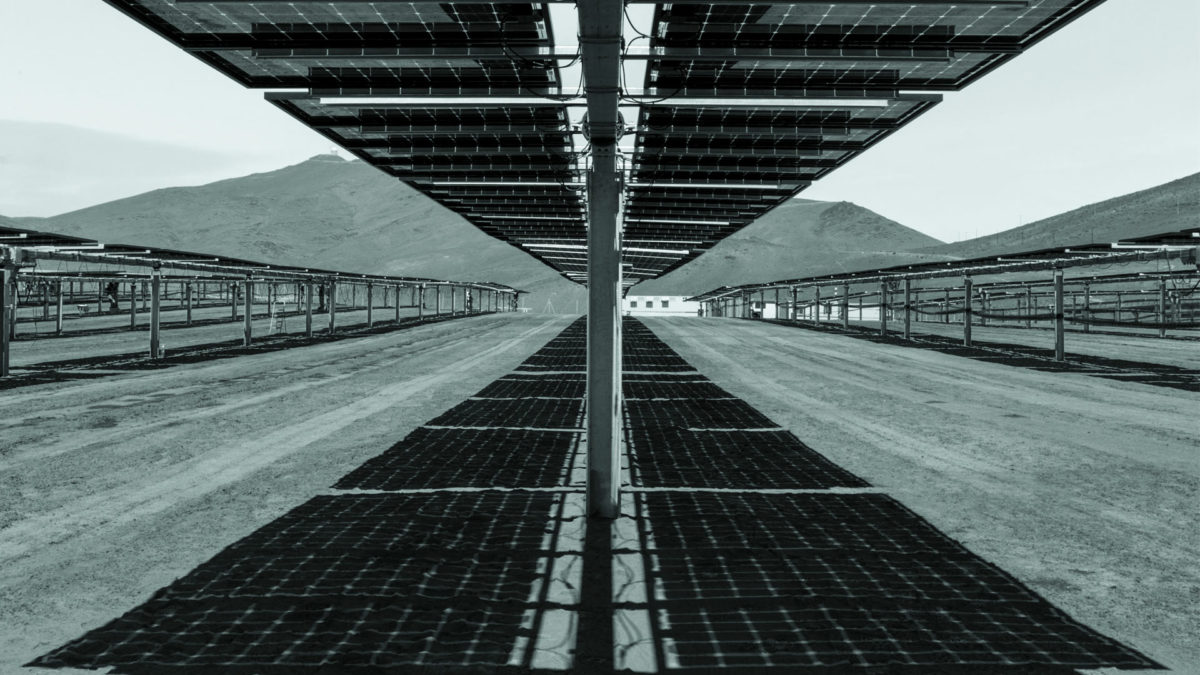
The latest report from the International Energy Agency’s Photovoltaic Power Systems Program (IEA-PVPS) covers best practices for the optimization of bifacial PV tracking systems and discusses key areas for improvement.
The IEA-PVPS has published a report on best practices for the optimization of bifacial photovoltaic tracking systems.
The Task 13 report follows a fact sheet on bifacial PV modules and advanced tracking systems, published in July. It says PV systems using bifacial modules and single-axis trackers have become the leading configuration for utility-scale PV installations around the world, with more than 90% of modules sold using bifacial cells and more than 60% of the market share for PV systems using single-axis trackers.
“The combined benefits of the tracker and bifacial technology result in a compelling cost-performance ratio,” says Ulrike Jahn, Task 13 manager. “This makes bifacial tracking systems the most cost-effective option in approximately 90% of regions worldwide.”
The report notes that typical tracker gains of 15% to 20% and bifacial gains of 2% to 10% are additive, with these systems offering the lowest levelized electricity costs.
IEA-PVPS says its latest report aims to help companies and developers design and build PV systems that take into account all factors that influence system performance. It features insights from leading tracker companies and PV system owners and operations around the world, including data obtained from interviews with 16 tracker companies that represented more than 87% of the global market share between 2012 and 2021.
The report also includes a blind modeling study, where participants were asked to design six imaginary PV systems based on the system design and weather data data provided. The comparison showed as much as a ~100% difference between the posterior irradiance predictions of different models and participants, leading the report to conclude that yield prediction models for bifacial tracking systems need to be improved.
“Additionally, predictions for module temperatures and even tracking angles were alarmingly variable between different participants,” the report continues. “More high-quality, validated data sets are needed for model developers to ensure models are more consistent.”
The report identifies key research areas, including the need for longitudinal studies of different tracker technologies in different climates to improve data on the reliability and durability of single-axis trackers. It also calls for research into low-cost, durable materials and optimal placement strategies to determine whether albedo enhancement should become standard practice.
The report adds that the use of bifacial modules and trackers for agricultural voltaic systems is “particularly exciting” because if proven feasible, “it could make a huge amount of land available for renewable energy generation and much smaller countries could help benefit from PV energy. without sacrificing land for agriculture.” It outlines the challenge of reducing complexity and variations in design to leverage standardization and high-throughput manufacturing.
In May, IEA-PVPS launched an action group on agrivoltaics, which is expected to result in a report on global trends expected to be released late next year.
This content is copyrighted and may not be reused. If you would like to collaborate with us and reuse some of our content, please contact: editors@pv-magazine.com.
