
Close Menu
  • News
  • Industry
  • Solar Panels
  • Commercial
  • Residential
  • Finance
  • Technology
  • Carbon Credit
  • More
    • Policy
    • Energy Storage
    • Utility
    • Cummunity
What's Hot

Distributed solar capacity in Argentina grew by 34.5% in the first half of the year

July 23, 2026

The UK government has urged to ensure that plug-in solar is properly regulated

July 22, 2026

Cornwall Insight cuts price ceiling forecast after Burnham’s VAT cut

July 22, 2026
Facebook X (Twitter) Instagram
Solar Energy News
Thursday, July 23
  • News
  • Industry
  • Solar Panels
  • Commercial
  • Residential
  • Finance
  • Technology
  • Carbon Credit
  • More
    • Policy
    • Energy Storage
    • Utility
    • Cummunity
Solar Energy News
Home - News - Solar farms will boost food security, says Solar Energy Scotland
News

Solar farms will boost food security, says Solar Energy Scotland

solarenergyBy solarenergySeptember 6, 2024No Comments4 Mins Read
Facebook Twitter Pinterest LinkedIn Tumblr Email
Share
Facebook Twitter LinkedIn Pinterest Email
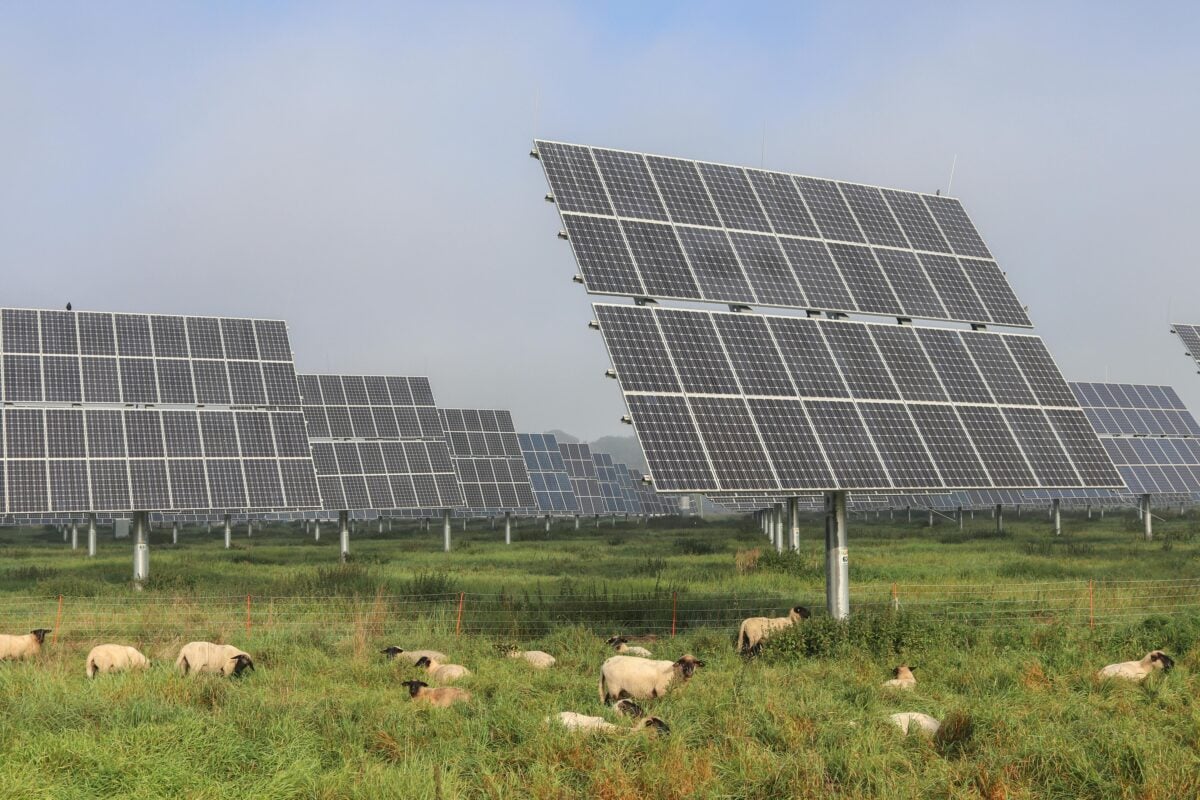
Since the departure of the Conservative government, the industry has fought hard against the myth that solar energy is a threat to agriculture. Image: Vincent Delsuc via Pexels.

Industry body Solar Energy Scotland has issued a statement in support of increasing the number of UK solar farms and combating the myth that solar farms pose a threat to food security.

Ahead of the publication of the Scottish Government’s Energy Strategy and Just Transition Plan, Solar Energy Scotland notes that climate change is a far greater threat to food security than land use from ground-mounted solar projects, adding that the country required to meet Scotland’s solar power generation is a much smaller amount than that intended for other, less useful applications.

The UK government has set a target of 50 GW of new solar capacity across the country by 2030, while the Scottish government is promising to have 4 to 6 GW of capacity by that date. Solar Energy Scotland estimates that around 2.5 GW of the top ambition of 6 GW will come from rooftop installations, while the remaining 3.5 GW will come from ground-mounted solar installations.

The amount of land required for this is just 0.05% of Scotland’s land – less than a fifth of the area currently allocated to golf courses in Scotland.

A graph showing land use for Scottish solar projects
The amount of land required to achieve Scotland’s solar ambitions is less than the amount of land currently occupied by its airports. Image: Solar Energy Scotland

The trade body also highlights the potential biodiversity benefits that solar farms can provide, something that has been verified by several major research projects previously covered by the program. Solar energy portal.

“Farms are under great economic pressure. Solar energy developments are an important part of the solution, reducing our impact on the climate while providing important diversification opportunities for farmers. Agriculture also has energy needs, like any sector, and we know many farmers who see the opportunity to reduce their costs and emissions at the same time,” said Josh King, Chairman of Solar Energy Scotland.

See also  Rosendin, AWM partner in utility-scale solar cable management

“Land used for solar energy projects can simultaneously support agricultural activities, especially grazing and also nature restoration. It’s not a question of whether we should decarbonize the economy, it’s just a question of how. Solar energy is a flexible part of the solution, supporting economic and food security and creating a positive legacy of improved soil and biodiversity. Our members look forward to working with Scottish Ministers to deliver these benefits for Scotland,” he added.

Changing the messages

A recent blog published on Solar energy portal discussed how widespread the myth is that solar farms pose a threat to food security, and how the new administration is working to change the public’s perception of these developments.

Following the July 4 general election, the newly elected Labor government wasted no time in publicly clarifying that solar farms do not pose a threat to British food security or the agricultural industry. Just days after the elections, she issued a public statement.

In fact, farmers and other landowners could see significant benefits from having their land used for solar energy projects; In addition to the soil health and biodiversity benefits that come from allowing land to escape intensive agricultural practices, land can still be used for grazing sheep and other animals, and the financial benefits of solar energy projects can provide farmers with security.

The National Farmer’s Union of Scotland (NFUS) recently signed an agreement with Iqony Solar Energy Solutions (SENS), which will see landowners who allow the development of solar energy and battery energy storage (BESS) on their land receive an indexed, competitive market rent for a maximum of 40 years. year.

See also  Sierra Space adds production capacity for solar energy systems for satellites - PV Magazine International

Commenting on this, NFU President Tom Bradshaw said: “Solar farms offer farmers an attractive diversification income opportunity if we find the right balance between food security and climate ambitions. National planning guidance and NFU policy both express a preference for large-scale solar farm development to be located wherever possible on lower quality agricultural land, avoiding the most productive and versatile soils.”

Source link

boost Energy farms food Scotland security solar
Share. Facebook Twitter Pinterest LinkedIn Tumblr Email
solarenergy
  • Website

Related Posts

Distributed solar capacity in Argentina grew by 34.5% in the first half of the year

July 23, 2026

The UK government has urged to ensure that plug-in solar is properly regulated

July 22, 2026

SmartestEnergy, Greentech ink CfD PPA for the Kent solar project

July 22, 2026
Leave A Reply Cancel Reply

Don't Miss
Solar Industry

EVs equipped with vehicle-integrated PV can cover up to 80% of their electricity needs

By solarenergyMay 23, 20260

A research project led by Fraunhofer Institute for Solar Energy Systems ISE has shown that…

BIPV for pilot projects with prefabricated net-zero homes in Australia – SPE

September 28, 2024

Germany has LCOE for solar energy ranging from €0.041/kWh to €0.144/kWh – SPE

October 7, 2024

Toshiba introduces an AI-powered portfolio management platform for solar power plants – SPE

March 12, 2026
Stay In Touch
  • Facebook
  • Twitter
  • Pinterest
  • Instagram
  • YouTube
  • Vimeo
Our Picks

Distributed solar capacity in Argentina grew by 34.5% in the first half of the year

July 23, 2026

The UK government has urged to ensure that plug-in solar is properly regulated

July 22, 2026

Cornwall Insight cuts price ceiling forecast after Burnham’s VAT cut

July 22, 2026

SmartestEnergy, Greentech ink CfD PPA for the Kent solar project

July 22, 2026
Our Picks

Distributed solar capacity in Argentina grew by 34.5% in the first half of the year

July 23, 2026

The UK government has urged to ensure that plug-in solar is properly regulated

July 22, 2026

Cornwall Insight cuts price ceiling forecast after Burnham’s VAT cut

July 22, 2026
About
About

Stay updated with the latest in solar energy. Discover innovations, trends, policies, and market insights driving the future of sustainable power worldwide.

Subscribe to Updates

Get the latest creative news and updates about Solar industry directly in your inbox!

Facebook X (Twitter) Instagram Pinterest
  • Contact
  • Privacy Policy
  • Terms & Conditions
© 2026 Tsolarenergynews.co - All rights reserved.

Type above and press Enter to search. Press Esc to cancel.