
Close Menu
  • News
  • Industry
  • Solar Panels
  • Commercial
  • Residential
  • Finance
  • Technology
  • Carbon Credit
  • More
    • Policy
    • Energy Storage
    • Utility
    • Cummunity
What's Hot

Fraunhofer ISE develops colored film technology for patterned solar panels

April 23, 2026

Thermoacoustic heat pumps are on the verge of commercial breakthrough – SPE

April 23, 2026

The federal court has halted Trump administration orders that hinder solar and wind energy development

April 23, 2026
Facebook X (Twitter) Instagram
Solar Energy News
Thursday, April 23
  • News
  • Industry
  • Solar Panels
  • Commercial
  • Residential
  • Finance
  • Technology
  • Carbon Credit
  • More
    • Policy
    • Energy Storage
    • Utility
    • Cummunity
Solar Energy News
Home - News - Solar energy and agriculture can work together, researchers from Swansea University have shown
News

Solar energy and agriculture can work together, researchers from Swansea University have shown

solarenergyBy solarenergySeptember 11, 2024No Comments2 Mins Read
Facebook Twitter Pinterest LinkedIn Tumblr Email
Share
Facebook Twitter LinkedIn Pinterest Email

Solar energy and agriculture can work together, researchers from Swansea University have shown


Researchers from Swansea University have developed a new tool to help find the best photovoltaic (PV) materials to support both solar energy generation and crop growth.

In a new study published in ‘Solar RRL’, scientists from the Department of Physics investigated how semi-transparent PV materials, used in agrivoltaic energy (where solar panels are combined with agriculture), affect crops. Their research is aimed at optimizing the balance between food production and solar energy generation.

The team introduced a freeware tool that predicts the performance of different PV materials in terms of light transmission, absorption and power generation. This tool, which can analyze materials for different locations around the world, is based on geographical, physical and electrical data.

Austin Kay, lead author of the study and PhD candidate at Swansea University, said: “This technology, which allows us to compare many types of PV material, can help us determine how we balance food production and renewable energy generation.”

A crucial factor in the agricultural voltaics sector is choosing the right PV material, which depends on how the material absorbs different light wavelengths and the band gap. A material’s band gap affects its ability to absorb higher-energy, short-wavelength light (blue) or lower-energy, long-wavelength light (red).

By selecting PV materials based on these properties, researchers can tailor the light passing through semi-transparent PV panels to benefit crops. Crops mainly absorb red and blue light for photosynthesis, while they reflect green light.

Associate Professor Ardalan Armin, the project leader, added: “By optimizing the combination of solar panels and agriculture, agrivoltaic energy has the potential to contribute significantly to the decarbonization of the agricultural sector. This approach not only generates clean energy, but also improves food security. “

See also  US and Europe on track for 2030 solar targets despite pipeline gaps – SPE

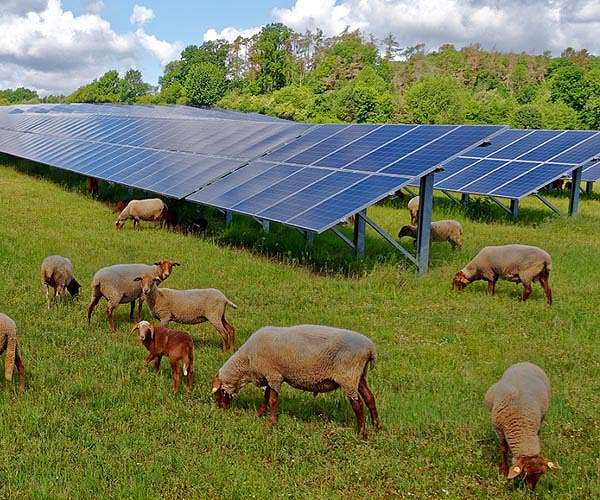
Solar panels have a variety of applications in agriculture, such as on the roofs of greenhouses or polytunnels, and can even provide shelter for livestock. Livestock, in turn, can help maintain vegetation around the panels. However, the choice of livestock is important because certain animals, such as goats, can damage the panels by jumping on them.

Research report:On the performance limits of agricultural voltaics: from thermodynamic to geo-meteorological considerations


Source link

Agriculture Energy researchers shown solar Swansea University work
Share. Facebook Twitter Pinterest LinkedIn Tumblr Email
solarenergy
  • Website

Related Posts

Fraunhofer ISE develops colored film technology for patterned solar panels

April 23, 2026

The federal court has halted Trump administration orders that hinder solar and wind energy development

April 23, 2026

Solar energy’s rebound effect could increase European electricity demand by 5% by 2050 – SPE

April 23, 2026
Leave A Reply Cancel Reply

Don't Miss
Finance

Elgin buys the development arm of Amberside Energy

By solarenergyJanuary 22, 20250

Elgin has acquired 100% of the share capital of Amberside Energy (Development) Ltd for an…

Polysilicon prices extend decline – SPE

April 11, 2026

Ireland’s first four-hour battery storage project

July 2, 2024

Ameresco Taps OHIO students to install the solar system on Career Center | Projects weekly

March 25, 2025
Stay In Touch
  • Facebook
  • Twitter
  • Pinterest
  • Instagram
  • YouTube
  • Vimeo
Our Picks

Fraunhofer ISE develops colored film technology for patterned solar panels

April 23, 2026

Thermoacoustic heat pumps are on the verge of commercial breakthrough – SPE

April 23, 2026

The federal court has halted Trump administration orders that hinder solar and wind energy development

April 23, 2026

Zendure launches battery ranges for residential PV – SPE

April 23, 2026
Our Picks

Fraunhofer ISE develops colored film technology for patterned solar panels

April 23, 2026

Thermoacoustic heat pumps are on the verge of commercial breakthrough – SPE

April 23, 2026

The federal court has halted Trump administration orders that hinder solar and wind energy development

April 23, 2026
About
About

Stay updated with the latest in solar energy. Discover innovations, trends, policies, and market insights driving the future of sustainable power worldwide.

Subscribe to Updates

Get the latest creative news and updates about Solar industry directly in your inbox!

Facebook X (Twitter) Instagram Pinterest
  • Contact
  • Privacy Policy
  • Terms & Conditions
© 2026 Tsolarenergynews.co - All rights reserved.

Type above and press Enter to search. Press Esc to cancel.