

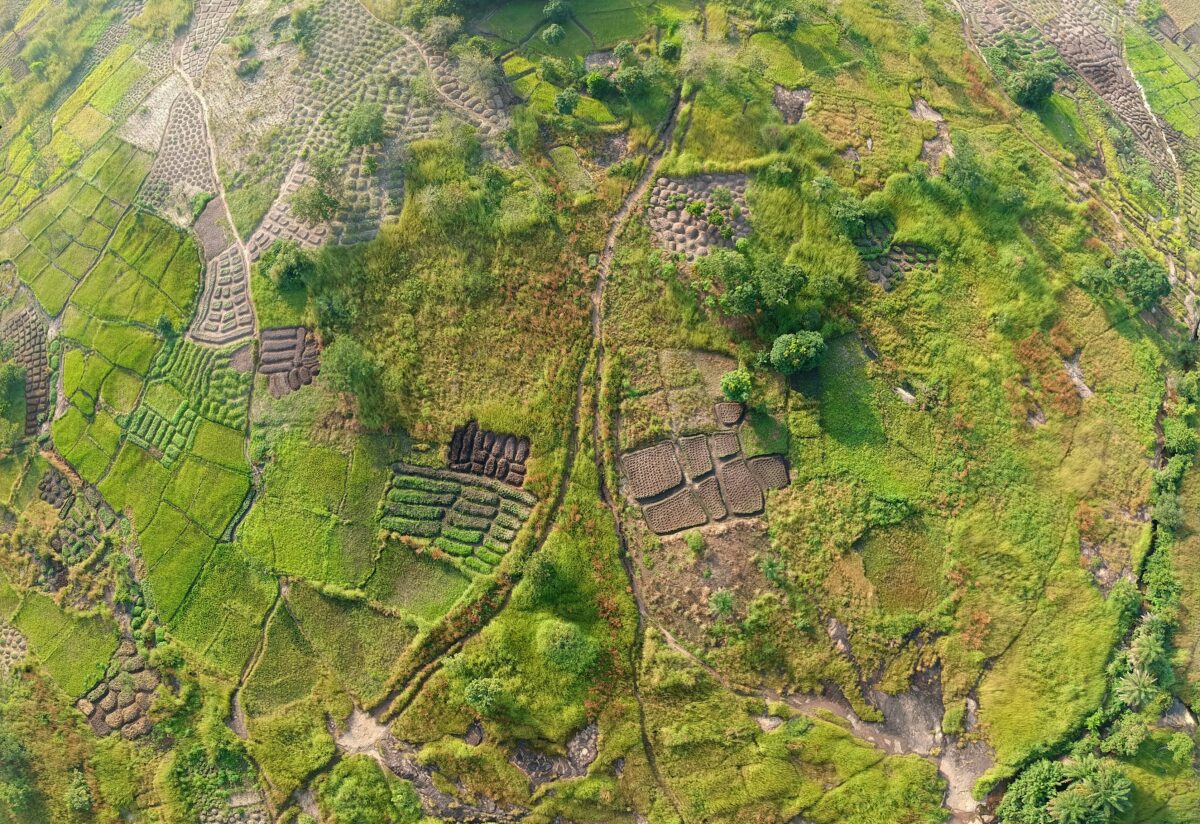
Africa has no shortage of sunlight. There is no shortage of arable land. There is no shortage of enterprising farmers or a new generation of clean energy innovators. What has been lacking thus far is a coordinated effort to bring these strengths together under a shared, investable vision.
Agrivoltaic energy – the integration of photovoltaic solar energy systems with agricultural production on the same land – offers exactly that vision. It’s not a panacea. It is not a short-term solution. But it is one of the most promising long-term strategies for aligning Africa’s agendas on food security, climate resilience and energy transition.
On April 10, 2026, the Consortium for Sustainable Agrivoltaics (C4SA) Foundation will launch the African Agrivoltaics Platform Initiative at the Organization for Economic Co-operation and Development headquarters in Paris, together with the OECD Development Centre, the UN Joint SDG Fund and Akademiya2063. This initiative is based on a simple premise: Africa can lead the next generation of integrated land use innovation – if we are willing to help with the patient, structural work needed to build viable markets.
Strategically aligned with Africa’s development priorities
Across the continent, governments are grappling with three converging tensions: rising food demand, growing energy needs and intensifying climate shocks. Too often these are framed in policy debates as competing claims on scarce land and public resources.
Agrivoltaics reframes the equation. Co-locating solar energy generation and crop cultivation increases land productivity rather than dividing it. Well-designed systems can reduce evaporation, moderate soil temperatures, improve water efficiency and preserve biodiversity. On-site solar energy can boost irrigation, cold storage and agro-processing, reducing post-harvest losses and strengthening rural value chains.
For farmers, this means a new and reliable income stream, together with strengthened resilience. For governments, it means simultaneous progress on multiple sustainable development goals: energy access, climate action, food security and rural employment. For public and private
For investors, this means exposure to two essential sectors – agriculture and renewable energy – within a single, forward-looking asset class.
A market that must be built – not assumed
Yet we must be honest: agriculture in Africa will not grow solely through enthusiasm.
The sector is still in its early stages. Regulatory frameworks are often unclear about dual land use. Grid connection procedures can be opaque or slow. Ministries often do not communicate and coordinate together. Land tenure systems – especially in rural areas – are often complex, informal or contested. Without clarity on land rights and benefit-sharing mechanisms, even the most technically sound projects will struggle to secure financing.
This is why the African Agrivoltaics Platform Initiative considers facilitating policy and institutional reforms as a key priority, along with shaping new business models and capacity building.
Investors need confidence that African governments are committed to implementing predictable, transparent regulatory regimes. This means that land use classifications need to be clarified to explicitly recognize agricultural voltaic energy; streamlining permit procedures; aligning the Ministries of Agriculture and Energy; and addressing long-standing land tenure issues fairly and urgently.
Encouragingly, a growing number of governments are signaling their willingness to do just that. Across the continent, national energy transition plans and agricultural modernization strategies are increasingly aligned with climate commitments. Agrivoltaic energy offers a practical means to realize these ambitions – at scale, if the economics can work.
Reduce the risk for the sector through smart financing
If government policy is the foundation, finances will determine the breadth and pace of growth.
By their nature, agrivoltaic projects are in sectors that are traditionally financed separately. Agricultural financing often focuses on seasonal credit and smallholder risk. Renewable energy financing emphasizes long-term infrastructure assets and energy purchase agreements. Bridging these worlds requires innovation.
Development finance institutions, climate funds and philanthropic capital play a crucial catalytic role. Blended financing structures can help absorb risks at an early stage – through first-loss tranches, guarantees, viability gap financing or concessional debt – and thus attract private capital.
Financial institutions should also explore new tools tailored to the dual nature of agrivoltaic energy: revenue sharing models with farmer cooperatives, aggregation vehicles to bundle smaller projects, and insurance products that take into account both agricultural and energy performance.
Standardized contracts, transparent impact metrics and shared data on crop yields and energy output will further reduce perceived risk. As performance data accumulates, the cost of capital should fall over time, unlocking commercial scale, supported by new credit products from domestic banks.
Ensuring inclusion and legitimacy
Agrivoltaic energy will only succeed in Africa if it is designed with, and not for, rural communities.
Land is not merely an economic asset; it is social, cultural and political. Transparent consultation processes, fair compensation frameworks and community ownership models are not optional; they are requirements.
Working closely with African research institutions and policy think tanks such as Akademiya2063, the African Agrivoltaics Platform Initiative seeks to base its work on local evidence and regional priorities. Field trials in various agro-ecological zones will provide context-specific data. Policy dialogues will bring together farmer organizations, regulators, developers and financiers.
The goal is not to replicate European or Asian models wholesale. It’s about co-creating African models that reflect local realities – whether that means integrating livestock farming, horticulture, aquaculture or staple crops under solar panels.
A long-term investment in resilience
Building agricultural markets in Africa will take time. Early projects can be complex. Returns may require patience. Regulatory reforms and legal strongholds will not appear overnight.
But the alternative – continuing to treat food systems and energy systems as separate silos – carries a much greater risk. Climate volatility is already eroding African agricultural productivity. Energy poverty limits rural industrialization. Land use conflicts will only increase among growing populations, especially in Africa’s growing urban centers.
Agrivoltaic energy offers a path to integrated resilience. It converts potential trade-offs into synergies. It indicates that sustainable infrastructure can also be socially inclusive, for young job seekers and female entrepreneurs. It invites long-term investors to participate in shaping a new asset class that meets climate and development imperatives.
From Paris to the continent
Our launch in Paris on April 10 is not an end point. It’s a starting signal.
By bringing together partners at the Organization for Economic Co-operation and Development, alongside the OECD Development Center and the UN Joint SDG Fund, we aim to
agrivoltaic energy within discussions on global development and climate finance. But the real work will unfold across African fields, ministries, financial institutions and research centers.
The message to investors is clear: the fundamentals are compelling and policy momentum is increasing. The message to governments is also clear: predictable frameworks and land tenure reforms will unlock capital on a massive scale. And the message to farmers and communities is fundamental: this transition must generate shared value.
Africa has the sunlight, the land and the needs. With coordination, courage and patient capital, it can also build the markets.
The sun is rising in African agriculture. The question is not whether the possibility exists. What matters is whether we are willing to invest in its realization.
Author: Chris Hegadorn, Founder of the Consortium for Sustainable Agrivoltaics (C4SA) Foundation, and Debisi Araba, Managing Director, Akademiya2063.
The C4SA envisions a future where agrivoltaic systems are an integral part of global agricultural practices, providing dual benefits: solar energy generation and agricultural production. Our goal is to aim agrivoltaic energy as a cornerstone of climate-smart agriculture, which improves food security and sustainability
The views and opinions expressed in this article are those of the author and do not necessarily reflect those of the author pv magazine.
This content is copyrighted and may not be reused. If you would like to collaborate with us and reuse some of our content, please contact: editors@pv-magazine.com.
