

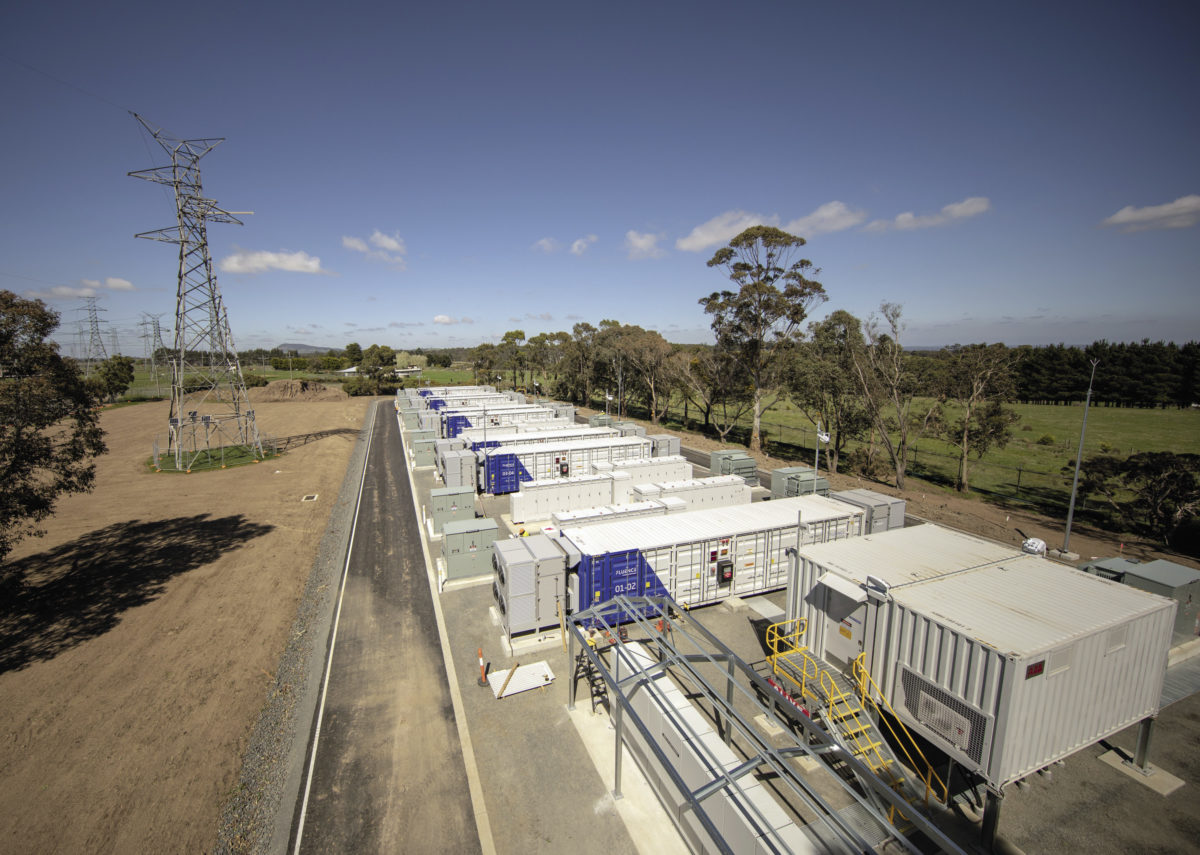
The Brazilian Association of Energy Storage Solutions (ABSAE) predicts that installations in Brazil’s commercial and industrial (C&I) segment will exceed 2 GWh by 2026. In addition, the group expects purchases of around 8 GWh at the auction scheduled for April, which will procure projects for delivery from 2028.
By ESS news And pv magazine Brazil
BSAE believes that there will be consolidation in Brazil’s C&I battery sector and regulatory space in 2026. In an interview with pv magazine BrazilABSAE Executive Director Fabio Lima said C&I systems are in high demand and are being deployed quickly. “There is also a dynamic market effect,” he explained, adding that those who have already deployed tend to spread the word of encouragement and this accelerates the adoption curve.
While the 2025 balance sheet has not yet been closed, the pace of implementation, based on the volume of projects partners see, will continue into 2026. The introduction of new regulations around renewable energy has also encouraged the market, Lima said. “We see 2026 as a year of regulatory consolidation.”
“In addition, we see C&I applications advancing, including in agribusiness, both in end-of-line and off-grid solutions, in rural and urban environments. There are many applications in hospitals, educational institutions and shopping centers, which are freight centers with variation during the day and relevant consumption during the night period.”
Growth engines
The core of the positive expectations is the auction of capacity reserves. Although the rules are still under discussion, they indicate that projects with a capacity of at least 30 MW will be prioritized for delivery from 2028.
Many projects are being developed and revised to fit the auction, which should be a turning point for the market as these are large systems. Lima said he expects the capacity auction to take place in the first half of the year. “The volume of the auction is secret, but something on the order of 2 GW of power/8 GWh of storage capacity is expected, which would multiply the current Brazilian market.”
Continued policy efforts to decarbonize the Amazon will also be a contributing factor to increased deployment of storage, as will data centers.
Brazilian energy regulator Aneel is currently in advanced discussions about hourly rates. Depending on how this is implemented – with predictability and legal certainty – it could become an important driver, Lima believes, also for the participation in storage in residential consumer units, although this is still evolving in terms of regulations.
Furthermore, with the right incentives, generation reduction can be part of the compensation for storage systems. “Progress has been made on the legal front, but there is still a long regulatory debate,” the ABSAE director said.
Major projects outside the auction
The feasibility of large energy storage projects beyond contracting through the auction of capacity reserves depends on greater clarity from other revenue sources, Lima said. In general, storage is usually accomplished by stacking income, with one fixed portion and another variable portion.
“In the capacity auction model, the project only participates in fixed revenue,” Lima said. “This leads to the deployment of systems that are almost entirely dedicated to the auction. In other countries, capacity payment works as a supplement, also allowing arbitrage on energy prices.”
Companies are currently developing projects that are mainly aimed at the auction. “The multitude of services should be more evident in related projects, for example for solar power plants, in light of the new regulations,” Lima said, adding that this is the spirit of the updated regulations, which he said “allows storage to enable new network connections and participate in more flexible competition mechanisms, close to demand response.”
In this context, having a fixed revenue base on which it is possible to stack the revenues from budget cuts, tariff reductions and other consumer services will enable ‘multiservice’ projects.
Lima added that some projects are being analyzed for realignment, especially in factories that are more affected by generation curtailment, but this will be decided on a case-by-case basis within companies.
“The goal is to create an environment in which storage develops autonomously, with fair taxation and adequate participation in auctions and competition mechanisms,” summarized the Executive Director of ABSAE.
More broadly, he believes the electricity sector continues to face the growing challenge of system flexibility. With delays in capacity auctions, it is essential to promote new competitive mechanisms and solutions that promote flexibility and make room for the expansion of storage in the country,” he said.
This content is copyrighted and may not be reused. If you would like to collaborate with us and reuse some of our content, please contact: editors@pv-magazine.com.
