

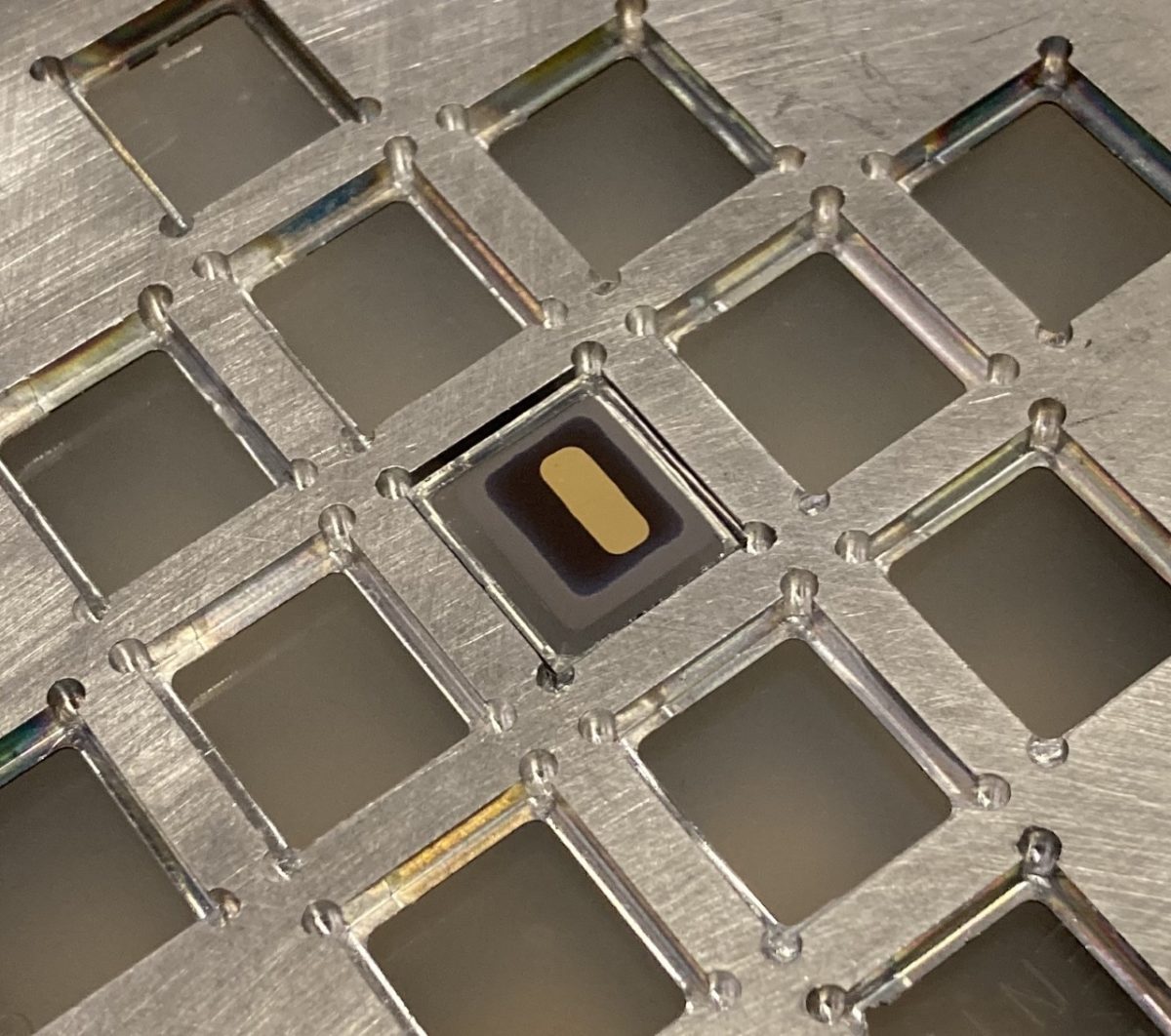
Researchers from the Chinese Academy of Sciences have set a world record for selenium solar cells, achieving an efficiency of 10.3% above the 10% threshold for the first time. The breakthrough was made possible by optimized charge-selective contacts, light-driven crystallization and post-deposition annealing, producing stable devices with an open-circuit voltage of 1.03 V.
A research team from the Chinese Academy of Sciences (CAS) has achieved an energy conversion efficiency of 10.3% for a solar cell based on a selenium absorber.
The result represents a world record for this photovoltaic technology and marks the first time it has exceeded the 10% efficiency threshold.
“Compared to many other photovoltaic materials, 10% may sound decent, but not particularly impressive. However, selenium’s larger band gap results in a much lower theoretical maximum efficiency,” Rasmus Nielsen, a selenium solar cell specialist at the Technical University of Denmark, told me. pv magazine.
“When device performance is instead compared to its maximum efficiency potential, selenium reaches an impressive 41.1%, outperforming antimony sulfide Sb2(S,Se)3 and even amorphous silicon (a-Si:H)despite decades of research and industrial development. In my opinion, this new record marks an important milestone, and this irresistibly simple semiconductor should be taken seriously as a promising wide bandgap absorber for tandem solar cells and indoor solar.”
Details of how the Chinese team achieved the efficiency record were outlined by Nielsen and his colleague Peter Christian Kjærgaard Vesborg in a short article: “Selenium hits double figures,” published in nature energy.
First, the researchers replaced the electron-selective contact of titanium oxide (TiO₂) with Zn₀.₈₅Mg₀.₁₅O (ZnMgO), a magnesium-doped zinc oxide alloy widely used in optoelectronics. The material was found to be better aligned with the selenium absorber, improving band alignment and leading to a higher open circuit voltage.
Second, conventional thermal annealing was replaced by LED visible light illumination to crystallize the thin film of selenium as deposited. “This approach was first explored in combination with thermal annealing and later by our group using a laser alone to crystallize the absorber, where light-driven crystallization significantly improved cell morphology and ultimately fill factor,” Nielsen said.
In a third step, the researchers thermally annealed the entire device after deposition of all layers. “We reported this strategy, which I called closed-space annealing (CSA), in 2024, showing that it improves carrier collection efficiency and therefore both short-circuit current density and fill factor,” Nielsen added.
According to Nielsen, the careful optimization and combination of all three strategies allowed the team to exceed the 10% efficiency threshold.
The device also achieved an open-circuit voltage of 1.03 V. Furthermore, unencapsulated cells showed “negligible” efficiency loss after 1000 hours of tracking at maximum power under ambient conditions.
The new cell design was presented in the paper “Illumination-assisted annealing allows selenium solar cells with an open-circuit voltage of more than 1 V and an efficiency of more than 10%”, which was also published in nature energy.
This content is copyrighted and may not be reused. If you would like to collaborate with us and reuse some of our content, please contact: editors@pv-magazine.com.
