

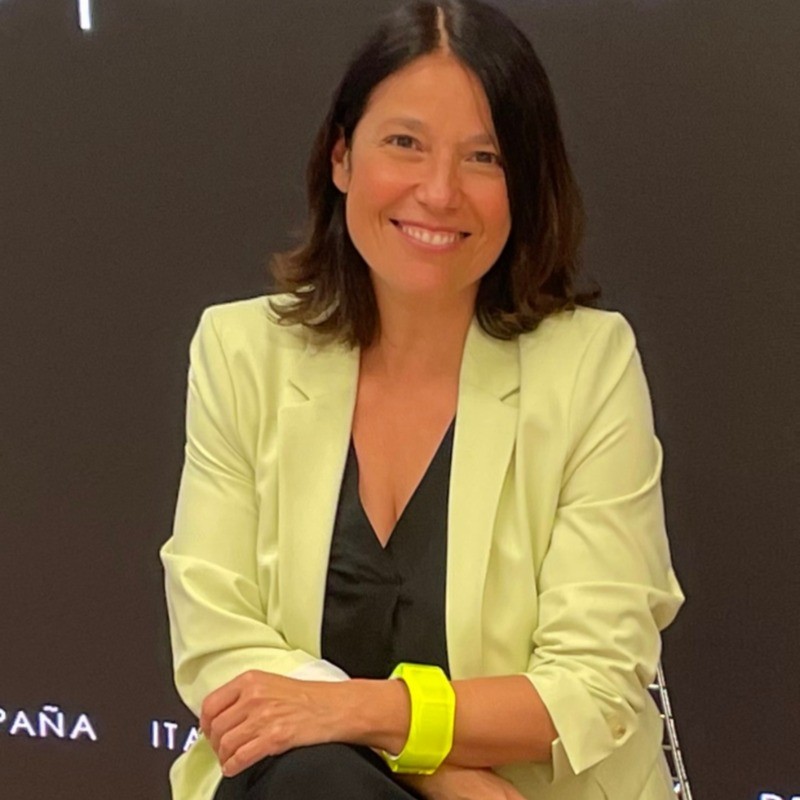
This week, Women in Solar Europe (WiSEu) gives voice to Ines Monroy, founder of Spain-based Licenciasocial.energy. She says the global renewable energy industry must be prepared to address the so-called authority gap. “When I have adopted a neutral, professional tone to convey guidance or focus on problem solving, I have received comments suggesting my approach was ‘bossy’ or ‘too harsh’. My impression is that this reaction stems from deeply ingrained stereotypes that expect women to be overly compliant, even in roles where decisiveness and objectivity are crucial,” she says.
The renewable energy industry has made significant progress towards gender equality, as evidenced by the most recent statistics available. By 2023, women made up 38% of the sector’s workforce, a significant improvement compared to the 22% representation in the conventional energy sector. However, significant barriers remain, especially in leadership, where women hold only 13% of senior positions.
One of the most common challenges has always been visibility and recognition. I have often noticed that women have had to work harder to receive the same level of recognition for their contributions as male colleagues. This is not necessarily due to overt discrimination, but rather unconscious biases in the way leadership potential is perceived, especially in technical and managerial areas.
Leadership in this field can sometimes be associated with traits or styles that are not necessarily diverse, creating additional barriers for women to break through. This, together with the perception that leadership roles are held by men, can subtly influence decision-making during promotions or role assignments.
Then there’s a broader problem I’ve experienced, which is the “authority gap.” For example, when I’ve adopted a neutral, professional tone to convey guidance or focus on problem solving, I’ve received comments suggesting my approach was “bossy” or “too harsh.” My impression is that this reaction stems from deeply ingrained stereotypes that expect women to be overly compliant, even in roles where decisiveness and objectivity are critical.
In contrast, male colleagues in similar situations are often seen as assertive or strong leaders, an attitude that is clearly rewarded in business contexts. This dynamic can put additional pressure on women, as we are sometimes expected to tone down our authority to make it more palatable to others. This not only distracts from the work itself, but also puts women at a disadvantage by viewing professionalism as a shortcoming rather than a strength.
That said, for most of my career I have been fortunate to gain the trust of my superiors, largely due to my work managing international business units. The renewable energy sector offers tremendous opportunities to expand into foreign markets and implement projects abroad, which allowed me to thrive in roles that required global perspective and initiative. Opening and developing new markets and designing strategies tailored to their specific needs gave me the independence and authority to make decisions. This was critical to achieving strong results and enabled me to take on positions involving leadership and management capabilities from the outset.
Over time, I have learned to tackle whatever challenges arise by staying true to my leadership style and my professional purpose, and I have approached situations with an entrepreneurial mindset, creating opportunities where they did not exist and standing up for myself and the people who work with me. .
As a woman in sustainability and founder of my own company, I embody the International Energy Agency’s assertion that women are the key drivers of innovative and inclusive solutions. My current startup company
Licenciasocial.energy focuses on facilitating social acceptance of sustainable energy and storage projects by implementing a more inclusive approach to decision-making and benefit sharing. By implementing social innovation tools that actively engage diverse voices and ensure communities are part of the process, I aim to create solutions that are equitable and widely embraced.
A notable aspect of sustainability in the energy sector is the large presence of women, reflecting the commitment to creating opportunities for all. Sustainability often emphasizes empathy, collaboration, and community involvement; qualities that fit well with the values that many women bring to the workplace. Additionally, the field is placing more emphasis on how social equality resonates strongly with women, who have historically been advocates for social change. This inclusive culture empowers women to meaningfully contribute to innovative solutions and ensures that the perspectives and needs of diverse communities are integrated into sustainable practices.
Closing the gender gap is not only an ethical but also a strategic imperative, as the clean energy transition requires diverse perspectives to stimulate the innovative thinking needed to achieve a sustainable future. Women’s contributions are essential to making this vision a reality.
Inés Monroy has been active in the solar photovoltaic sector since 2005 and has built a varied career across the entire value chain, including production, distribution, technology transfer and the development, EPC and O&M of PV projects. Her expertise includes grid-connected large-scale installations, distributed generation systems and off-grid solutions for rural electrification, including solar systems for homes, schools, health centers and more. She has held key roles in business development, sales and project management in markets in Europe, Latin America and Asia Pacific. As founder of Licenciasocial.energy, she focuses on ensuring projects thrive with the support of local communities. Her work uses tools such as sociopraxis, community engagement, communication, negotiation and alternative dispute resolution techniques to minimize social risks and maximize the positive social impact of investments.
Interested in participating Ines Monroy and other female leaders and industry experts at Women in Solar Europe? More information: www.wiseu.network
The views and opinions expressed in this article are those of the author and do not necessarily reflect those of the author pv magazine.
This content is copyrighted and may not be reused. If you would like to collaborate with us and reuse some of our content, please contact: editors@pv-magazine.com.
