

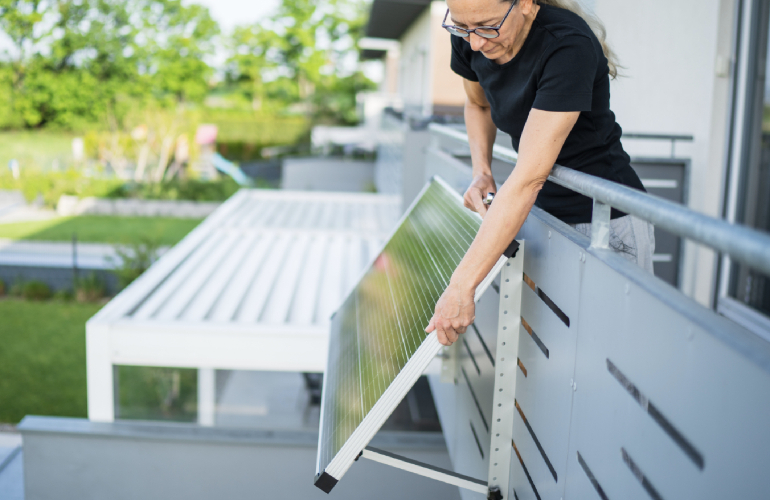
Colorado becomes the latest state to approve plug-in solar (also known as balcony solar) after Governor Jared Polis signed it HB26-1007 in law.

Credit: UL
The legislation led by Representatives Lesley Smith and Rebekah Stewart and Sens. Cathy Kipp and Matt Ball will make it cheaper and easier for Colorado families, including renters and apartment dwellers, to power their homes with solar energy. The bill passed both houses of the Colorado Legislature with bipartisan support.
The new law creates a pathway that allows the use of plug-in solar energy devices, establishes critical safety standards for those products, and eliminates unnecessary interconnection barriers by allowing families to use meter neck adapters.
“Colorado is breaking down barriers to clean energy and saving people money on energy bills,” Governor Polis said after signing the bill. “Just because you live in an apartment or multifamily building doesn’t mean you shouldn’t be able to use solar panels to save money on your energy bills. This new law expands access and choice to money-saving clean energy solutions for more Coloradans. Thank you to the sponsors for expanding choices for more Coloradans to explore new technology that protects our environment and saves Coloradans money.”
What HB-1007 does:
- Legalizes plug-in solar energy with safety railings. The new law legalizes plug-in solar power generation devices – typically one to four solar panels plus an inverter, designed for easy self-installation by homeowners or renters in a garden or on a balcony. It requires devices to meet strict product safety standards, closing a gap that previously allowed unsafe products to be sold in Colorado. It prohibits utilities and homeowners’ associations from unreasonably blocking the installation or use of these devices.
- Reduces costly interconnection barriers with meter collars. The law requires the Public Utilities Commission to update the interconnection rules by December 31, 2026, to explicitly allow customer ownership and use of meter neck adapters – simple devices that are installed between an electric meter outlet and a utility billing meter and that allow immediate interconnection of customer-owned energy devices. Meter collars reduce or eliminate the need for expensive electrical panel upgrades, saving families between $2,000 and $5,000 per installation and avoiding panel upgrades that can cost up to $10,000. Colorado’s investor-owned utilities, including Xcel and Black Hills, already use meter neck technology. This law makes access universal and statewide.
- Expands access for all types of utilities. The law extends these protections to municipal utilities and electric cooperatives, ensuring that families across Colorado – not just those served by investor-owned utilities – can benefit.
- Benefits for tenants and apartment residents. Unlike traditional rooftop solar, plug-in solar does not require major building modifications and can be moved when a family moves – making it the first accessible solar option for the millions of Colorado families who rent their homes.
News item from Colorado Solar and Storage Association
