

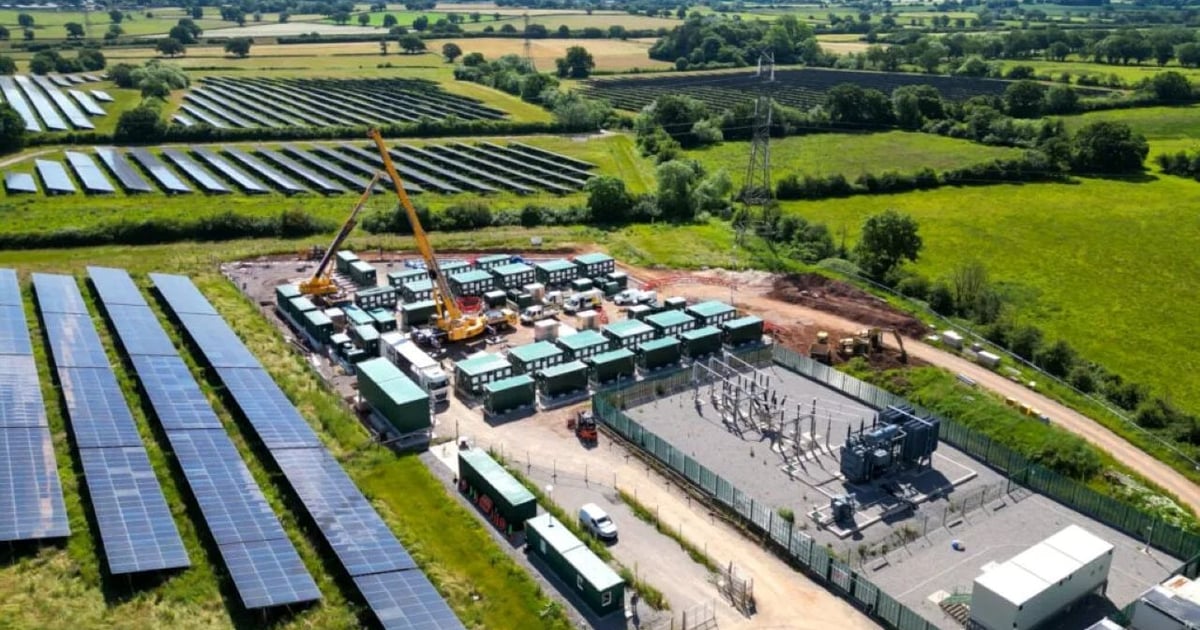
In this blog, Toby Virno, investment manager at Foresight Solar Fund, examines the structural curtailment pressures facing a saturated renewable energy market.
Curtailment has gone from a theoretical concern for the renewable energy sector to a practical reality. For years, the conversation around the economics of solar has focused on the level of deployment, subsidies and long-term energy prices. Today, the limitation is no longer generation capacity, but the ability of the system to absorb that energy and use it efficiently where and when it is produced.
Electricity networks around the world are under pressure. Renewable capacity continues to grow, often in areas where network reinforcement is lagging behind. Electrification of demand is accelerating, with data centres, electric vehicles and heat pumps all contributing to peak load requirements.
Meanwhile, grid upgrades are complex, capital-intensive and slow to implement. In some regions, connection queues now extend well into the 2030s, a challenge recognized by regulators as part of their connection processes.
The result is an energy system model that is increasingly constrained, both physically and economically. Containment, once rare, is now part of the operational playbook. According to data from National Grid ESO, coercive payments and balancing costs have risen sharply, reaching £2.3 billion by 2024-2025. And that’s just in Great Britain.
Solar producers are also increasingly seeing periods of price cannibalization during peak hours, with zero prices and negative prices no longer an anomaly but an increasingly common feature of sunny days with low demand.
Compared to other markets, including much of mainland Europe and Australia, Britain still has a relatively modest level of containment. In those markets, the curtailment is caused less by delays in grid upgrades and more by system saturation. Analysis from the Australian Energy Market Operator shows that once renewable energy penetration reaches a certain threshold, wholesale prices deteriorate rapidly during peak production periods.
What these markets demonstrate very clearly is that negative prices are not a market failure; it’s a signal. It tells us when the system has more generation than it can use, and it rewards assets that can respond dynamically. Storage, hybrid assets and flexible demand all become essential once that point is reached. In Australia, for example, battery revenues are increasingly driven by arbitrage and system services rather than energy alone.
CfD allocation accelerates the need for system flexibility
This issue has come into sharper focus following the latest Contracts for Difference (CfD) allocation round, which underlined how quickly the system is changing in Britain. Allocation round 7 completed a record volume of new solar capacity alongside significant volumes of onshore and offshore wind power, meaning this is the largest expansion of clean generation ever delivered through the scheme.
This is a major step forward for the UK’s move towards energy independence and for the sustainable energy sector, and should be celebrated. However, with projects expected to come online later this decade, the scale and speed of implementation now captured by the CfD program may accelerate the point where system saturation, price cannibalization and curtailment become structural features of the market rather than edge cases. The interplay between different types of regulatory support regimes also poses an interesting challenge for portfolio construction, as newer schemes will generally be more easily constrained than older schemes, both contractually and economically.
The implication for investors, developers and policymakers is that the historical model of sustainable assets based solely on one technology may no longer be sufficient. The question is not whether storage will become an integral part of utility-scale solar, but how and when it will be deployed. Britain is just one example of a trend that can be extrapolated to multiple markets.
Falling battery costs have made this question more urgent. According to BloombergNEF, lithium-ion battery pack prices have fallen by more than 80% since 2013, significantly improving the economics of battery energy storage systems despite recent volatility.
For owners of existing solar assets, the idea of retrofitting storage is understandably attractive. It provides protection against volatile energy prices, access to revenue from additional services and some protection against curtailment.
Retrofitting storage is complex; co-location must start with development
In practice, however, retrofitting is not always easy. Many operational solar sites are designed with export-only grid connections that are closely matched to generation capacity. Import options may be limited or non-existent, limiting the ability to charge batteries via the electricity grid during periods of low prices. Export caps could also limit combined solar and storage production. In some cases, interconnection agreements simply do not allow for additional technologies without lengthy and uncertain change processes – a problem recognized by regulators and network operators.
There are also technical considerations. Land availability, inverter compatibility, substation capacity and control systems all influence what is feasible. Retrofitting may be useful in certain cases, but it is not a universal solution. Economic conditions are highly location-specific and regulatory friction remains a key barrier.
Therefore, the long-term plan for co-location must be devised already in the development phase. By designing solar plus storage as an integrated system from the start, developers can optimize grid connections and control the architecture and commercial strategy. It enables more efficient use of network capacity, better alignment with market signals and greater resilience to future changes in price dynamics.
As renewable energy penetration increases, solar plus storage will likely become the standard model for new utility-scale projects, not the exception. This is not simply about adding a battery to a solar farm; it is about rethinking the interaction between energy generation assets and the wider energy system. Hybrid projects can smooth production, shift energy to higher value periods and provide services that support system stability, reducing the cost of curtailments and dependence on fossil generation.
That said, the transition will not happen immediately and existing pure-play solar systems will continue to play a crucial role in the energy mix. Maintaining and improving the value of these assets will depend on a combination of strategies.
Selective storage integration will be part of the solution, to the extent that grid conditions and connection conditions permit. Equally important will be commercial strategies that reduce exposure to volatile and negative prices. The corporate power purchase agreement (PPA) market continues to evolve, driven by demand from companies seeking long-term price certainty and decarbonization opportunities. To maintain this momentum, a robust and sustainable regulatory framework is essential to give companies the confidence to plan electricity purchasing over the long term. This would also help deepen the PPA market for businesses, alongside state-backed income support schemes such as CfDs.
For solar generators, well-structured PPAs can provide stable income and limit downside trading risk.
Another critical consideration is the future planning of the repowering. Many early solar energy systems will reach the end of their original design life in the next decade. Repowering offers an opportunity to increase capacity, improve efficiency and potentially integrate storage, but the policy framework will be decisive. At Foresight Solar, the team has been closely involved with the assets since construction and keeps a close eye on their performance. Where possible, we adapt locations to maintain performance, improve efficiency and support our operational track record.
It is also important to be clear about what co-location can and cannot achieve. Solar and storage together will be critical to balancing a decentralized, flexible grid, but they are not a silver bullet. Batteries do not eliminate the need for investments in the electricity grid, but complement it. Long-term storage, demand-side response, interconnection and network reinforcement all play a role.
Ultimately, success depends on early design choices, continued market evolution and sustainable investments in network infrastructure. The signals from the markets are clear: once renewable energy penetration passes a certain point, flexibility will become the defining asset class. Britain has an opportunity to learn from these experiences and plan accordingly, rather than reacting after the fact.
For companies like Foresight Solar, this isn’t just a technical or regulatory issue; it goes to the heart of long-term value creation. Assets that are designed to be flexible, adaptable and systems-friendly will be better positioned to navigate an increasingly complex market environment. Those who don’t risk being left behind.
Bringing together solar and storage from development should be seen not just as an optional improvement, but as a logical next step in the evolution of the renewable energy sector – and to maximize returns for investors. If we want a system that is affordable, resilient and capable of supporting net zero, then building in flexibility from the start must be considered the standard.
