

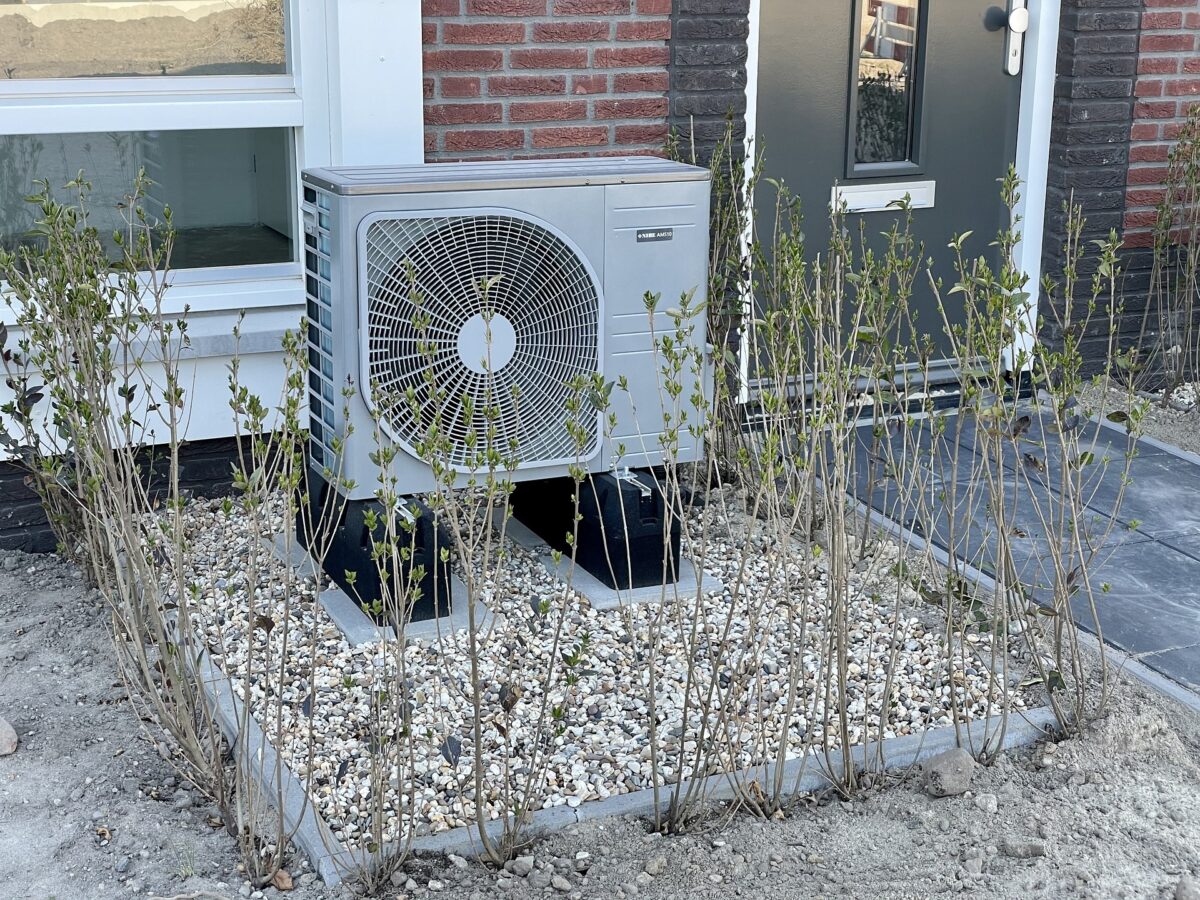
To determine the willingness to pay for low-CO2 home heating in the Netherlands, a survey among 1,797 residents was used. On average, respondents were willing to pay a premium of 33% for electricity heating. Policy recommendations were also made as part of the research.
Researchers from the University of Groningen conducted a survey among 1,797 Dutch residents about their willingness to pay (WTP) for low-carbon residential heating systems. The results could be valid not only in the Netherlands, but also for other European Union countries and Great Britain due to the similarity of the markets, the scientists said.
“Many studies of home heating solutions typically adopt a top-down perspective, where the primary goal is to minimize the total system costs, consumer costs or environmental impacts of heating systems,” the academics said. “However, a disadvantage of these top-down approaches is that they pay little attention to consumer preferences for different types of heating. For energy transition policies to be effective, consumers must find the changes in their heat supply acceptable and be willing to adopt low-carbon heating systems.”
The experiment
For their analysis, the team conducted a discrete-choice experiment, analyzing the results with the latent-class logit (LCL) model. A discrete-choice experiment studies preferences through choices, while LCL identifies different preference groups. Participants were asked to answer questions about six characteristics: the type of heating system, the energy source, the CO2 emissions per kWh, the choice of energy supplier, the installation costs and the monthly energy bill. For each question, two identical systems were presented, with only the relevant attribute changing.
“In our choice experiment, we ask participants to imagine a situation in which their current heating system no longer functions and needs to be replaced. Respondents are then asked to consider which option for a new heating system is most preferred for installation in their home,” the group explains. “Respondents must choose between the presented heating systems in each choice set; they do not have the option to keep their current heating system or make no choice at all.”
Regarding the type of heating system, the responders could choose between household appliances or a district heating system. The energy source was gas, electricity or hydrogen, the latter two being produced from renewable or non-renewable sources. The CO2 emissions per kWh, including emissions from energy production, were 0 g, 200 g or 400 g. Regarding the retailer, respondents could choose between markets where it is possible to switch companies or not. The last two characteristics helped the scientists calculate the WTP: the initial installation costs required them to choose between prices of €2,000 ($2,218), €5,000 and €7,500; while on the monthly energy bill they could choose between 50%, 100% or 150% of the current payment.
The results
“Our results indicate that Dutch households are on average willing to pay a premium on their current monthly energy bill of 33% for electricity and 29.4% for hydrogen, compared to using gas for heat production,” the researchers said. “They are willing to pay a premium of 15.3% for reducing the amount of CO2 emissions per kWh of heat by 100 grams; and 16% because they have the option to switch between energy retailers. In contrast, they require a 28.4% discount for district heating systems compared to stand-alone household appliances.”
The socio-economic characteristics of the respondents were known to the institution managing the poll’s distribution, and therefore a class profile analysis was possible. According to the results, people with higher education and income levels in the Northern Netherlands have the highest WTP for low-carbon electricity and hydrogen. Moreover, according to this analysis, homeowners with higher incomes are more likely to demand compensation for a district heating system, while less educated, low-income tenants in small families value district heating the most.
“Relatively younger individuals in larger family households tend to be more price sensitive and exhibit lower WTP for all heating system characteristics,” the academics added. “Our analysis also indicates that older people in rural areas are most sensitive to initial capital expenditures, as reflected in their relatively high implied discount rates, and are less likely to have positive WTP for characteristics other than those with which they are already familiar. status quo or familiarity effects are particularly strong in this group.”
The policy implications
To conclude the article, the scientists also made recommendations for policy makers. This includes compensating individuals for switching to a district heating network, supplying electricity and hydrogen instead of gas, and enabling customers to switch between providers. They also propose to specifically target the elderly with compensation for the switch to renewable heat. “Ultimately, a more consumer-oriented approach can lead to a more sustainable and widely accepted transition to low-carbon home heating,” they emphasized.
The results are presented in “Willingness to pay for low-carbon residential heating systems: a discrete choice experiment among Dutch households”, published in Energy and Buildings.
This content is copyrighted and may not be reused. If you would like to collaborate with us and reuse some of our content, please contact: editors@pv-magazine.com.
