
Close Menu
  • News
  • Industry
  • Solar Panels
  • Commercial
  • Residential
  • Finance
  • Technology
  • Carbon Credit
  • More
    • Policy
    • Energy Storage
    • Utility
    • Cummunity
What's Hot

Dutch solar owners asked to switch off during peak periods to ease the distribution crisis

June 7, 2026

The hydrogen flow: Toyota demonstrates its racing prototype on liquid hydrogen

June 7, 2026

Era of electrification exposing Australia’s weakest link

June 6, 2026
Facebook X (Twitter) Instagram
Solar Energy News
Sunday, June 7
  • News
  • Industry
  • Solar Panels
  • Commercial
  • Residential
  • Finance
  • Technology
  • Carbon Credit
  • More
    • Policy
    • Energy Storage
    • Utility
    • Cummunity
Solar Energy News
Home - Technology - Efficient solar cooking with sand-based thermal energy storage – SPE
Technology

Efficient solar cooking with sand-based thermal energy storage – SPE

solarenergyBy solarenergyNovember 21, 2025No Comments3 Mins Read
Facebook Twitter Pinterest LinkedIn Tumblr Email
Share
Facebook Twitter LinkedIn Pinterest Email

Scientists in Ghana have developed a device that combines a conventional solar-powered steam cooker with sand-based thermal energy storage. The system can achieve a thermal efficiency of 38.9% and has a payback period of 4.5 years.

November 21, 2025
Lior Kahana

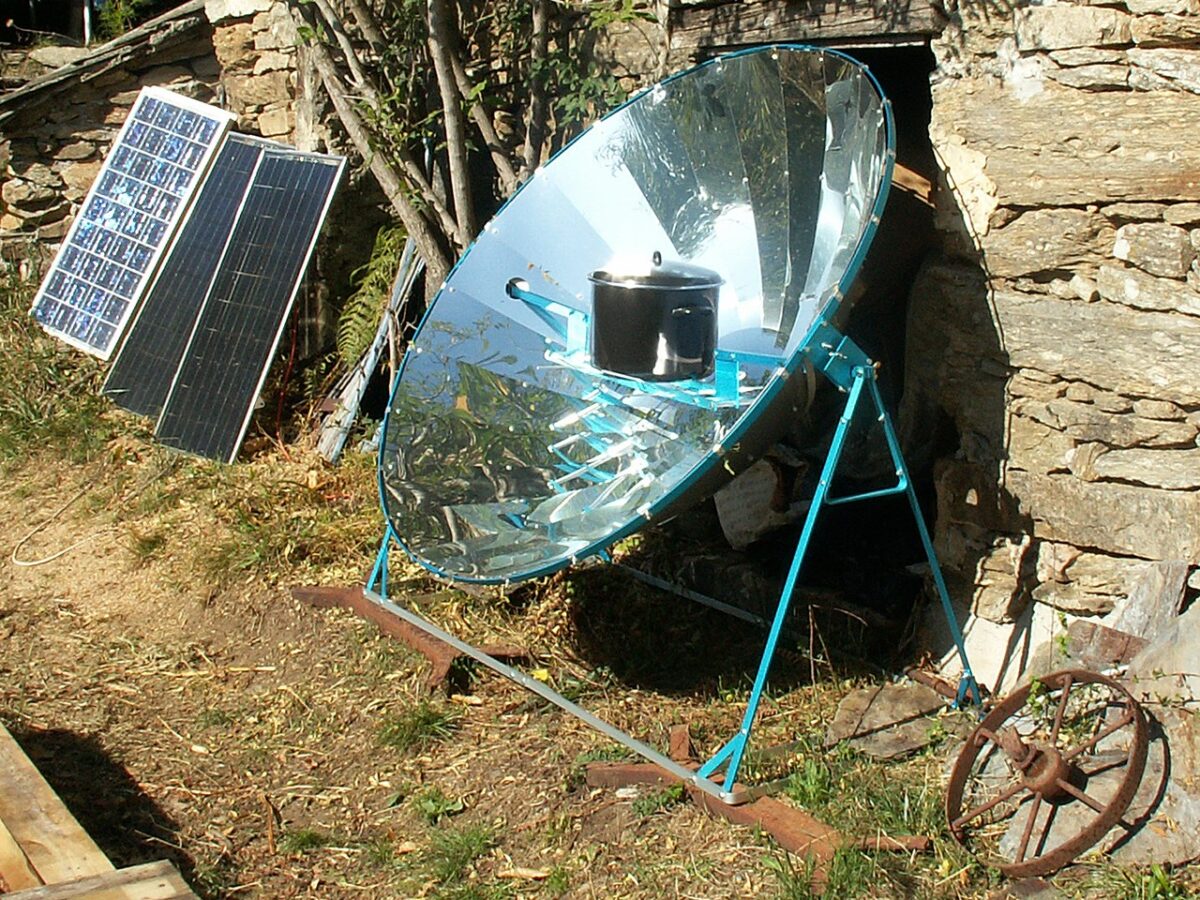
A research group from Ghana has developed a solar-powered steam cooker (ISESC) with sand-based thermal energy storage (WKO).

“The potential of sand, given its thermal stability and low cost, has not yet been extensively explored. Existing research mainly uses diodes, resistance heaters or induction systems as heat sources, with limited exploration of direct steam generation using stored heat in the sand,” the academics said. “The integration of steam cooking with sand-based TES into solar electric systems is a new area, and its efficiency in steam production and food cooking remains unclear.”

The tested setup consists of 20 photovoltaic (PV) modules, each with a maximum power of 580 W and an efficiency of 22.65%. The modules are mounted on a ground structure with an inclination angle of 10° facing south and an azimuth angle of 0°. The electricity generated is fed to the thermal energy storage system (TES), which consists of two components: a mild steel sand container filled with quarry sand, in which a DC-resistant heating element is embedded.

A water chamber containing 10 kg of water is installed above the sand layer, which generates steam that heats the food in the cooking space. The cooking chamber is 143 cm high, 150 cm long and 57.5 cm wide, while the dimensions of the thermal battery are 15 cm x 65.5 cm x 44 cm.

See also  'When faced with career challenges, it's all too easy to feel isolated' – SPE

The tests were conducted at the Kunst Senior High School in Kumasi, Ghana. From October 21 to 24, 2024, water boiling tests were conducted daily between 10 a.m. and 3 p.m. Cooking tests followed from November 5 to 7, 2024. The instruments used included a solar radiation meter, an infrared temperature gun, a voltmeter, an ammeter and a thermal camera.

The results showed that the cooking chamber reached a temperature of 105–110 C, sufficient to cook 16 kg of rice in 80 minutes, 16 kg of beans in 140 minutes and 32 kg of plantain in 85 minutes. The ISESC achieved a thermal efficiency of 38.9%, exceeding the performance of Scheffler dish solar steam systems (25–26.5%) under similar conditions by approximately 12–14%. The sand-based TES stored 13–15 MJ of energy and provided 4–6 hours of reliable cooking even under variable solar radiation of 400–900 W/m2.

Life cycle cost analysis indicated a payback period of 4.5 years, with total costs over 20 years estimated to be 47% lower than traditional biomass stoves. The ISESC’s annual emissions savings were calculated as 5,312.22 kg CO₂, 11.10 kg NOx and 7.05 kg PM2.5, contributing to reduced deforestation, lower indoor air pollution and support for Ghana’s Nationally Determined Contribution Targets (NDC).

The system was described in “Experimental analysis of an institutional solar steam cooker with sand-based thermal energy storage”, published in Advances in solar energy. Scientists from Ghana’s Kwame Nkrumah University of Science and Technology, Technology Consultancy Center – International Center for Innovation, Manufacturing, Technology Transfer, and Entrepreneurship (TCC-CIMET) and Cape Coast Technical University.

See also  Connecticut increases the amount of incentives available for the growing market for C&I Energy Storage

This content is copyrighted and may not be reused. If you would like to collaborate with us and reuse some of our content, please contact: editors@pv-magazine.com.

Popular content

Source link

cooking efficient Energy sandbased solar SPE storage thermal
Share. Facebook Twitter Pinterest LinkedIn Tumblr Email
solarenergy
  • Website

Related Posts

Dutch solar owners asked to switch off during peak periods to ease the distribution crisis

June 7, 2026

Britain’s next energy dependency is already taking shape

June 5, 2026

UK government considers community grant for battery storage

June 5, 2026
Leave A Reply Cancel Reply

Don't Miss
Technology

New single-diode model tackles recombination losses in solar cells – SPE

By solarenergyFebruary 21, 20260

UNSW researchers have developed an intrinsically modified single-diode model that explicitly takes into account radiative…

Students to connect the Green Skills Gap of the UK

July 27, 2025

New method to verify the warranty conditions of PV modules

May 22, 2025

Serbia to install 134.3 MW of solar energy in 2025 – SPE

January 27, 2026
Stay In Touch
  • Facebook
  • Twitter
  • Pinterest
  • Instagram
  • YouTube
  • Vimeo
Our Picks

Dutch solar owners asked to switch off during peak periods to ease the distribution crisis

June 7, 2026

The hydrogen flow: Toyota demonstrates its racing prototype on liquid hydrogen

June 7, 2026

Era of electrification exposing Australia’s weakest link

June 6, 2026

‘Come out from behind your screen, our industry is ultimately about people’

June 6, 2026
Our Picks

Dutch solar owners asked to switch off during peak periods to ease the distribution crisis

June 7, 2026

The hydrogen flow: Toyota demonstrates its racing prototype on liquid hydrogen

June 7, 2026

Era of electrification exposing Australia’s weakest link

June 6, 2026
About
About

Stay updated with the latest in solar energy. Discover innovations, trends, policies, and market insights driving the future of sustainable power worldwide.

Subscribe to Updates

Get the latest creative news and updates about Solar industry directly in your inbox!

Facebook X (Twitter) Instagram Pinterest
  • Contact
  • Privacy Policy
  • Terms & Conditions
© 2026 Tsolarenergynews.co - All rights reserved.

Type above and press Enter to search. Press Esc to cancel.