

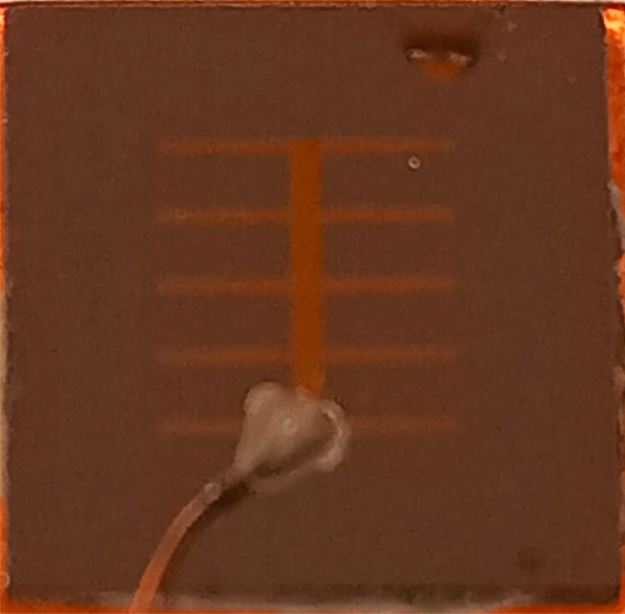
After years of conducting theoretical studies on gallium phosphide and titanium solar cells, a group of Spanish researchers have now attempted to build the first mid-band device based on this material combination and found that it can achieve improved external quantum efficiency at wavelengths above 550 nm.
A group of scientists led by the Universidad Complutense de Madrid in Spain has for the first time produced an intermediate band (IB) solar cell based on gallium phosphide (Gap) and titanium (Ti).
It is believed that the IB solar cells have the potential to… Shockley-Queisser limit – the maximum theoretical efficiency that a solar cell with a single p-n junction can achieve. It is calculated by looking at the amount of electrical energy extracted per incident photon.
The devices are typically designed to provide a large photo-generated current and maintain a high output voltage. They contain an energy band partially filled with electrons within the band gap of a semiconductor. In this cell configuration, photons with insufficient energy to push electrons from the valence band to the conduction band use this intermediate band to generate an electron-hole pair.
“Research on these cells has been done in our group for more than 15 years,” said the study’s lead author, Javier Olea Ariza. pv magazine. “We published the first article in the series in 2009 and in our last article we continued to create the first real devices. The devices are not yet working properly and their current efficiency is very poor. Although more work is required, these cells have the theoretical potential to achieve an efficiency of approximately 60%.”
In the newspaper “Optoelectronic properties of GaP:Ti photovoltaic devices”, which was recently published in Materials today SustainabilityOlea Ariza and his colleagues explained that GaP has a bandgap of 2.26 eV, which they describe as “remarkably close” to the theoretical optimal.
They built the 1 cm2 cell with a GaP: Ti absorber with a thickness of 50 nm, a p-type GaP layer and metal contacts made of gold (Au) and germanium (Ge). The GaP substrates were supplied by the Polish research institute Łukasiewicz-Itme. “The GaP:Ti layer was modeled as a very thin GaP surface layer with a constant Ti concentration,” the scientists explained.
They then performed a series of transmission and reflection measurements, as well as spectroscopic ellipsometry, and found that at wavelengths above 550 nm there is a broad band that could be related to enhanced light absorption due to the Ti incorporation.
“The results confirm that the GaP:Ti material has a very high absorption coefficient at energies below 550 nm, which is one of the objectives of this work,” said Olea Ariza, noting that there is still a long way to go before this technology is possible. reach commercial maturity. “There is no point in thinking about it until we have a laboratory prototype in which we have solved the problems and which has a high efficiency.
Looking ahead, the scientists said they want to achieve better surface passivation via formation gas annealing processes, as well as the reduction of the Ti depth profile tails by using a deposition technique instead of Ti ion implantation.
“In future work, we will aim to obtain thicker GaP:Ti layers that can be integrated into highly efficient photovoltaic devices,” they said. “Nevertheless, we also recommend using deposition techniques (such as sputtering) instead of ion implantation to achieve this thickness, to avoid the implantation tails.”
The research group included scientists from the Institute of Optics of the Spanish National Research Council (IO-CSIC, Madrid) and the Universidad Autónoma de Madrid.
This content is copyrighted and may not be reused. If you would like to collaborate with us and reuse some of our content, please contact: editorial@pv-magazine.com.
