

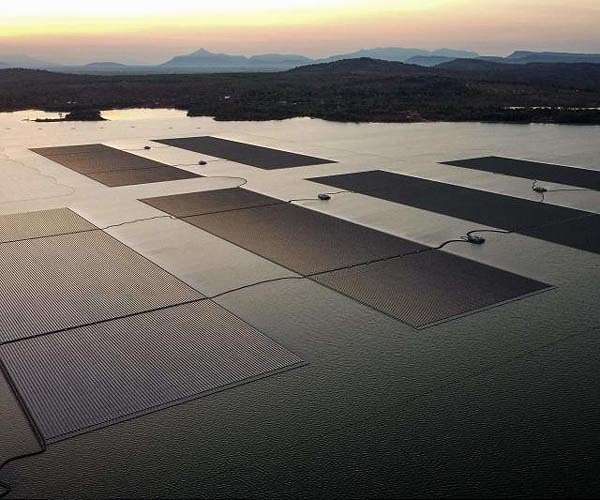
Floating solar panels are emerging as a promising clean energy solution with environmental benefits, but a new study shows that these impacts vary significantly depending on where the systems are deployed.
Researchers from Oregon State University and the US Geological Survey modeled the impact of floating solar photovoltaic systems on eleven reservoirs in six states. Their simulations showed that the systems consistently cooled surface water and changed water temperatures at different layers within the reservoirs. However, the panels also introduced greater variability in habitat suitability for aquatic species.
“Different reservoirs will respond differently based on factors such as depth, circulation dynamics and the fish species important to management,” said Evan Bredeweg, lead author of the study and a former postdoctoral researcher at Oregon State. “There’s no one-size-fits-all formula for designing these systems. It’s ecology — it’s messy.”
Although the floating solar market is established and growing in Asia, it remains limited in the United States, mainly to small pilot projects. However, a study published earlier this year by the U.S. Department of Energy’s National Renewable Energy Laboratory estimated that U.S. reservoirs could house enough floating solar panel systems to generate up to 1,476 terawatt hours annually, enough to power about 100 million homes.
Floating solar panels offer several advantages. The cooling effect of the water can increase panel efficiency by an estimated 5 to 15%. The systems can also be integrated with existing hydropower and transmission infrastructure. They can also help reduce evaporation, which is especially valuable in warmer, drier climates.
However, these benefits raise questions about the potential impacts on aquatic ecosystems, an area that has received limited scientific attention.
“Understanding the environmental risks and variability in ecological responses to floating solar energy is crucial for informing regulators and guiding the development of sustainable energy,” said Bredeweg.
The new study used advanced modeling techniques to assess the implications of deploying floating solar panels on entire reservoirs. Researchers examined reservoirs in Oregon, Ohio, Washington, Idaho, Tennessee and Arkansas, analyzing two-month periods in both summer and winter.
They found that changes in temperature and oxygen dynamics caused by floating solar panels can affect habitat availability for both warm-water and cold-water fish species. For example, colder water temperatures in summer are generally beneficial for cold-water species, although this effect is most pronounced when panel coverage exceeds 50%.
The researchers point to the need for continued research and long-term monitoring to ensure floating photovoltaic systems support clean energy goals without endangering aquatic ecosystems.
“History has shown that large-scale modifications to freshwater ecosystems, such as hydroelectric dams, can have unforeseen and lasting consequences,” said Bredeweg.
Co-authors of the paper include Ivan Arismendi of the Oregon State Department of Fisheries, Wildlife, and Conservation Sciences; Sarah Henkel of the Hatfield Marine Science Center, Oregon; and Christina Murphy of the US Geological Survey’s Maine Cooperative Fish and Wildlife Research Unit.
Research report:Modeling various environmental responses of reservoirs to floating photovoltaic systems
