
Close Menu
  • News
  • Industry
  • Solar Panels
  • Commercial
  • Residential
  • Finance
  • Technology
  • Carbon Credit
  • More
    • Policy
    • Energy Storage
    • Utility
    • Cummunity
What's Hot

A deep learning model tracks the status of the EV battery with high precision

March 6, 2026

Mitsubishi Electric Trane announces new heat pump line for hydronic heating – SPE

March 6, 2026

Origis is developing a 413 MW solar portfolio in West Texas

March 6, 2026
Facebook X (Twitter) Instagram
Solar Energy News
Friday, March 6
  • News
  • Industry
  • Solar Panels
  • Commercial
  • Residential
  • Finance
  • Technology
  • Carbon Credit
  • More
    • Policy
    • Energy Storage
    • Utility
    • Cummunity
Solar Energy News
Home - News - Folded or cut, this lithium-sulfur battery continues to power devices
News

Folded or cut, this lithium-sulfur battery continues to power devices

solarenergyBy solarenergySeptember 20, 2024No Comments2 Mins Read
Facebook Twitter Pinterest LinkedIn Tumblr Email
Share
Facebook Twitter LinkedIn Pinterest Email

Folded or cut, this lithium-sulfur battery continues to power devices


Most rechargeable batteries that power portable devices such as toys, handheld vacuum cleaners and e-bikes use lithium-ion technology. But these batteries can have a short lifespan and can catch fire if damaged. To address stability and safety concerns, researchers reporting in “ACS Energy Letters” designed a lithium-sulfur (Li-S) battery with an improved iron sulfide cathode. One prototype remains very stable for 300 charge-discharge cycles, and another provides power even after being folded or cut.

Sulfur has been proposed as a material for lithium-ion batteries due to its low cost and potential to retain more energy than lithium metal oxides and other materials used in traditional ion-based versions. To make Li-S batteries stable at high temperatures, researchers have previously proposed using a carbonate-based electrolyte to separate the two electrodes (an iron sulfide cathode and a lithium metal-containing anode). However, when the sulfide in the cathode dissolves in the electrolyte, it forms an impermeable precipitate, causing the cell to quickly lose capacity. Liping Wang and colleagues wondered if they could add a layer between the cathode and the electrolyte to reduce this corrosion without reducing functionality and chargeability.

The team coated iron sulfide cathodes with different polymers and found in initial electrochemical performance testing that polyacrylic acid (PAA) performed best, maintaining the electrode’s discharge capacity after 300 charge-discharge cycles. The researchers then integrated a PAA-coated iron sulfide cathode into a prototype battery design, which also included a carbonate-based electrolyte, a lithium metal foil as an ion source, and a graphite-based anode. They then produced and tested prototypes of both pocket and button cell batteries.

See also  Renewables produced 24% of US energy in the first ten months of 2024

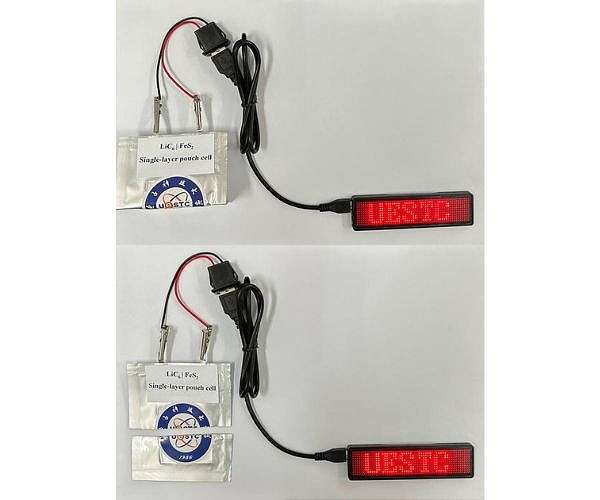
After more than 100 charge-discharge cycles, Wang and colleagues observed no substantial loss of capacity in the pouch cell. Additional experiments showed that the pouch cell still worked after it was folded and cut in half. The coin cell retained 72% of its capacity after 300 charge-discharge cycles. They then applied the polymer coating to cathodes made of other metals, creating lithium-molybdenum and lithium-vanadium batteries. These cells also had a stable capacity over 300 charge-discharge cycles. Overall, the results indicate that coated cathodes could produce not only safer, long-life Li-S batteries, but also efficient batteries with other metal sulfides, Wang’s team said.

Research report:Chelating type binders for stable cycling and highly safe transition metal sulfide based lithium batteries


Source link

battery continues cut devices folded lithiumsulfur power
Share. Facebook Twitter Pinterest LinkedIn Tumblr Email
solarenergy
  • Website

Related Posts

A deep learning model tracks the status of the EV battery with high precision

March 6, 2026

Origis is developing a 413 MW solar portfolio in West Texas

March 6, 2026

Zelestra continues construction of two Texas projects

March 5, 2026
Leave A Reply Cancel Reply

Don't Miss
News

Verogy installs 486 kW solar portfolio for Connecticut school district

By solarenergyMay 13, 20240

The City of Groton Board of Education is proud to announce the installation of solar…

Higher gas prices are driving up some European electricity prices – SPE

January 12, 2025

The American company introduces new solar carports

February 22, 2025

First Solar completes construction of a 1.3 million square foot R&D center

July 18, 2024
Stay In Touch
  • Facebook
  • Twitter
  • Pinterest
  • Instagram
  • YouTube
  • Vimeo
Our Picks

A deep learning model tracks the status of the EV battery with high precision

March 6, 2026

Mitsubishi Electric Trane announces new heat pump line for hydronic heating – SPE

March 6, 2026

Origis is developing a 413 MW solar portfolio in West Texas

March 6, 2026

New Jersey expands state community solar program by 3 GW

March 6, 2026
Our Picks

A deep learning model tracks the status of the EV battery with high precision

March 6, 2026

Mitsubishi Electric Trane announces new heat pump line for hydronic heating – SPE

March 6, 2026

Origis is developing a 413 MW solar portfolio in West Texas

March 6, 2026
About
About

Stay updated with the latest in solar energy. Discover innovations, trends, policies, and market insights driving the future of sustainable power worldwide.

Subscribe to Updates

Get the latest creative news and updates about Solar industry directly in your inbox!

Facebook X (Twitter) Instagram Pinterest
  • Contact
  • Privacy Policy
  • Terms & Conditions
© 2026 Tsolarenergynews.co - All rights reserved.

Type above and press Enter to search. Press Esc to cancel.