
Close Menu
  • News
  • Industry
  • Solar Panels
  • Commercial
  • Residential
  • Finance
  • Technology
  • Carbon Credit
  • More
    • Policy
    • Energy Storage
    • Utility
    • Cummunity
What's Hot

Why the UK solar industry needs to own its safety story

April 23, 2026

Fraunhofer ISE develops colored film technology for patterned solar panels

April 23, 2026

Thermoacoustic heat pumps are on the verge of commercial breakthrough – SPE

April 23, 2026
Facebook X (Twitter) Instagram
Solar Energy News
Thursday, April 23
  • News
  • Industry
  • Solar Panels
  • Commercial
  • Residential
  • Finance
  • Technology
  • Carbon Credit
  • More
    • Policy
    • Energy Storage
    • Utility
    • Cummunity
Solar Energy News
Home - Technology - Fraunhofer develops tandem module for direct hydrogen production – SPE
Technology

Fraunhofer develops tandem module for direct hydrogen production – SPE

solarenergyBy solarenergyJuly 2, 2024No Comments3 Mins Read
Facebook Twitter Pinterest LinkedIn Tumblr Email
Share
Facebook Twitter LinkedIn Pinterest Email

Three Fraunhofer institutes in Germany have developed a tandem module for direct hydrogen production, as a modular, flexible alternative to large electrolyzers. PV is an additional power supply.

July 2, 2024 Jochen Siemer

By pv magazine Germany

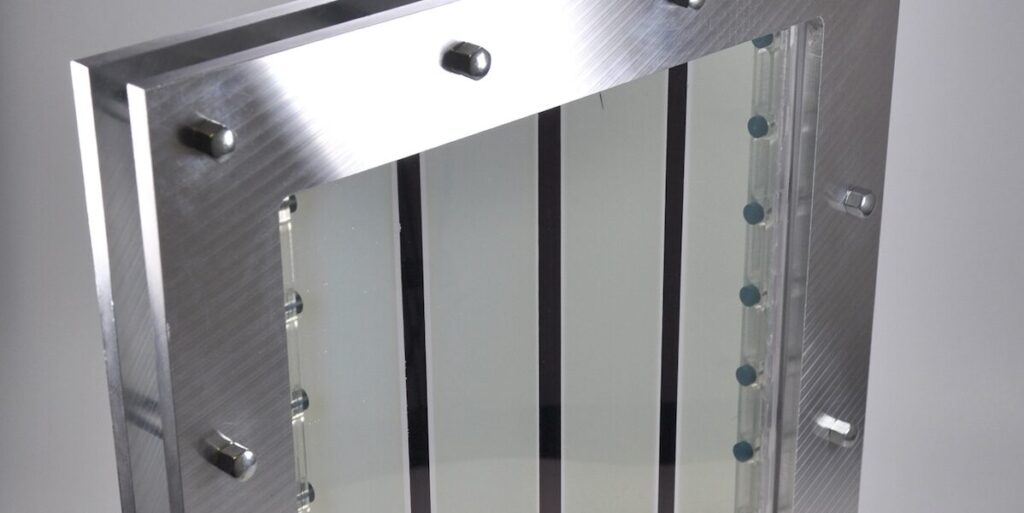
Three Fraunhofer institutes in Germany have developed “an exciting alternative” for the production of hydrogen using electrolyzers in the joint research project Neo-PEC. “PEC” stands for “photoelectrochemical cell”, a cell that allows direct splitting of solar water.

The solution from the research project, presented in June, consists of a module with an area of ​​approximately half a square meter that can be connected to larger units and enables ‘highly flexible hydrogen production using solar energy’.

The “tandem PEC module” consists of two panes of float glass coated with semiconducting materials. One side absorbs short-wave light, while long-wave light penetrates the top layer of glass and is absorbed at the back. The module emits hydrogen at the back (cathode) and oxygen at the top (anode), with the two elements being separated.

During the three-year project, researchers developed high-purity semiconductor materials that were applied using “particularly gentle coating processes,” increasing hydrogen yield.

Ultra-thin layers measuring nanometers are built onto the glass via the gas phase, says Arno Görne, group leader for functional materials at the Fraunhofer Institute for Ceramic Technologies and Systems IKTS.

“The structures created have a major influence on the reactor activity, in addition to the actual material properties, which we have also optimized,” he said. The system is supplied with additional voltage via ‘photovoltaic elements’ in the module, which work ‘like a turbo, accelerating activity and increasing efficiency’.

See also  Iberdola-led project develops solid-state battery module for stationary storage – SPE

Popular content

The result is a reactor that generates hydrogen separately from oxygen, which can be collected directly. Under European radiation conditions, as much as 30 kg of hydrogen can be generated with 100 square meters of module surface. This allows a hydrogen car to travel 15,000 to 20,000 km. By comparison, solar modules in Central Europe could generate about 16,000 kWh of electrical energy, enough to electrolyze about 300 kg of hydrogen.

According to Görne, the dimensions of the individual units are “limited by the fact that our module splits the water directly, but this also requires electricity to go from one side to the other. As the module surface increases, the increasing resistance affects the system.” The current format is optimal at this stage of development because it is “stable, robust and significantly larger than all comparable solutions.” An important advantage is the scalability of connecting multiple modules.

The other two institutes involved – the Fraunhofer Institute for Surface Engineering and Thin Films IST and the Fraunhofer Center for Silicon Photovoltaics CSP – conducted several field tests. They want to continue the collaboration in a follow-up project and plan to involve companies.

This content is copyrighted and may not be reused. If you would like to collaborate with us and reuse some of our content, please contact: editors@pv-magazine.com.

Source link

develops direct Fraunhofer hydrogen module production SPE tandem
Share. Facebook Twitter Pinterest LinkedIn Tumblr Email
solarenergy
  • Website

Related Posts

Fraunhofer ISE develops colored film technology for patterned solar panels

April 23, 2026

Thermoacoustic heat pumps are on the verge of commercial breakthrough – SPE

April 23, 2026

Zendure launches battery ranges for residential PV – SPE

April 23, 2026
Leave A Reply Cancel Reply

Don't Miss
Technology

Eternal Sun offers solar simulators for space PV testing – SPE

By solarenergyDecember 11, 20250

A new optional Light Emitting Diode (LED) board, pre-calibrated for AM0 testing, is available for…

Front cubes to work until 2026 while the mission is spreading worldwide

August 23, 2025

Environmental and renewable energy groups are suing the IRS and Treasury Department

December 18, 2025

Buying Solar Panels in Colorado Springs, CO

April 26, 2024
Stay In Touch
  • Facebook
  • Twitter
  • Pinterest
  • Instagram
  • YouTube
  • Vimeo
Our Picks

Why the UK solar industry needs to own its safety story

April 23, 2026

Fraunhofer ISE develops colored film technology for patterned solar panels

April 23, 2026

Thermoacoustic heat pumps are on the verge of commercial breakthrough – SPE

April 23, 2026

The federal court has halted Trump administration orders that hinder solar and wind energy development

April 23, 2026
Our Picks

Why the UK solar industry needs to own its safety story

April 23, 2026

Fraunhofer ISE develops colored film technology for patterned solar panels

April 23, 2026

Thermoacoustic heat pumps are on the verge of commercial breakthrough – SPE

April 23, 2026
About
About

Stay updated with the latest in solar energy. Discover innovations, trends, policies, and market insights driving the future of sustainable power worldwide.

Subscribe to Updates

Get the latest creative news and updates about Solar industry directly in your inbox!

Facebook X (Twitter) Instagram Pinterest
  • Contact
  • Privacy Policy
  • Terms & Conditions
© 2026 Tsolarenergynews.co - All rights reserved.

Type above and press Enter to search. Press Esc to cancel.