

Germany has connected the world’s first supercapacitor-based STATCOM to the grid, with Siemens Energy and transmission system operator TenneT positioning it as a blueprint to replace fossil fuel generators by providing instant reserve and reactive power.
A supercapacitor-based grid stabilization system has been put into operation in Mehrum, Germany, marking a world first in power system control technology.
Siemens Energy and transmission system operator TenneT have installed an electronic static synchronous compensator (STATCOM) with supercapacitor storage, which the companies describe as the first system of its kind to be deployed on a live grid.
The technology is designed to provide instant reserve and reactive power, functions historically provided by the rotating masses of large generators of fossil fuel power plants.
The system, branded SVC Plus FS, differs from conventional STATCOM installations in that it uses supercapacitors instead of batteries or mechanical inertia. The devices can deliver very high currents within milliseconds, allowing frequency deviations to be quickly compensated.
“No one has ever built a supercapacitor-powered STATCOM before,” said Hauke Jürgensen, senior vice president of grid solutions at Siemens Energy. “This sets a benchmark for the global energy transition.”
Technology development took more than ten years, followed by approximately three years of construction.
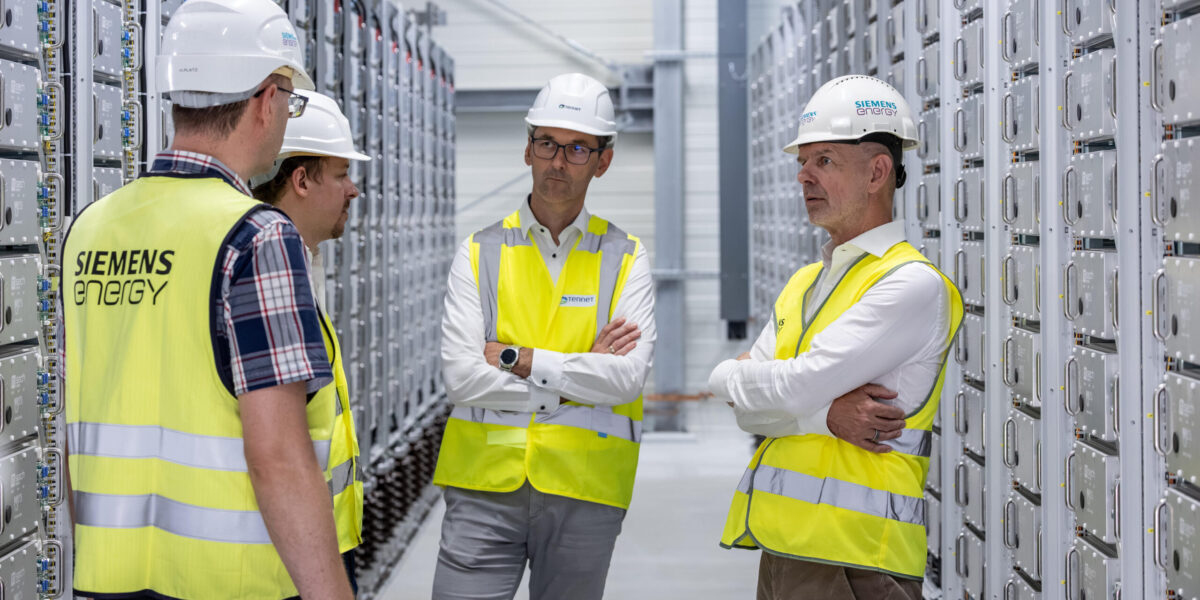
Within the facility, supercapacitors are arranged in racks, with each individual cell about the size of a beverage can. Together, the system forms a short-lived energy reservoir that can provide artificial inertia to the power grid. Modular power converters manage switching pulses and reactive power compensation. The installation works fully automatically and can be monitored and controlled remotely, including the diagnostic and control algorithms.
TenneT expects that around thirty similar systems will be needed across Germany, with additional projects already in the planning phase.
“Mehrum is a benchmark project,” said Jürgensen. “It shows that grid stability can be maintained without baseload power from fossil fuels.”
The project is still in a testing phase and is expected to gradually transition to commercial operation in the coming months, demonstrating how supercapacitors can replace the grid stabilizing functions once provided by large rotating masses.
This content is copyrighted and may not be reused. If you would like to collaborate with us and reuse some of our content, please contact: editors@pv-magazine.com.
