
Close Menu
  • News
  • Industry
  • Solar Panels
  • Commercial
  • Residential
  • Finance
  • Technology
  • Carbon Credit
  • More
    • Policy
    • Energy Storage
    • Utility
    • Cummunity
What's Hot

Origis is developing a 413 MW solar portfolio in West Texas

March 6, 2026

New Jersey expands state community solar program by 3 GW

March 6, 2026

How to address imbalance datasets in solar panel dust detection

March 5, 2026
Facebook X (Twitter) Instagram
Solar Energy News
Friday, March 6
  • News
  • Industry
  • Solar Panels
  • Commercial
  • Residential
  • Finance
  • Technology
  • Carbon Credit
  • More
    • Policy
    • Energy Storage
    • Utility
    • Cummunity
Solar Energy News
Home - Solar Industry - How to find optimum PV placement in mountain areas
Solar Industry

How to find optimum PV placement in mountain areas

solarenergyBy solarenergyMay 6, 2025No Comments3 Mins Read
Facebook Twitter Pinterest LinkedIn Tumblr Email
Share
Facebook Twitter LinkedIn Pinterest Email

The WSL Institute for Snow and Avalanche Research (SLF) in Switzerland is investigating how the solar yield can be optimized in snow covered with snow. It is foreseen that the results will help to place PV systems on mountains, so that they use light that is reflected by adjacent slopes.

May 6, 2025
Patrick Jowett

A research project in Switzerland Works to determine where and how solar modules can best be placed in mountain areas to generate as much electricity as possible.

The research is being conducted by the WSL Institute for Snow and Avalanche Research (SLF), with PhD student and researcher Anja Mödl who leads the work.

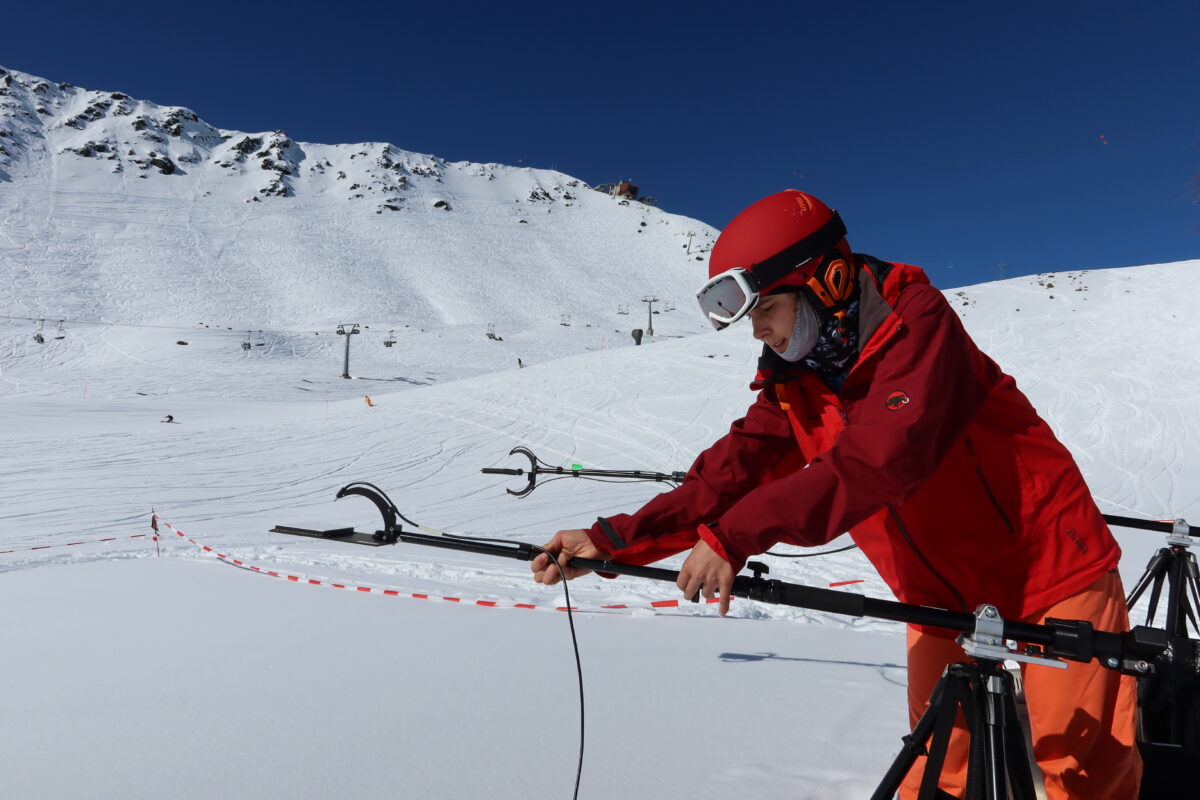
Mödl works in the Meierhof region in East -Switzerland and uses sensors that can register wavelengths of between 340 and 2500 nanometers to measure both the incoming sunlight and the sunlight that is reflected by the snow.

Schematic representation of the experimental arrangement.

Image: Anja Mödl/Jochen Bettzieche/SLF

In mountainous areas, most of the sunlight that reflects snow on other slopes, which in turn reflects the sunlight again. Since the snow surface reflects different wavelengths to varying degrees, the light spectrum changes with every reflection.

The research emphasizes that the intensity of certain wavelengths becomes stronger over time than in the first, incoming sunlight. Mödl says that she wants to discover how the spectra differ in different locations such as on the south -facing slopes, slopes on the north and those in between.

These findings would help to optimize PV system locations by ensuring that the installation uses From the light that is reflected by adjacent slopes, so that they can generate more electricity in the winter months.

See also  Spanish researchers find that updating modules and inverters is the most profitable strategy – SPE

Mödl explained that the data collected so far will be analyzed in the summer, compared to data from model calculations.

To date, Mödl has taken measurements around the middle of the day, on days when there is no cloud cover. But she emphasized that in order to draw good conclusions, data must be included under a series of conditions, which means that the project will continue again next winter.

Last year other SLF researchers Used drones To measure the depths of snow in an area where a solar park would be located.

Research by ETH Zurich last August investigated the Financial viability from Alpine PV projects in Switzerland.

This content is protected by copyright and may not be reused. If you want to work with us and reuse part of our content, please contact: editors@pv-magazine.com.

Popular content
Source link

areas find Mountain optimum placement
Share. Facebook Twitter Pinterest LinkedIn Tumblr Email
solarenergy
  • Website

Related Posts

How to address imbalance datasets in solar panel dust detection

March 5, 2026

Zelestra continues construction of two Texas projects

March 5, 2026

Heliup raises €16 million to scale up the production of lightweight solar panels

March 5, 2026
Leave A Reply Cancel Reply

Don't Miss
Technology

Researchers find agricultural voltaics has an LCOE of $0.039/kWh, a payback period of seven years in India – SPE

By solarenergyJuly 26, 20240

Indian researchers compared the performance of an agrivoltaic system with monofacial and bifacial rooftop PV…

The installations of the solar energy system influence less than 1 percent of AG soil from Arkansas

June 2, 2025

India will limit 2.3 TWh of solar energy between May and December 2025 – SPE

January 28, 2026

Nicaragua is starting to work on 70 MW Solar Plant, largest to date – PV Magazine International

June 16, 2025
Stay In Touch
  • Facebook
  • Twitter
  • Pinterest
  • Instagram
  • YouTube
  • Vimeo
Our Picks

Origis is developing a 413 MW solar portfolio in West Texas

March 6, 2026

New Jersey expands state community solar program by 3 GW

March 6, 2026

How to address imbalance datasets in solar panel dust detection

March 5, 2026

Oleic acid anti-pollution coating for solar panels – SPE

March 5, 2026
Our Picks

Origis is developing a 413 MW solar portfolio in West Texas

March 6, 2026

New Jersey expands state community solar program by 3 GW

March 6, 2026

How to address imbalance datasets in solar panel dust detection

March 5, 2026
About
About

Stay updated with the latest in solar energy. Discover innovations, trends, policies, and market insights driving the future of sustainable power worldwide.

Subscribe to Updates

Get the latest creative news and updates about Solar industry directly in your inbox!

Facebook X (Twitter) Instagram Pinterest
  • Contact
  • Privacy Policy
  • Terms & Conditions
© 2026 Tsolarenergynews.co - All rights reserved.

Type above and press Enter to search. Press Esc to cancel.