

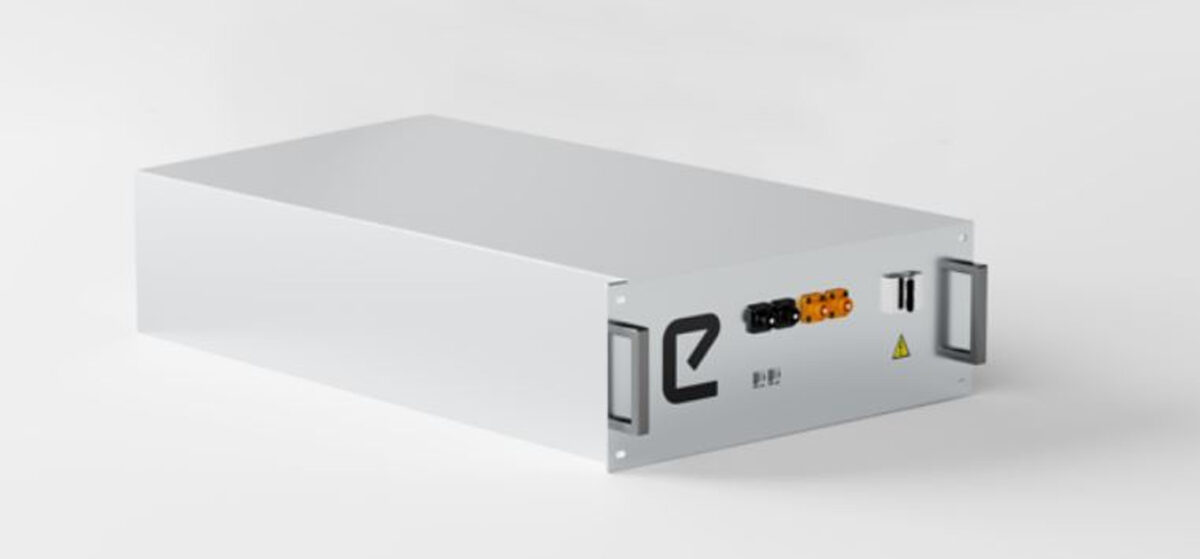
At a time of growing demand for battery energy storage, pv magazine spoke with Eloisa de Castro, CEO of Enerpoly, a Swedish company preparing to launch the world’s first zinc-ion battery mega-factory on its own territory. Now that the rechargeability issues have been resolved, the company expects its safe and durable zinc-ion batteries, which rely solely on a European supply chain, to increase their market share in the coming years.
From pv magazine ESS news place
The energy storage market was worth between $44 billion and $55 billion in 2023, and is expected to reach $150 billion by 2030. However, the market faces major economic and supply challenges associated with the use of batteries made with scarce and price volatile materials. . How can your company help address these issues?
Eloisa de Castro: Enerpoly develops and produces batteries with zinc and manganese as active materials. The strategic use of globally available and reusable materials plays an important role in ensuring a stable and reliable supply chain that can withstand price volatility and geographic constraints. Our zinc-ion batteries are 100% dependent on a European supply chain, which strengthens their resilience.
Environmentally friendly, cost-effective and safe, our batteries meet a variety of large-scale stationary energy storage needs, including grid stabilization services or reliable backup power. Essentially, the properties of our batteries allow us to provide scalable, reliable and sustainable energy storage solutions.
Enerpoly’s technology meets the affordability, safety and sustainability requirements that are essential for the transition to clean energy. Furthermore, our recent grant from the Swedish Energy Agency, which will be used to build the world’s first zinc ion battery mega-factory, shows that zinc ion batteries can be mass-produced affordably and at scale.
How did you solve the rechargeability issues typical of zinc-ion batteries?
Enerpoly has implemented several key innovations to address these issues. Our zinc-ion batteries use a zinc metal anode and manganese dioxide cathode. We have developed strategies that limit the formation of inactive manganese species. This is important because manganese oxide can change phase to the electrochemically inactive Mn3O4 and cause battery degradation. This innovation significantly improves both battery performance and rechargeability.
Secondly, we had to address the problem of zinc dendrite formation on the anode. Zinc ndrites can cause a short circuit. We have developed a proprietary electrolyte and controlled battery approach to prevent dendrites. Every time an innovation takes place in one component, the optimization of the battery as a whole must be taken into account, and we have taken careful care to balance any side reactions that may occur with each new change.
What would the rise of zinc-ion batteries mean for the supply chain and zinc prices?
Zinc is already used in a variety of industrial applications, so an increase in demand for zinc batteries is unlikely to lead to major price fluctuations. Zinc ion batteries are better insulated against supply chain issues and inflation that have affected the energy sector in recent years. If you look at zinc prices compared to lithium prices in 2022 and 2023, when commodity prices were the most volatile, lithium had price volatility of 14x and zinc around 1x.
In addition, I expect that the existing recycling of zinc and the extraction of zinc from other important industrial applications will create a more circular supply chain and make purchasing flexible, keeping the price quite low and stable. Enerpoly’s focus on zinc, a more stable and less geopolitically bound material, positions us to appropriately manage any cost instability even as demand increases.
How viable is zinc mining and refining?
This is to zinc’s advantage: zinc is mined responsibly and sustainably in Europe, and there is 200 times more mining capacity for zinc than for lithium in Europe. In terms of refined materials for batteries, Enerpoly uses similar materials as in non-rechargeable zinc-alkaline batteries, and the refining and production of zinc for European battery production has been successfully and reliably carried out for decades by the suppliers of existing European battery giants. for the non-rechargeable version of this battery. I can’t say with certainty that we will never encounter problems, but I am confident that the chances of us encountering major obstacles are very, very small.
In addition to supply chain issues, lithium-ion batteries also pose significant safety risks and face sustainability challenges in their manufacturing and recycling processes. How are zinc-ion batteries different?
Enerpoly’s zinc-ion batteries do not use components that can cause thermal flooding, and our zinc-ion batteries, unlike other battery chemistries, are not classified as dangerous goods and are therefore safe for transport and storage. Some potential positive effects of increased safety include further reduced costs due to no need for specialized fire suppression components and lower insurance costs, and the ability to be deployed in safety-critical applications and in dense urban areas without the risk of explosions.
Enerpoly batteries also use state-of-the-art dry electrode manufacturing and require no dry areas or toxic solvents in production, significantly reducing energy consumption in their production. Because our batteries use similar materials to the proven non-rechargeable zinc-alkaline batteries, there is already an existing recycling infrastructure available for global recycling, further contributing to a low-carbon economy and, interestingly, potentially making the batteries even more cost-effective due to lower costs for decommissioning batteries that have reached the end of their service life.
To read further, visit our new EES news website.
This content is copyrighted and may not be reused. If you would like to collaborate with us and reuse some of our content, please contact: editors@pv-magazine.com.
