

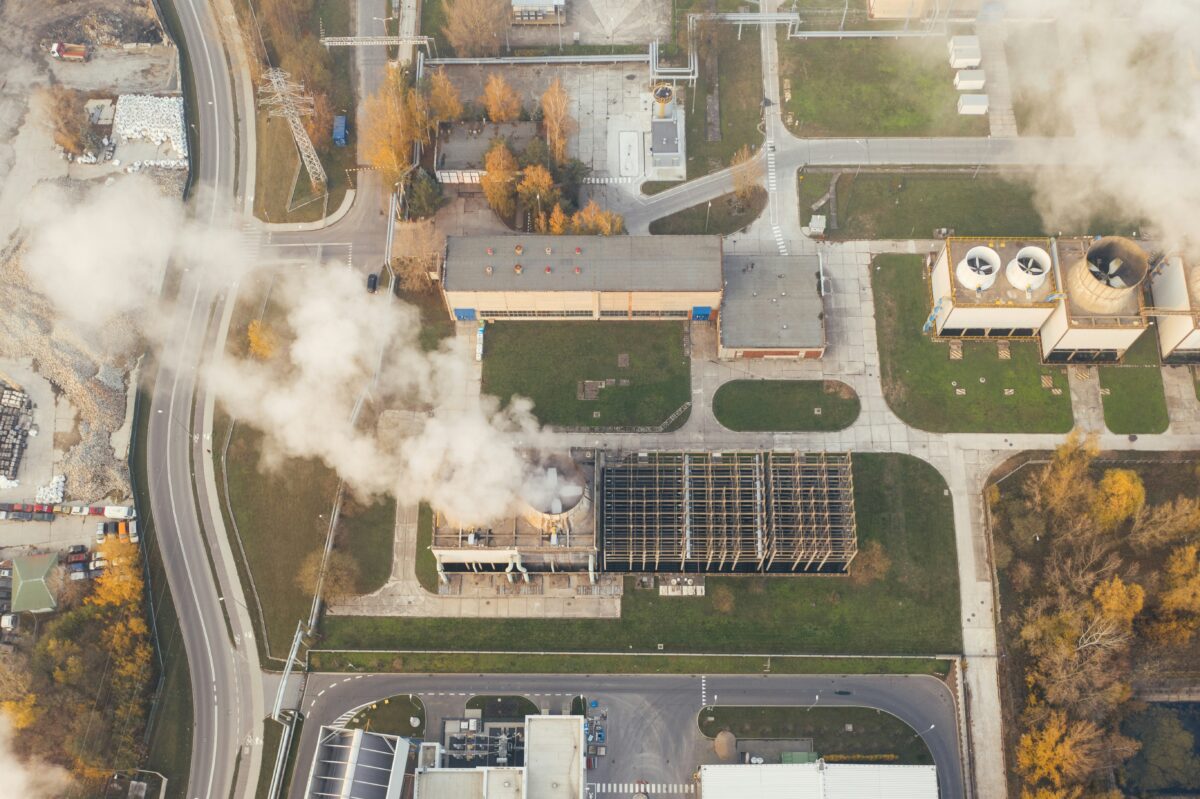
The IEC has launched a new portfolio of carbon footprint verification services to help build trust and credibility in companies’ commitment to monitoring and reducing their emissions.
As global urgency for climate action increases, companies around the world are trying to reduce their emissions, even as progress remains slow. According to the United Nations Sustainable Development Goals (SDGsTo achieve global climate action goals, greenhouse gas (GHG) emissions must peak before 2025 and decline thereafter 43% by 2030. We are already at the end of 2024 and the world is lagging behind on its climate action commitments, something noted at many crucial climate summits in 2024, including the world’s largest climate conference COP 29 in November.
But it’s not all gloomy news. The World Economic Forum Net Zero Industry Tracker 2024 highlights that five of the eight hard-to-fight sectors (including steel, cement, aluminium, primary chemicals and oil and gas) managed to reduce their emissions intensity by 4.1% between 2019 and 2023. This progress is a testament to the potential of technological innovation, including in solar energy technology, and supporting policies to promote sustainable practices.
Companies are increasingly turning to reliable indicators to prove their commitment to reducing emissions. The new portfolio of IEC carbon footprint claims verification services helps companies build trust and transparency in the ethical and sustainable practices of their products and technology.
Carbon credit tracking
Monitoring and reporting the carbon footprint is high on the agenda of most global climate action plans. One of the most important outcomes of COP29 the agreement stated to international carbon market standards. These standards are intended to facilitate the trading of carbon credits across borders, making it easier for companies to offset their emissions and contribute to global climate goals.
For companies, this means that tracking their carbon footprint is no longer just a matter of corporate responsibility; it is a necessity to participate in the international CO2 markets. Companies that want to earn carbon credits and sell them in these markets must adhere to strict reporting and verification standards to ensure emissions reductions are credible and transparent.
New IEC carbon footprint verification services
The IEC issues verification statement certificates to verify carbon footprint claimsissued by the IEC Quality Assessment System, IECQas part of the IECQ Approved Process Scheme. Obtaining an IEC Verification Statement Certificate provides independent assurance that an organization has made its carbon footprint claims in accordance with internationally agreed standards, such as but not limited to ISO14067.
A new portfolio of services has been launched, specifically for verifying CO2 claims at different levels and areas for companies. The services are also responding to calls for an internationally harmonized approach to verifying such claims, which will help combat greenwashing. These IEC environmental verification services are offered as ‘horizontal services’, meaning they include carbon footprint verification across a variety of different industries.
- Product carbon footprint (verification of compliance with ISO 14067)
This IEC verification ensures that the product’s carbon footprint (PCF), as declared by the supplier, has been determined in accordance with the international standard ISO14067. The ISO 14067 standard provides principles, requirements and guidelines for quantifying and reporting the carbon footprint of products throughout their life cycle. It measures the environmental impact of a product, from raw material extraction to disposal.
International IEC Verification Statement Certificates are useful to any manufacturer in any industry to provide evidence of its sustainable approach, as well as to its customers and the markets that the manufacturer has been independently verified by a trusted source, the IEC. - CO2 footprint at organizational level (verification of compliance with ISO 14064-1)
This IEC verification helps companies measure and report their total greenhouse gas emissions and removals across their organization, providing a comprehensive view of their impact on the environment.
This IEC verification service provides assurance that companies follow ISO 14064-1 when determining their declared environmental footprint. With this service you can demonstrate that the entire organization is committed to reliable carbon footprint reporting, not just for a specific product. - Carbon footprint of hydrogen (verification of compliance with ISO19870)
In a fast-growing green hydrogen economy, this IEC international verification service is being launched to meet the huge demand from players working with hydrogen technologies and in collaboration with ISO technical committees such as TC/197.
This verification service provides assurance that companies follow ISO 19870:2023, which concerns methodologies for determining greenhouse gas emissions associated with the production, conditioning and transport of hydrogen.
This verification service helps verify the measurement and reporting of emissions, throughout the life cycle of hydrogen use, starting from production, through transport and conditioning, to end-user consumption, according to the ISO standard.
These international standards have long been the benchmark used by the industry. With the introduction of new IEC environmental verification services through their IECQ conformity assessment services, manufacturers can now provide verifiable and internationally recognized assurance. This move not only increases transparency, but also strengthens the credibility of their sustainability efforts and helps build trust globally.
The value of certificates
The IEC conformity assessment services provide significant value through the IECQ certificates to companies striving to achieve global sustainability goals. By obtaining these IECQ Verification Statement Certificates, companies can:
- Improve credibility and trust: Achieving IEC verification through IECQ services demonstrates a genuine commitment to reducing carbon footprint, helping companies build trust and reputation in the market.
- Limit the risks of greenwashing: With IEC verification through IECQ, companies can distinguish their real sustainability efforts from superficial or misleading claims, reducing the risk of greenwashing accusations.
- Facilitate compliance and market access: Many regulatory and voluntary initiatives require or promote independently verified carbon footprint management. The IEC, through IECQ, can help companies demonstrate that they meet these requirements, gaining access to new markets and opportunities.
- Strategic decision support: Reliable data on greenhouse gas emissions and reductions provides valuable insights for making informed strategic decisions, such as identifying emissions reduction opportunities and managing carbon risks, reducing energy consumption and ultimately increasing profitability.
- Stimulate innovation: Monitoring and reporting also encourage companies to invest in innovative solutions to reduce their carbon emissions and improve their impact on the environment.
As companies navigate the complexity of climate obligations, reliable carbon footprint targets become indispensable. By adhering to verifiable standards and obtaining recognized assurances, companies can lead the way towards a sustainable and net-zero future. And IEC verification services exist to enable this transition, building trust and reputation while driving real environmental change.
The International Electrotechnical Commission (IEC) is a global non-profit membership organization that unites 174 countries and coordinates the work of 30,000 experts worldwide. International IEC standards and conformity assessment are the basis of international trade in electrical and electronic goods. They facilitate access to electricity and verify the safety, performance and interoperability of electrical and electronic devices and systems, including, for example, consumer equipment such as mobile phones or refrigerators, office and medical equipment, information technology, electricity generation and much more.
The views and opinions expressed in this article are those of the author and do not necessarily reflect those of the author pv magazine.
This content is copyrighted and may not be reused. If you would like to collaborate with us and reuse some of our content, please contact: editors@pv-magazine.com.
