

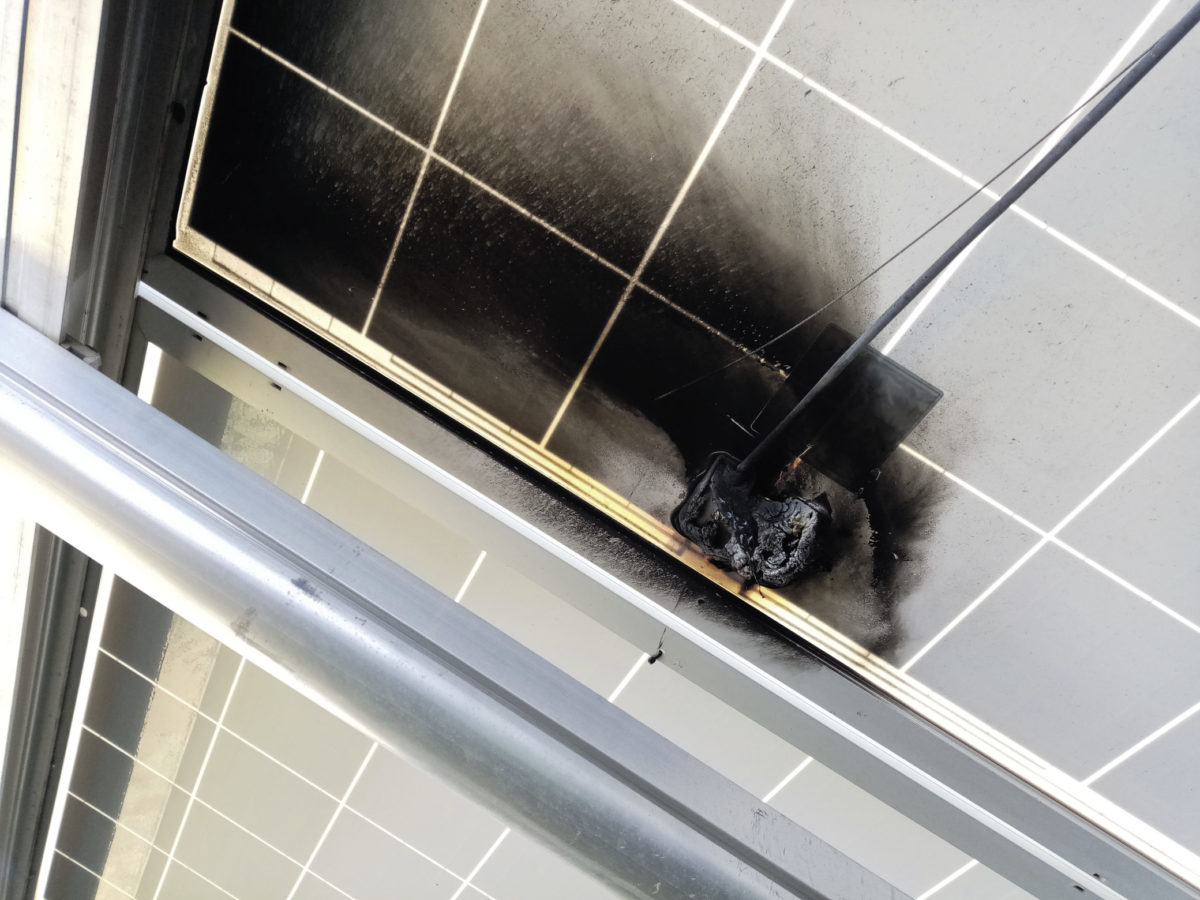
New UNSW research has found that around 20% of solar panels in large PV installations are deteriorating much faster than expected. They recommend holistic strategies such as robust materials, advanced designs and proactive monitoring to decouple degradation pathways and prevent cascading failures.
A group of researchers from the University of New South Wales (UNSW) studied the ‘long tail’ phenomenon in large-scale photovoltaic installations and found that about 20% of solar modules used in the field deteriorate much faster than expected.
The “long tail” occurs when a significant number of modules in the same facility underperform expectations, creating significant risk for asset owners. It’s called “long tail” because the graph showing energy output over time shows a curve with a high peak and a long, low tail.
“The study shows that the long tail of extreme PV degradation is an intrinsic feature of PV farms and is observed across all climates and project types, rather than being limited to specific regions or technologies. Even when data is analyzed within individual climate zones, such as hot desert, Mediterranean, temperate, a pronounced long tail persists, indicating that extreme underperformance is not simply the result of the merger of different climates,” said the study’s corresponding author, Shukla Poddar, pv magazine. “That said, climate and project context influence how severe tailing becomes. Hot, dry, or hot-humid areas tend to exhibit higher average degradation rates and heavier tails because thermal stress, UV exposure, and moisture accelerate multiple degradation mechanisms simultaneously.”
“The research also shows that the most extreme degradation often occurs when multiple mechanisms occur together and reinforce each other, for example degradation of the backsheet that allows moisture to enter, which then accelerates corrosion, hot spots and discoloration,” she continued. “Avoiding this trade-off requires robust material selection, such as durable backplates or glass-glass designs, compatible encapsulants, modules and architectures that limit electrical mismatch, rigorous manufacturing quality control to reduce infant mortality, and proactive field monitoring and maintenance. Defaults are moving toward combined stress testing for simultaneous UV/heat/humidity cycles so that modules survive real-world conditions. In practice, this means that factories must not only pass each IEC test individually, but synergistic loads should also be considered. Collectively, these measures aim to decouple degradation pathways so that an initial defect or stressor does not propagate into a chain of failures that pushes modules into the extreme ‘long tail’ of degradation.”
The main factors contributing to the ‘long tail’ include potential induced degradation (PID, light-induced degradation (LID), thermal cycling or temperature stress, moisture and moisture ingress, mechanical stress caused by wind, snow and hail, as well as UV-induced polymer degradation in encapsulants and backing sheets.
To investigate them, the researchers proceeded in three main steps. First, they investigated whether the long tail is simply a statistical artifact resulting from merging global data, by running separate analyzes for each climate zone. They then examined the relationships among eight common degradation mechanisms to determine whether their co-occurrence is a defining characteristic of severely degraded modules. Finally, they took into account the temporal dynamics of the long tail, analyzing both the age distribution over the entire data set and longitudinal evidence from individual systems to understand the wear and tear of modules over time.
The analysis showed that the long tail observed in field data reflects a combination of three factors: early failures from initial defects, performance loss due to interacting degradation mechanisms, and long-term wear from latent defects. This multifactorial view explains, the researchers say, why degradation distributions in the real world are ‘skewed’.
“The long tail appears in graphs showing the annual degradation rate of the panels, indicating that up to 20% of all samples perform 1.5 times worse than the average,” they also stated. “In other words, a significant number of panels do not degrade at a constant rate over a long period of time, as might be expected, but instead lose energy or fail unexpectedly much sooner.”
They proposed addressing all issues related to the ‘long tail’ phenomenon through a holistic approach. “In the context of our research, a holistic approach means going beyond treating individual failure modes in isolation and instead designing, manufacturing and operating PV systems to avoid cascading or interacting degradation mechanisms,” Poddar explains.
As key mitigation strategies, the group proposed to decouple degradation pathways through a robust design and to reduce degradation interactions through an advanced module structure. “Future work and industry efforts should focus on improving initial quality, understanding and preventing the interaction between associated degradation modes, and implementing module designs that are inherently more tolerant to the inevitable emergence of cell-level inconsistencies over time,” they concluded.
Their findings can be found in the study “Understand and reduce the risk of extreme photovoltaic degradation”, published in the IEEE Journal of Photovoltaics.
This content is copyrighted and may not be reused. If you would like to collaborate with us and reuse some of our content, please contact: editors@pv-magazine.com.
