
Close Menu
  • News
  • Industry
  • Solar Panels
  • Commercial
  • Residential
  • Finance
  • Technology
  • Carbon Credit
  • More
    • Policy
    • Energy Storage
    • Utility
    • Cummunity
What's Hot

Dutch solar owners asked to switch off during peak periods to ease the distribution crisis

June 7, 2026

The hydrogen flow: Toyota demonstrates its racing prototype on liquid hydrogen

June 7, 2026

Era of electrification exposing Australia’s weakest link

June 6, 2026
Facebook X (Twitter) Instagram
Solar Energy News
Sunday, June 7
  • News
  • Industry
  • Solar Panels
  • Commercial
  • Residential
  • Finance
  • Technology
  • Carbon Credit
  • More
    • Policy
    • Energy Storage
    • Utility
    • Cummunity
Solar Energy News
Home - News - Hydrogels use sunlight for sustainable hydrogen production
News

Hydrogels use sunlight for sustainable hydrogen production

solarenergyBy solarenergyNovember 8, 2024No Comments3 Mins Read
Facebook Twitter Pinterest LinkedIn Tumblr Email
Share
Facebook Twitter LinkedIn Pinterest Email

Hydrogels use sunlight for sustainable hydrogen production


Scientists have long tried to replicate how plants convert sunlight into energy, with the aim of developing renewable energy alternatives through artificial photosynthesis. This process uses sunlight to drive chemical reactions that produce clean energy. Yet developing synthetic systems that mimic natural photosynthesis has remained an elusive goal.

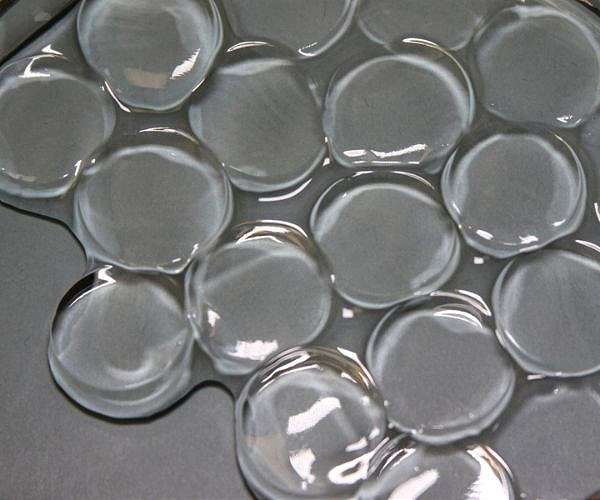
Now, researchers from the Japan Advanced Institute of Science and Technology (JAIST) and the University of Tokyo have introduced a bio-inspired hydrogel that can split water into hydrogen and oxygen using sunlight. This innovation marks significant progress in clean energy research, with hydrogen being recognized as a promising fuel source for the future. Unlike existing methods such as solar photovoltaics and electrolysis, which require external energy, this hydrogel system uses sunlight directly for water splitting, potentially increasing efficiency and reducing costs. The findings were recently published in ‘Chemical Communications’.

The team, led by Associate Professor Kosuke Okeyoshi, PhD student Reina Hagiwara at JAIST, and Professor Ryo Yoshida at the University of Tokyo, designed hydrogels with specialized polymer networks that facilitate electron transfer, a crucial component in water splitting. The hydrogels contain functional molecules, such as ruthenium complexes and platinum nanoparticles, that work together to mimic photosynthesis.

“The biggest challenge was figuring out how to arrange these molecules so that they could transfer electrons smoothly,” says Prof. Okeyoshi. “By using a polymer network, we were able to prevent them from clumping together, which is a common problem in synthetic photosynthetic systems.”

First author and Ph.D. student Reina Hagiwara emphasized: “What is unique here is how the molecules are organized within the hydrogel. By creating a structured environment, we have made the energy conversion process much more efficient.”

See also  EU allocates 1.1 GW of electrolysis capacity at third hydrogen auction, lowest bid is €0.44/kg – SPE

A major achievement of this research is the ability of the hydrogels to prevent the aggregation of functional molecules, a long-standing problem in artificial photosynthetic systems. This improvement led to improved hydrogen production, surpassing the performance of previous methods.

This development offers potential for transforming clean energy production. Producing hydrogen using only water and sunlight could pave the way for a sustainable energy future, replacing fossil fuels. “Hydrogen is a fantastic energy source because it is clean and renewable. Our hydrogels offer a way to produce hydrogen using sunlight, which could help sustainably reshape energy technologies,” said Prof. Okeyoshi.

While these findings are promising, the researchers acknowledge that further work is needed. Scaling up hydrogel production and ensuring long-term stability are the next steps. “We have shown the potential, but now we need to refine the technology for industrial use,” added Prof. Okeyoshi. “The possibilities are exciting and we are eager to move forward.”

Future efforts will also focus on improving the design of the hydrogels to further optimize energy conversion efficiency. The team’s commitment to advancing sustainable energy solutions remains steadfast.

Research report:Bioinspired hydrogels: polymeric designs for artificial photosynthesis


Source link

Hydrogels hydrogen production sunlight Sustainable
Share. Facebook Twitter Pinterest LinkedIn Tumblr Email
solarenergy
  • Website

Related Posts

The hydrogen flow: Toyota demonstrates its racing prototype on liquid hydrogen

June 7, 2026

The Hydrogen Stream: JCN launches a hydrogen-powered backhoe loader

May 30, 2026

Saudi Arabia gets first BESS production facility – SPE

May 27, 2026
Leave A Reply Cancel Reply

Don't Miss
Solar Industry

Pivot Energy and GreenSpark Solar complete a 22 MW portfolio in Upstate New York

By solarenergyJune 6, 20240

Turn energy and EPC provider GreenSpark solar energy have completed construction on a solar portfolio…

Battery Units Arrive for Statkraft’s 200MW Thornton BESS-Solar Power Portal

November 27, 2024

British sun applications Spike but the planning process remains slow

May 21, 2025

Solar powered brine management system for hydrogen and chlorine production

January 24, 2025
Stay In Touch
  • Facebook
  • Twitter
  • Pinterest
  • Instagram
  • YouTube
  • Vimeo
Our Picks

Dutch solar owners asked to switch off during peak periods to ease the distribution crisis

June 7, 2026

The hydrogen flow: Toyota demonstrates its racing prototype on liquid hydrogen

June 7, 2026

Era of electrification exposing Australia’s weakest link

June 6, 2026

‘Come out from behind your screen, our industry is ultimately about people’

June 6, 2026
Our Picks

Dutch solar owners asked to switch off during peak periods to ease the distribution crisis

June 7, 2026

The hydrogen flow: Toyota demonstrates its racing prototype on liquid hydrogen

June 7, 2026

Era of electrification exposing Australia’s weakest link

June 6, 2026
About
About

Stay updated with the latest in solar energy. Discover innovations, trends, policies, and market insights driving the future of sustainable power worldwide.

Subscribe to Updates

Get the latest creative news and updates about Solar industry directly in your inbox!

Facebook X (Twitter) Instagram Pinterest
  • Contact
  • Privacy Policy
  • Terms & Conditions
© 2026 Tsolarenergynews.co - All rights reserved.

Type above and press Enter to search. Press Esc to cancel.