

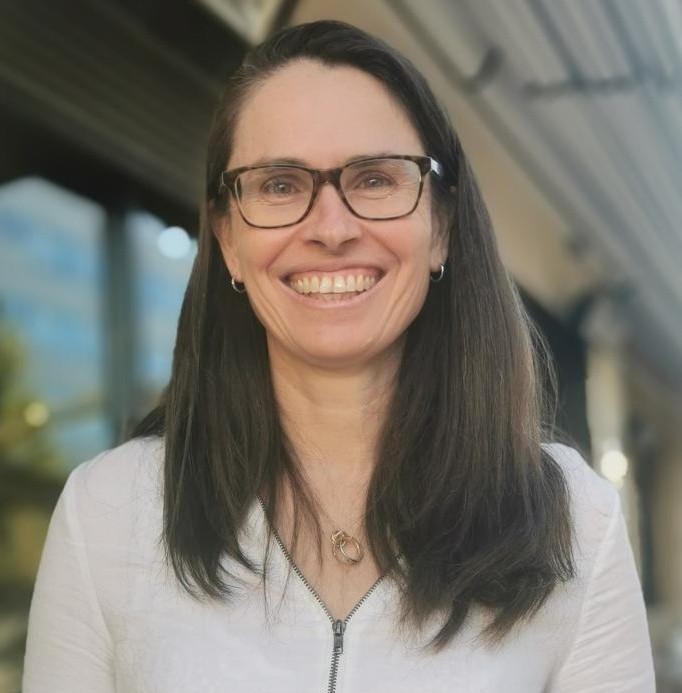
This week, Women in Solar+ Europe gives voice to Melodie de l’Epine, Senior Project Manager/Head of Research & Innovation at the French Becquerel Institute. She says encouraging men to move from strict hierarchy to informal exchanges promotes a more equitable relationship. Women can benefit from noticing how men address each other and consciously participate, because subtle forms of address strongly determine power perceptions.
Our industries operate in a context of constant fluctuations. Policy frameworks are changing, market conditions are evolving rapidly and uncertainty is part of our daily reality. This means that as a sector we must be creative, adaptable and resilient. From my perspective, the more diverse our teams are, the broader and more varied their experiences become. This increases the likelihood that we will find the viewpoint, idea, or understanding that allows us to adapt resiliently to changing environments. This wealth of thought and experience is something that our sector benefits enormously from, not only because we need it, but also because we tend to have higher female participation rates than many other energy sectors.
Looking back on my own career, the barriers I encountered were often systemic rather than explicit. In France at least, I have found that respectfully encouraging men to move away from a strictly hierarchical viewpoint and towards more informal exchanges has been incredibly helpful in creating a more equal relationship. I would like to encourage women to pay attention to the way men address each other and to consciously involve themselves in this form of address. It’s subtle, but forms of address support human perception in powerful ways.
At the same time, my knowledge and insight are often underestimated. In such situations, the willingness to raise my hand and show what I know has been fundamental to my role. It’s not easy to be visible, especially when you feel like you have to prove your competence, but learning to have confidence in myself was an important lesson in my professional development.
In the area of gender inclusion in leadership, I have observed meaningful shifts over time. Working in fields and jobs that have meaning and contribute to the greater good has often been the preferred route for women, and renewable energy clearly fits this motivation. Historically, however, achieving leadership roles has been hindered by several factors: the lower share of women in management positions, unconscious biases, and the commitment many women still have to domestic responsibilities. A generation of more accessible parental leave for fathers, alongside legislation mandating greater representation of women, is beginning to change this dynamic. I am grateful that some major companies in France have clearly shown their confidence in women in leadership positions, of which ENGIE is an example.
I have also seen very tangible consequences of having diverse leadership teams. In my experience, diverse leadership has shown that caring for the holistic well-being of employees and team members is both acceptable and beneficial. Women, at least in my experience, are usually able to express this concern more easily than men. I’ve seen women leaders much more likely to identify and propose accommodations for employees facing stressful or difficult circumstances at home, often based on personal experiences. The results were very positive, especially in anticipating work deadlines and making room for quality deliveries despite complicated availability.
An inclusive environment has also played an important role in my own career development. I have teenagers, and when they were born and throughout their younger years, I was able to adjust my work hours and duration to fit my care plans. That flexibility allowed me to fully concentrate on my work when I was at work, without feeling guilty because I could also give my children the time I wanted to give them. French legislation has of course made this possible across the board. What really made a difference, however, was my employer’s attitude. This flexibility was welcomed as an opportunity to experiment with new people and new roles, rather than being seen as a limitation, and it made a significant difference to my experience.
For young women entering the solar and renewable energy industries today, my advice is based on experience. I believe we can change people’s perception by expecting the best from them. Expect men to treat you as their equal, and demonstrate this expectation by the way you work with them. Increase your own self-confidence – others can’t do that for you – and be aware of your achievements. Know that you are valuable, that you can and will learn, and that a task can only be undone until you learn how to do it. Finally, don’t hesitate to ask for advice and support from other women. We have been there too.
Mélodie de l’Épine is Head of Research & Innovation at the Becquerel Institute France, where she leads strategic analyses, market research and innovation programs in the field of photovoltaics. Recognized as a leading expert in the French PV sector with more than 25 years of experience, she previously coordinated the photovoltaic unit at HESPUL and contributed to national and institutional working groups on grid connection, support mechanisms and energy policy. Today, Mélodie works on European innovation projects covering new PV technologies, production and operations, while also being involved in international collaborations, where she is co-manager of Task 1 for the International Energy Agency’s PVPS programme. She regularly publishes market analyzes and contributes to national and international reports on PV power applications, helping shape strategic insights into market trends and policy developments.
Interested in participating Melodie de l’Épine and other female market leaders and experts at Women in Solar+ Europe? More information: www.wiseu.network
The views and opinions expressed in this article are those of the author and do not necessarily reflect those of the author pv magazine.
This content is copyrighted and may not be reused. If you would like to collaborate with us and reuse some of our content, please contact: editors@pv-magazine.com.
