
Close Menu
  • News
  • Industry
  • Solar Panels
  • Commercial
  • Residential
  • Finance
  • Technology
  • Carbon Credit
  • More
    • Policy
    • Energy Storage
    • Utility
    • Cummunity
What's Hot

A deep learning model tracks the status of the EV battery with high precision

March 6, 2026

Mitsubishi Electric Trane announces new heat pump line for hydronic heating – SPE

March 6, 2026

Origis is developing a 413 MW solar portfolio in West Texas

March 6, 2026
Facebook X (Twitter) Instagram
Solar Energy News
Friday, March 6
  • News
  • Industry
  • Solar Panels
  • Commercial
  • Residential
  • Finance
  • Technology
  • Carbon Credit
  • More
    • Policy
    • Energy Storage
    • Utility
    • Cummunity
Solar Energy News
Home - Technology - Indian researchers present 28% efficient silicon-perovskite tandem solar cell – SPE
Technology

Indian researchers present 28% efficient silicon-perovskite tandem solar cell – SPE

solarenergyBy solarenergyOctober 1, 2024No Comments3 Mins Read
Facebook Twitter Pinterest LinkedIn Tumblr Email
Share
Facebook Twitter LinkedIn Pinterest Email

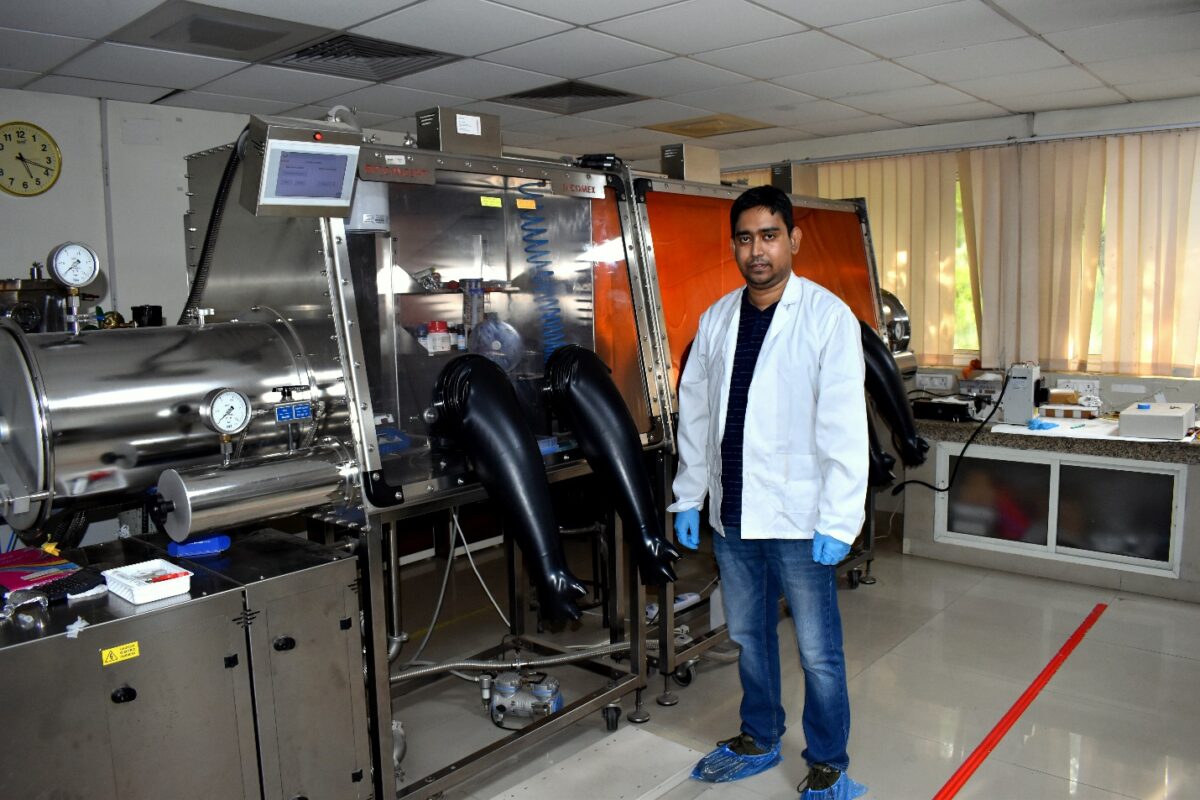
A research group from the Indian Institute of Technology Roorkee has fabricated 4-terminal silicon-perovskite tandem solar cells with an energy conversion efficiency of 28%. The team is now scaling up this technology to match the dimensions of commercial M10 solar cells of 18.2 cm x 18.2 cm.

October 1, 2024 Uma Gupta

By pv magazine India

Crystalline silicon (c-Si) solar cells have maintained their dominance among global PV products for 40 years and have secured over 95% of the market share. As the efficiency of Si solar cells approaches the conventional thermodynamic detailed balance limit of 33.5%, achieving further improvements becomes increasingly difficult.

The high energy demands during production, together with the resulting carbon dioxide emissions and the limited opportunities for efficiency gains, underline the drive for innovation in device processing and architectures.

With an urgent demand for expanded solar energy generation, it is critical to improve the deployment of current PV technologies and move forward with the development of future PV technologies that are more efficient, easier to produce and require less energy .

Over the past decade, organic-inorganic hybrid perovskites (OIHPs) have led to significant advances in low-cost optoelectronic semiconductors, especially in photovoltaics, achieving remarkable power conversion efficiencies (PCEs) of more than 26%. Taking into account practical considerations such as cost, preparation methods and industrial status, the synergy of perovskite with crystalline silicon (c-Si) emerges as the most feasible tandem configuration.

A research group from the Indian Institute of Technology Roorkee is developing high-efficiency silicon-perovskite tandem solar cells for next-generation, low-cost and highly efficient energy generation.

See also  Kan het elektriciteitsnet de stijgende vraag naar elektriciteit aan? – pv-magazine Internationaal

The team, led by Prof. Soumitra Satapathi, has fabricated 4-terminal silicon-perovskite tandem solar cells with an energy conversion efficiency of 28%. This has been achieved by improving the efficiency of wide bandgap perovskite solar cells and improving the device technology. One of the team’s most important achievements is the development of highly efficient and stable perovskite solar cells. The researchers have successfully integrated these perovskite cells with commercial PERC silicon solar cells.

“These perovskite and silicon solar cells are electrically connected in a four-terminal configuration. Light is illuminated by the top perovskite solar cells and filtered through them. A perovskite top layer with a band gap of about 1.8 eV absorbs light in the visible range and transmits near-IR light that is absorbed by the lower silicon solar cells. As a result, the efficiency increases from 20% to 28% of tandem solar cells from 20% of all-silicon solar cells,” shared Prof. Satapathi. pv magazine.

Prof. Satapathi said they are now scaling up this technology to meet the commercial M10 solar cell dimensions of 18.2 cm x 18.2 cm. This is done by fabricating perovskite solar cells over a large surface area using Slot-Die coating, a technique used to fabricate perovskite mini-modules.

The team is also working to improve system balance to reduce costs.

Prof. Satapathi said they expect to achieve 30% efficient commercial-sized tandem solar cells in another year. Based on their success, their team founded Perovskite Innovation Pvt Ltd, a start-up exclusively dedicated to this technology.

This content is copyrighted and may not be reused. If you would like to collaborate with us and reuse some of our content, please contact: editors@pv-magazine.com.

See also  Soltage protects $ 260 million to expand the Buildout on solar energy on utilities | Solar financing Spotlight

Popular content

Source link

cell efficient Indian present researchers siliconperovskite solar SPE tandem
Share. Facebook Twitter Pinterest LinkedIn Tumblr Email
solarenergy
  • Website

Related Posts

Mitsubishi Electric Trane announces new heat pump line for hydronic heating – SPE

March 6, 2026

Origis is developing a 413 MW solar portfolio in West Texas

March 6, 2026

New Jersey expands state community solar program by 3 GW

March 6, 2026
Leave A Reply Cancel Reply

Don't Miss
Policy

Teralight turns on Israel’s largest solar power plant – SPE

By solarenergyJanuary 27, 20250

Teralight has activated Israel’s largest PV project, the 150 MW Ta’anach 1 array, which will…

Invinity’s new flow battery is intended to enable ’24/7 solar energy’ for the electricity grid

December 3, 2024

Atomic-6 collaborates with Starpath Robotics to develop Lunar Power Tower

November 25, 2024

Solar will be Spain’s top source in 2024 – PV Magazine International

March 26, 2025
Stay In Touch
  • Facebook
  • Twitter
  • Pinterest
  • Instagram
  • YouTube
  • Vimeo
Our Picks

A deep learning model tracks the status of the EV battery with high precision

March 6, 2026

Mitsubishi Electric Trane announces new heat pump line for hydronic heating – SPE

March 6, 2026

Origis is developing a 413 MW solar portfolio in West Texas

March 6, 2026

New Jersey expands state community solar program by 3 GW

March 6, 2026
Our Picks

A deep learning model tracks the status of the EV battery with high precision

March 6, 2026

Mitsubishi Electric Trane announces new heat pump line for hydronic heating – SPE

March 6, 2026

Origis is developing a 413 MW solar portfolio in West Texas

March 6, 2026
About
About

Stay updated with the latest in solar energy. Discover innovations, trends, policies, and market insights driving the future of sustainable power worldwide.

Subscribe to Updates

Get the latest creative news and updates about Solar industry directly in your inbox!

Facebook X (Twitter) Instagram Pinterest
  • Contact
  • Privacy Policy
  • Terms & Conditions
© 2026 Tsolarenergynews.co - All rights reserved.

Type above and press Enter to search. Press Esc to cancel.