

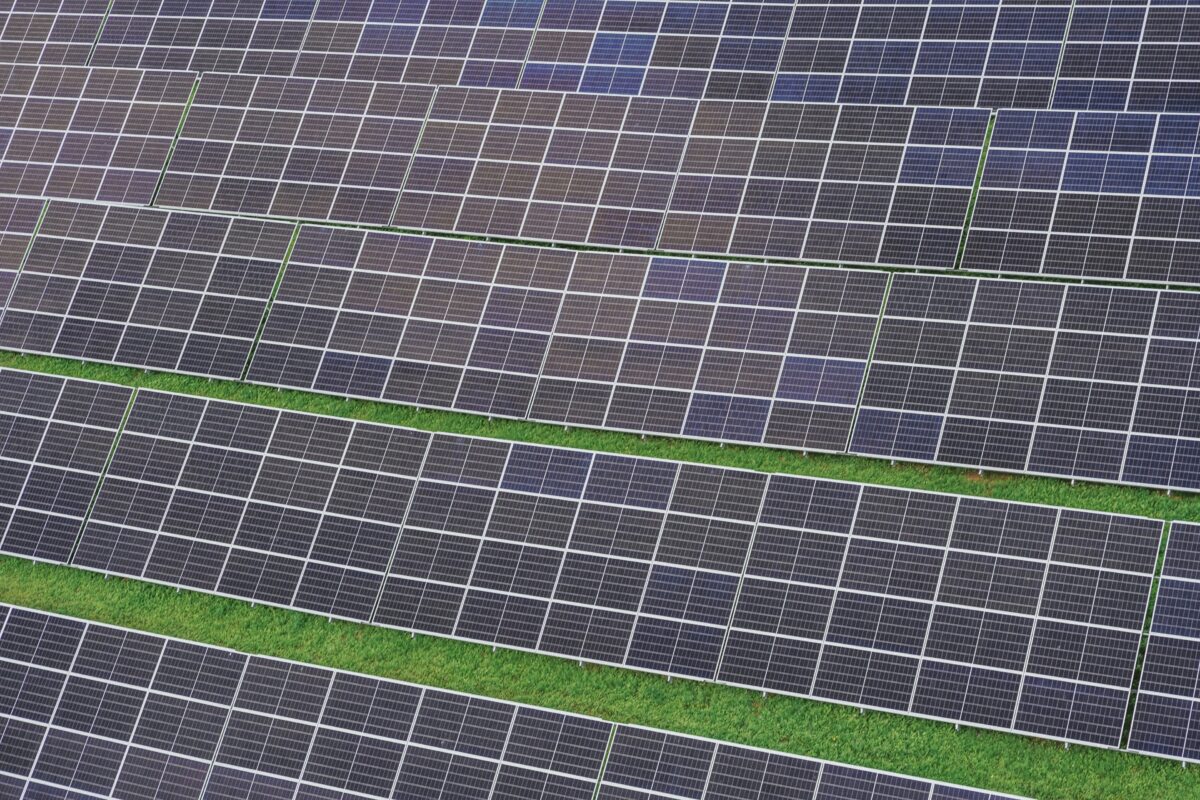
The latest round of Japan’s carbon finance program, which provides financial support to low-carbon infrastructure projects in partner countries, is supporting a 130 MW solar project being built in southeastern Tunisia.
A 130 MW solar project in Tunisia has received support from the Japanese government’s Joint Credit Mechanism (JCM) subsidy program.
The JCM is a bilateral initiative that works with developing countries to reduce greenhouse gas emissions, providing financial support that can cover up to half of the initial investment costs for low-carbon technologies.
Projects are eligible for funding through application rounds, the most recent of which took place between April and September last year. The Osaka-based Global Environment Center Foundation (GEC) acts as the implementing organization, with the Japanese Ministry of the Environment (MOE) responsible for project selection.
The recently supported 130 MW solar project will be located in the Gabès region in southeastern Tunisia. According to details on GEC’s website, it will be developed by Japanese conglomerate Marubeni Corporation in partnership with French renewable energy developer Voltalia, with the electricity generated sold to the Tunisian electricity and gas company.
A statement on MOE’s website adds that the project qualifies for the carbon finance program because it reduces greenhouse gas emissions by replacing some of the electricity from the fossil fuel-based grid with renewable energy.
Projects spanning more than 30 countries have received support from the JCM since its inception in 2011.
Recent beneficiaries include a 43 MW solar project in Georgia. It is building a total of three solar sites, one with a capacity of 31 MW and two solar panels of 6 MW, in the Kakheti and Kvemo Kartli regions, near the capital Tbilisi. The electricity generated will be sold to the national electricity grid or on the spot market.
The JCM has also supported three solar-plus-storage projects in the past year, including a 55 MW solar and 40 MWh storage project in Thailand for a data center in Chon Buri province, located in the south of the country.
It has also supported a 14 MW solar and 40 MWh storage project spread across three sites in Chile, which will supply electricity through a Chilean energy distribution company, and a 66.8 MW solar project linked to a 15 MWh storage project in Laos, with the energy generated being sold to the country’s state-owned energy company.
This content is copyrighted and may not be reused. If you would like to collaborate with us and reuse some of our content, please contact: editors@pv-magazine.com.
