

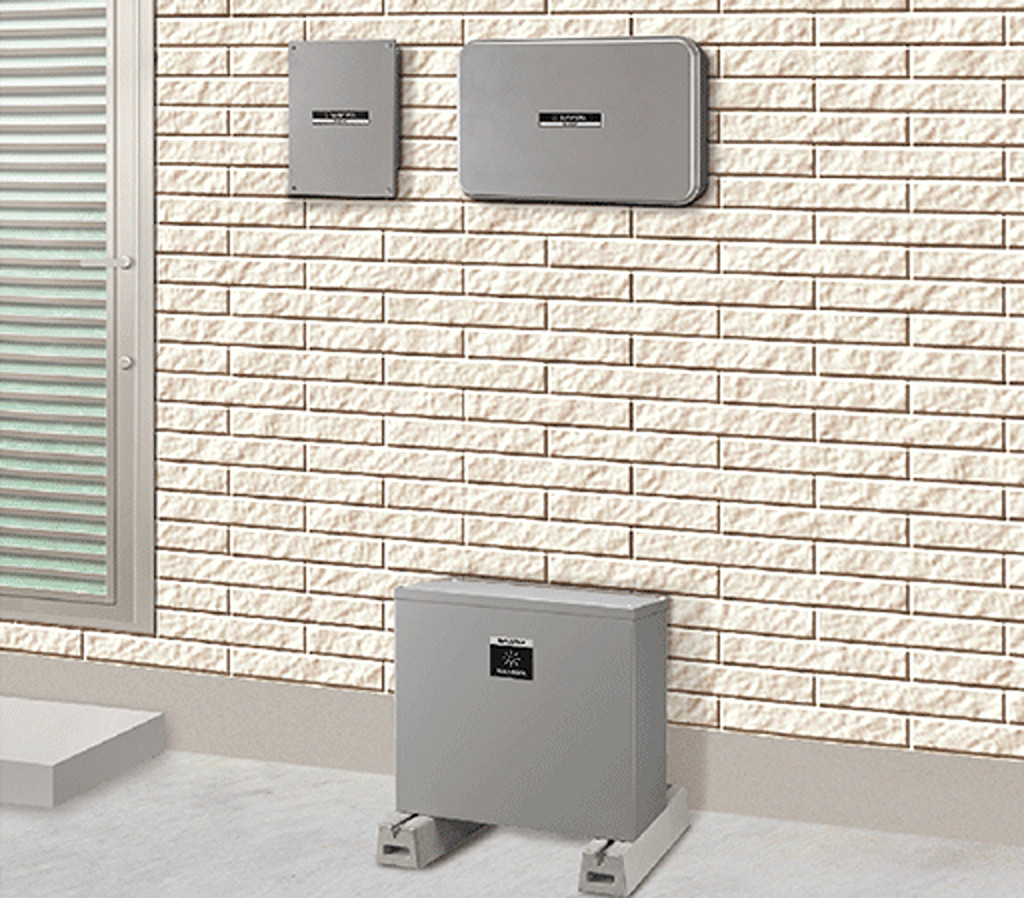
Japanese utility Tohoku Electric Power uses Sharp’s residential batteries and AI-powered energy management systems to balance grid demand and optimize household solar energy use. Customers in the program can earn points that can be redeemed for local products.
Sharp announced this week that Japanese utility Tohoku Electric Power will use Sharp’s residential batteries in its service area to provide demand-side balancing capacity.
The Japanese electronics manufacturer explained that all batteries are controlled via the cloud-based Home Energy Management System (HEMS) and the Cocoro Energy mobile app, which allows users to manage multiple Sharp home appliances.
“AI will learn each household’s lifestyle patterns and solar power generation status, and consume the electricity generated efficiently, helping to reduce customers’ electricity bills,” Sharp said in a statement. “Cocoro Energy will efficiently control its own energy consumption under normal circumstances, and during demand response (DR) control, our company will remotely control the battery on behalf of the customer based on Tohoku Electric Power’s DR control plan, which contributes to adjusting the balance between energy supply and demand.”
Customers who participate in the Demand Response (DR) program earn points through Tohoku Electric Power’s Yorisou e-Net program. Under this initiative, collected points can be redeemed for local electronic products in the Tohoku and Niigata regions.
“This initiative changes electricity consumption patterns without the customer having to operate the equipment themselves,” Tohoku Electric said. “By remotely controlling battery mode and charging/discharging, taking into account the balance between electricity consumption and production, we aim to ensure a stable power supply by using batteries to cover power consumption in times of power shortage.”
The utility also noted that the points awarded reflect electricity costs incurred through remote control. However, depending on the type of device and how customers use electricity, their electricity bill may be higher than the value of the points earned.
The company also clarified that remote control of batteries assumes a PV system is installed. “Remote control of batteries does not significantly affect the number of charge-discharge cycles, so we do not expect substantial battery degradation. However, we cannot guarantee that the degradation will not accelerate,” he added.
Sharp recently upgraded its AI-based Eee Connect system for effective use of PV-generated electricity by connecting residential solar systems, batteries, home appliances and electric vehicles (EVs).
Early last year it also unveiled a new EV charger based on V2H technology made easier bidirectional flows between solar-powered homes and electric vehicles.
This content is copyrighted and may not be reused. If you would like to collaborate with us and reuse some of our content, please contact: editors@pv-magazine.com.
