Scientists in China have designed a ventilated, building-integrated photovoltaic system that relies on flexible solar panels weighing 6 kg/m2. The system also uses an airflow duct beneath the PV panels to reduce their operating temperature and increase their power output.
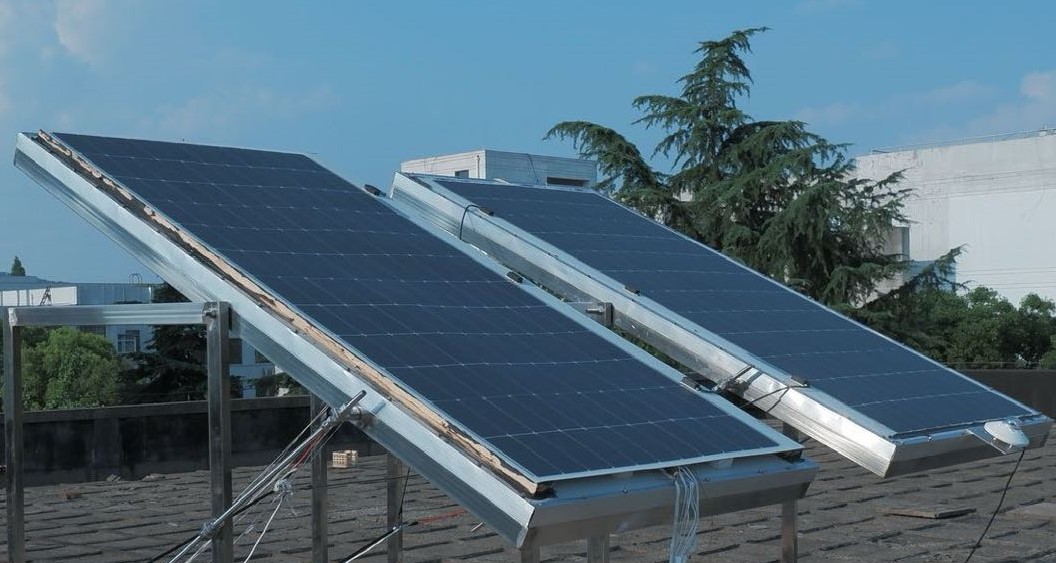
Researchers from Nanjing University of Science and Technology in China have designed a ventilated building-integrated photovoltaic system (VL-BIPV) that they claim could be an optimal solution for roofs with limited load-bearing capacity of less than 15 kg/m2.
“The VL-BIPV system adds only 6 kg/m² load when applied to roofs, effectively addressing the challenges faced by conventional modules,” says the corresponding author of the study. Chenglong Luotold pv magazine. “In addition, compared to conventional rooftop PV systems, the VL-BIPV system features a ventilation duct that effectively reduces the temperature of the PV modules in hot environments, mitigating the impact of high temperatures on their normal operation.”
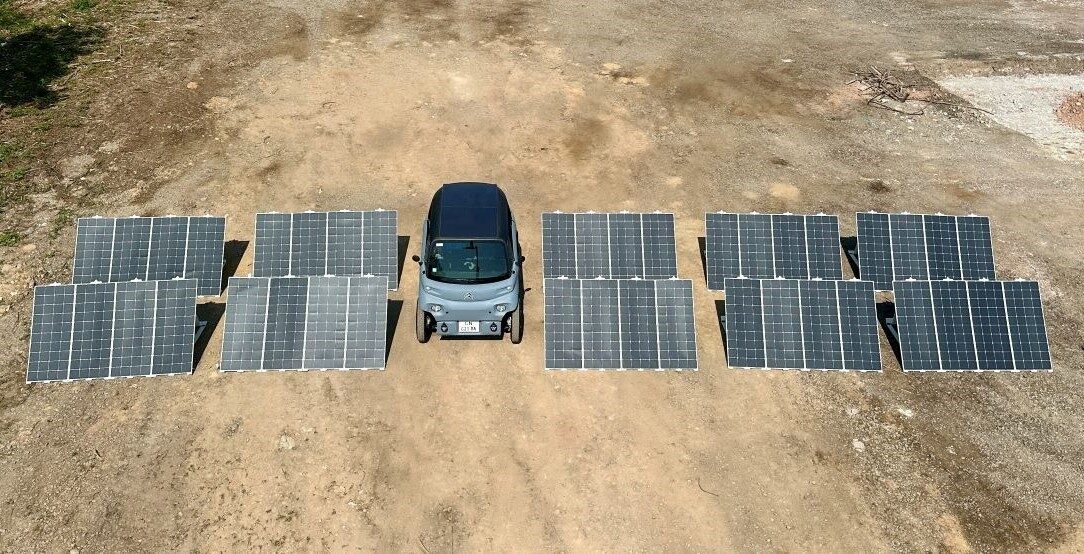
The system is based on a 460 W BIPV module that uses a polymer front layer as an alternative to heavy glass.
“Thanks to the special encapsulation process and materials, this module weighs only about 3 kg/m² and has a thickness of about 1.8 mm,” Luo explains. “This PV module achieves a PV efficiency of 21.04%, maintaining high PV efficiency and reducing weight. Therefore, compared with other types of modules, this module has significant advantages in the comprehensive aspects of efficiency, stability and cost, demonstrating significant potential for practical applications.”
In the newspaper “Performance prediction of a ventilated building-integrated photovoltaic system with lightweight flexible crystalline silicon module based on an experimental mounting method”, published in Renewable energyLuo and his colleagues also explained that among the modules used for the VL-BIPV system, there is an airflow duct that reduces the operating temperature.
The proposed system underwent a series of experimental tests and simulations and its performance was compared with that of a conventional rooftop PV system without any cooling. Both systems were located in a university building in Nanjing and had a tilt angle of 26 degrees.
“During the test, the solar radiation intensity was 908.05 W/m2 and the ambient temperature was 33.73 C,” the academics said. “It can be observed that the short-circuit current of the VL-BIPV system was slightly higher by 0.08 A compared to that of the conventional system, while the open-circuit voltage of the VL-BIPV system was 0.98 V higher.”
The test showed that the VL-BIPV system achieved a 6.52% increase in annual energy generation compared to the conventional system, with an overall PV efficiency of approximately 1.07 times higher. “The VL-BIPV system achieved PV efficiency ranging from 18.91% to 19.29%, averaging 19.06%, while the conventional system achieved PV efficiency ranging from 17.19% to 17, 59%, average 17.36%,” the researchers further explained.
The analysis also showed that, over the 25-year operational life of both systems, the power generation of the VL-BIPV system is 28.67 kWh/W, which is approximately 1.78 kWh/W higher than that of the conventional system . “In addition, the highest average and maximum cell temperatures in the VL-BIPV system during the year are 58.39 C and 64.74 C, respectively, both lower than the conventional system’s peak of 68.34 C,” the group said.
More details about system costs and commercial maturity were not provided in the study.
This content is copyrighted and may not be reused. If you would like to collaborate with us and reuse some of our content, please contact: editors@pv-magazine.com.
Popular content