

In response to a question about how an AI satellite constellation could provide precise and equitable adjustments to solar energy across Earth’s hemispheres — taking into account seasonal variations and potential geopolitical conflicts over control — Musk said: “Yes. Small adjustments would be enough to prevent global warming or cooling. The Earth has snowballed many times in the past.”
The same user who asked the question added that “making small adjustments to balance warming and cooling makes perfect sense; Earth’s ancient ice ages already demonstrate this. But managing such an intervention would require a global AI protocol; otherwise geopolitical tensions could escalate into solar blockade wars. I wonder what role AI would play in such a scenario.”
User Ram ben Ze’ev, on the other hand, argued that using a constellation of AI and solar-powered satellites to limit global warming by controlling solar radiation carries enormous risks. While this is technically feasible, it would require near-continuous global coverage and flawless coordination. Even a minimal 1% to 2% reduction in sunlight, he warned, could disrupt photosynthesis, agriculture and ecosystems, as well as change rainfall patterns and temperatures.
And if the system were to fail or become disrupted, the resulting “termination shock” could cause a rapid and devastating temperature increase. “Changing the climate in a satellite-controlled system ignores the natural complexity of the biosphere and could have irreversible consequences,” he concluded.
Most satellites in orbit use solar panels as the primary energy source to operate both the spacecraft bus and its payload. Their functions include powering subsystems such as attitude control, communications, onboard processing and thermal control, as well as providing energy for scientific instruments, communications relays and electrical propulsion systems.
Several programs are also testing photovoltaic cells in real space environments and investigating wireless energy transmission, also called “beaming,” for space-to-space and space-to-ground applications.
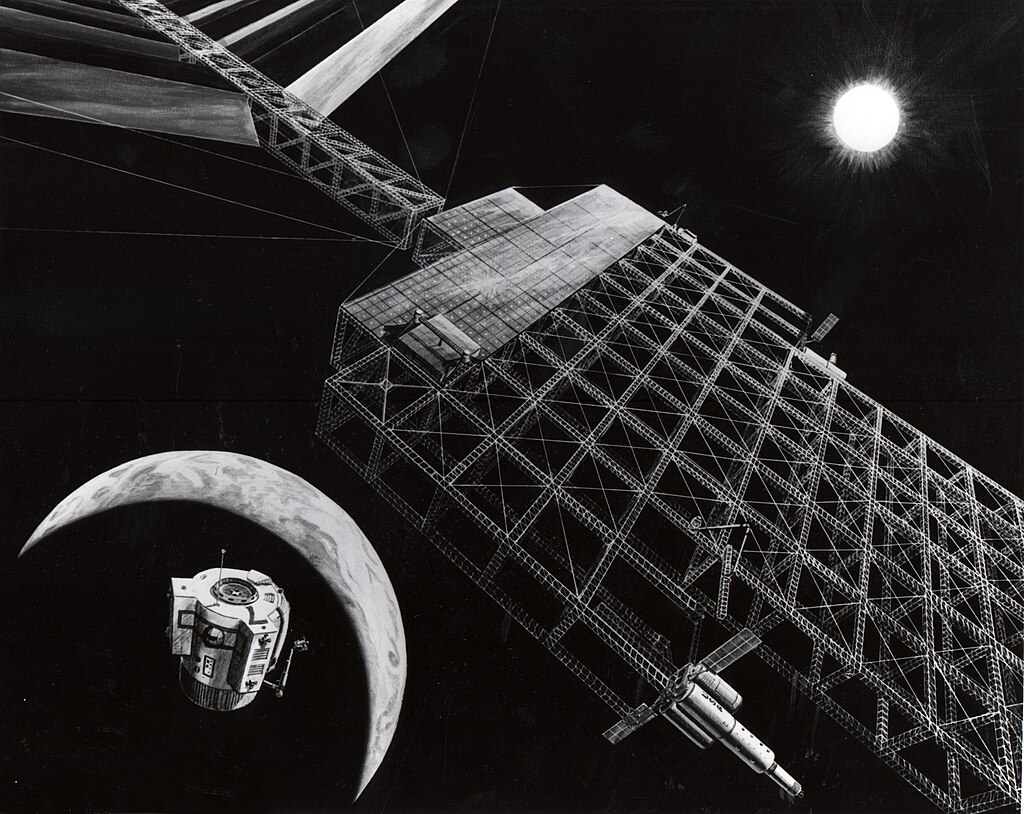
Space solar developers aim to capture solar energy in orbit and transmit it to receiving stations on Earth via wireless energy transmission, using microwaves or lasers. On a commercial scale, the technology could provide continuous, weather-independent renewable energy worldwide.
The maturation of this technology, combined with declining launch costs, is bringing the concept closer to implementation. The intention is to have several demonstration projects in orbit next year.
South Korea is planning a 120 GW space solar project by 2024. Two national research institutes are designing a space-based solar energy satellite that could provide about 1 TWh of electricity per year. The proposed system would use 4,000 underwater solar panels, each measuring 10 by 270 meters, made of roll-up thin plates, with an overall efficiency of 13.5%.
By 2030, the China Academy of Space Technology also plans to launch its first solar power transmission demonstrator, with three solar panels and both microwave and laser power transmission systems.
