

The UK National Energy System Operator (NESO) has not awarded any contracts for battery storage projects in the Stability Market Round 2, despite the recent Stability Pathfinder proving the technology’s capabilities in networking and system stability.
In the second round of the stability market, all entries for battery energy storage systems (BESS) failed the technical assessment stage, while synchronous condensers and open cycle gas turbines (OCGTs) took up 7.3 gross value added of contracts, according to market intelligence and analysis firm Modo Energy.
Some of the failed batteries are already operational with active NESO Stability Pathfinder contracts, Modo Energy analyst Zachary Jennings added, posting the company’s analysis on LinkedIn.
That’s despite NESO spending £323 on it Pathfinder program stability which aimed to demonstrate how newer technologies such as BESS could provide inertia and other network stability services historically provided by gas-fired power stations. The Stability Market is the regular long-term purchasing mechanism for such stability services.
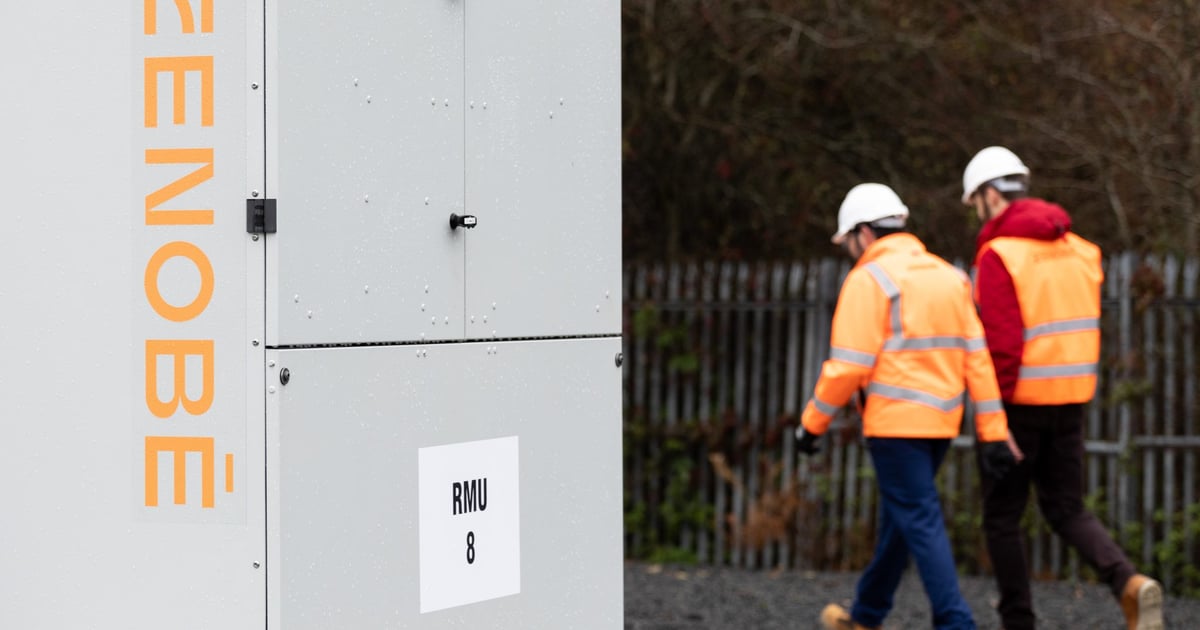
Owner-operator Zenobē has been the lead player in implementing BESS within the Pathfinder program, with two projects online: the Blackhill And Kilmarnock South Projects.
Responses from industry sources to Modo’s post showed frustration and concern over the lack of BESS awards despite the Pathfinder program.
Several commenters suggested that NESO favors synchronous/thermal assets over proven carbon-free alternatives, with the eligibility criteria “seeming to be written on incumbents rather than results,” according to one commenter.
However, one commenter said NESO was “reassuringly conservative” when it came to acquiring inertia, given how critical the services are to a stable network.
New technical specifications around things like “fixed H-constants” (requiring participants to commit to specific, non-variable inertia values for their network-forming technologies during the procurement and connection phases) may have been behind the assessment errors, as they did not occur in Round 1, Jennings said. Another commenter said that Round 1 had criteria that prioritized persistent slowness, error contribution, and system strength against more stringent technical thresholds.
Jennings said raising thresholds and requirements was good, but they needed to be clearly communicated to incumbents before design parameters were set.
One commentator drew parallels with the development of solar projects in Britain, where sub-optimal technologies were prioritized due to institutional biases. In both cases, the common thread is a policy framework that has not kept pace with what technology can now deliver, they said.
System integrator Wärtsilä supplied the BESS and PCS for both of Zenobē’s Stability Pathfinder BESS projects and spoke to our sister Energy storage.news for an article on grid-forming technologies as part of his recent Energy Storage Report 2026, which you can download here.
