

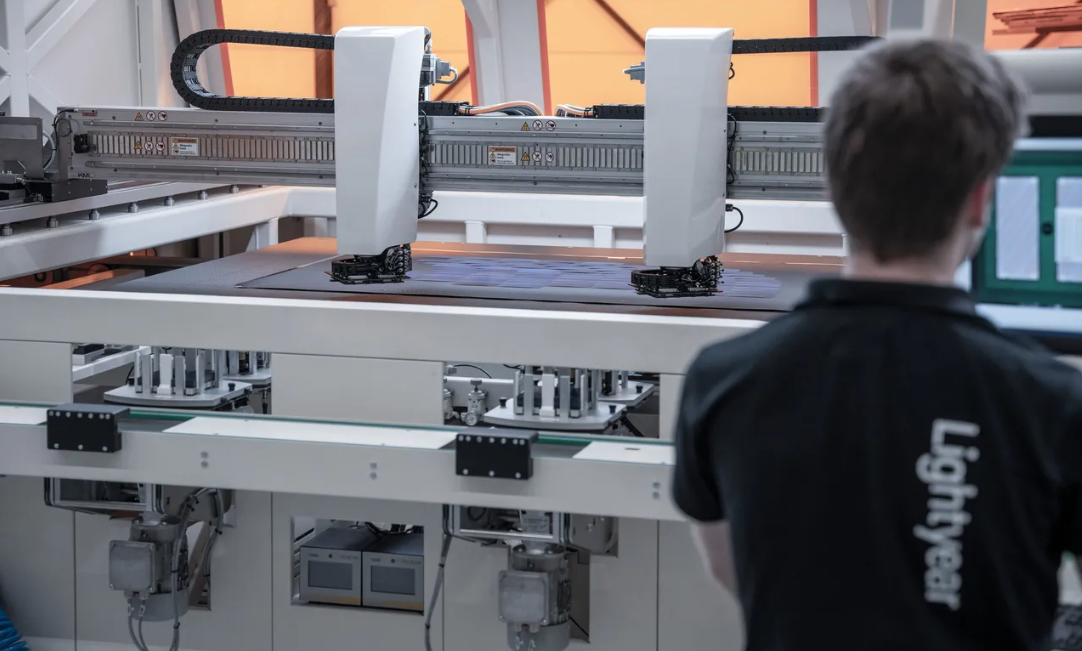
The Ariya demonstrator features 3.8 m² of custom solar panels from Lightyear, integrated across the hood, roof and tailgate. Tests showed that the car could generate 0.5 kWh of solar energy during a 2-hour, 80-kilometre drive, and deliver a range of up to 3 kilometers without additional costs or charging time.
Dutch startup Lightyear has developed and refined its solar car charging technology, working with a number of vehicle manufacturers to demonstrate the system. It announced a partnership with Nissan to integrate its solar charging system into a demonstration vehicle, which the startup says is an important step toward eventually bringing its solar charging technology to market.
In an interview with pv magazine Last summer, Lightyear CEO Bonna Newman said that aesthetics are a big factor to consider when developing any type of solar-powered vehicle.
Lightyear previously tried to market a car with solar panels integrated into the vehicle’s body, but this ultimately failed and the company went bankrupt. Since returning in 2023 under new leadership, Lightyear has focused primarily on solar charging technology. However, at its Dutch base it produces vehicle-integrated solar panels for certain applications.
The collaboration with Nissan has resulted in what Nissan calls the Ariya solar-powered concept: a car equipped with 3.8 m² of custom solar panels on the polymer-based hood, roof and glass tailgate.
The vehicle’s integrated solar panels, supplied by Lightyear, use high-efficiency photovoltaic cells that convert sunlight directly into direct current. This energy is managed through an optimized power controller, increasing overall energy availability and reducing dependence on external charging.
Tests showed that the Ariya car could generate 0.5 kWh of solar energy during a 2-hour, 80-kilometre drive, and deliver a range of up to 3 kilometers without additional costs or charging time.
In clear, sunny weather, the solar panels can generate enough clean energy to power up to 14 miles of additional range. In one year, this could mean an average additional range per day of 10.2 kilometers in London, 18.9 kilometers in New Delhi and 21.2 kilometers in Dubai.
Following Ariya’s announcement, Newman said: “Working with the global automotive industry proves that our technology delivers measurable benefits to electric vehicle (EV) drivers and owners, taking them off the grid and making them plug-in dependent.”
“Our ambition has always been to make solar energy a meaningful and scalable part of electric mobility,” she added.
Tests conducted on the demonstration vehicles showed a reduction in charging frequency of 35-65%, depending on usage patterns and conditions. The system is not intended as a replacement for plug-in charging, but could potentially reduce charging frequency. Data shows that annual charging visits could be reduced from approximately 23 to 8 charges per year for drivers traveling approximately 6,000 kilometers annually, and approximately 50% more time between charges for commuters traveling approximately 12,000 kilometers per year. The system can also generate energy while the vehicle is driving or parked.
The company’s chief financial officer said the demonstration showed that Lightyear’s vehicle-integrated solar energy is ready to hit the market. “We have passed the proof-of-concept phase,” says Herman van Barneveld.
“As the world changes and technology evolves, it is important to see forms of energy such as solar as a potential paradigm shift, bringing a new layer of convenience and innovation to driving,” said Jorge Paganetto, from Nissan’s Product Planning team in Dubai, adding that the concept pushes the boundaries of possibility.
Last October, Nissan said it would showcase a prototype electric vehicle with an expandable PV roof at the 2025 edition of the Japan Mobility Show.
This content is copyrighted and may not be reused. If you would like to collaborate with us and reuse some of our content, please contact: editors@pv-magazine.com.
