

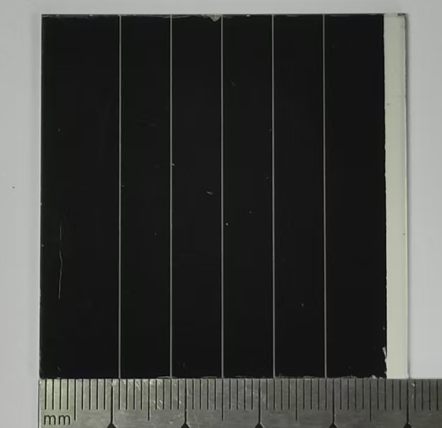
A research team in Spain has built what it claims is the world’s most efficient perovskite solar cell using MXenes or other types of 2D materials. The device is based on a Mxene interlayer that suppresses non-radiative recombination and enhanced charge extraction at the interface between the perovskite absorber and the electron transport layer.
Researchers from Spain’s University of the Basque Country (UPV/EHU) have fabricated a perovskite solar cell based on a light absorber containing two-dimensional titanium carbide (Ti3C2Tx), also known as MXeen.
MXeen compounds take their name from their graphene-like morphology and are made via selective etching of certain atomic layers from a bulk crystal known as MAX. Recently, these materials have shown promise for use in PV technology due to their unique optoelectronic properties, such as their high charge carrier mobility, excellent metal conductivity, high optical transmission, and tunable work function (WF).
“We placed MXene at the interface of the electron transport layer (ETL) based on tin oxide (SnO2) and the perovskite absorber to minimize oxygen vacancies and defects,” says the corresponding author of the study, Shahzada Ahmadtold pv magazine. “The chlorine-terminated MXenes we used significantly reduced the oxygen vacancy at the subsurface interface.”
Terminating Mxene with chlorine helped effectively reduce pinholes and particle aggregation often associated with the dispersion of MXene in the absorber, the scientists said.
Using scanning electron microscopy (SEM) images, they were able to verify that the placement of the Mxene interlayer beneath the perovskite layer causes changes in the patterns and a different crystallization surface in the perovskite material, with Raman spectroscopy also finding improved crystal quality.
Further analysis confirmed that the bond between the MXene layer and SnO2 eliminates oxygen vacancies on the SnO2 surface and reduces interactions with existing surface defects.
The academics built the cell with a substrate made of indium tin oxide (ITO), the SnO2 ETL, the Mxene layer, the perovskite absorber, a hole transport layer (HTL) based on Spiro-OMeTADand gold (Au) metal contact.
Tested under standard lighting conditions, the device achieved an energy conversion efficiency of 25.75%, an open circuit voltage of 1,184 mV, a short circuit density of 25.93 mA cm2 and a fill factor of 84%. For comparison, a reference cell without the Mxene interlayer achieved an efficiency of 23.03%, an open-circuit voltage of 1,131 mV, a short-circuit density of 25.37 mA cm2 and a fill factor of 80%.
The cell was also able to maintain 95.5% of the initial efficiency after 1200 hours, while the control device only achieved 76.9%.
“These are the highest performance and stability reported using MXenes or any other type of 2D materials,” Ahmad declared. “This result depends on the simultaneous gains in both the open-circuit voltage and the filling factor, which arise from suppressed non-radiative recombination and enhanced charge extraction at the SnO2-perovskite interface.”
“We then used this MXene-adapted device architecture to fabricate a module and measured 21.76% performance and increased stability,” Ahmad added, noting that future research will focus on scaling from cell to module.
The cell was described in “Environmentally Friendly MXene with Cl-Terminator for Buried Interface Engineering in Perovskite Solar Panels”, published in Advanced functional materials. THe researchH team consisted of scientists from Huazhong University of Science and Technology (HUST).
Previous attempts to use Mxene in perovskite solar cells resulted in devices with efficiencies of 23%, 17% and 25.13% efficiencies. In addition, another international research group recently conducted a study to find out how MXenes can be used as a material for solar cells
This content is copyrighted and may not be reused. If you would like to collaborate with us and reuse some of our content, please contact: editors@pv-magazine.com.
Popular content

