

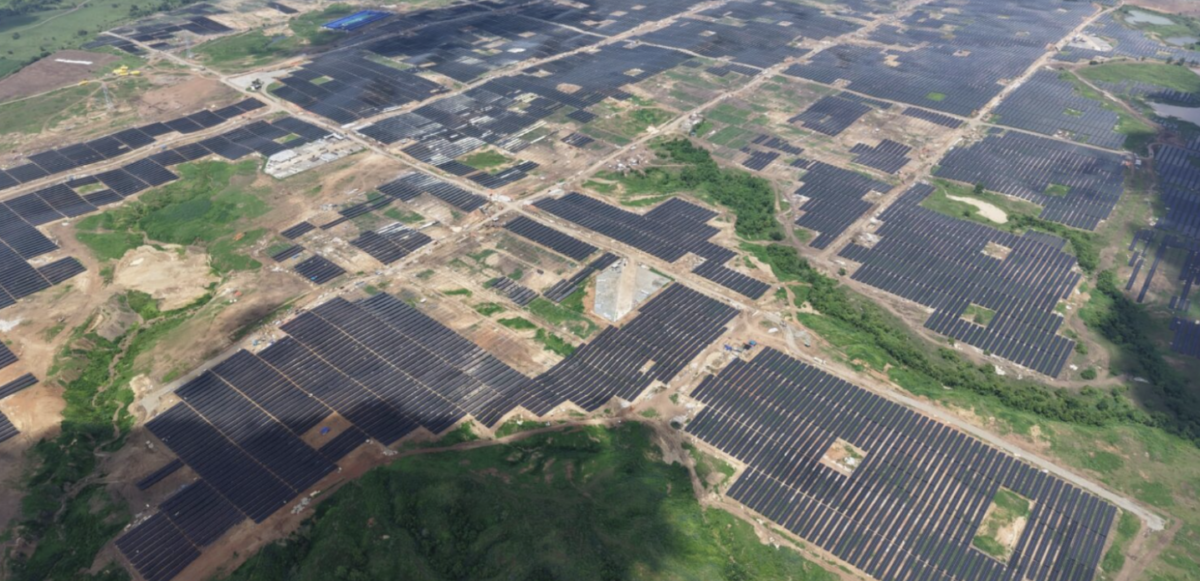
The Energy Regulatory Commission (ERC) of the Philippines has approved the MTerra Solar Project to develop its own dedicated transmission facilities and connect to the Luzon grid. The first phase, which includes 2.5 GW of solar energy and 3.3 MWh of battery storage, is expected to be completed in 2026.
ERC, the energy regulator of the Philippineshas approved an application from the world’s largest solar-plus-battery project under construction to develop and own its own transmission network.
The MTerra Solar Project, under development by Terra Solar Philippines Inc. (TSPI), a wholly owned subsidiary of SP New Energy Corp, is a 3.5 GW solar and 4.5 GWh battery energy storage system (BESS) spread across the municipalities of Nueva Ecija and Bulacan in Luzon Island. The project will be implemented in two phases, the first of which will consist of approximately 2.5 GW of solar energy and 3.3 MWh of BESS.
ERC’s approval, signed last week, allows the project to be connected to the Luzon grid through its own dedicated point-to-point transmission facilities to be built by TSPI. According to the commission’s decision, the connection will be made via a bus-in connection to the existing 500 kV Nagsaag-San Jose transmission line, as well as via another bus-in connection to the planned 500 kV San Isidro substation.
However, it rejects TSPI’s request to operate and maintain the transmission facilities, emphasizing that the responsibility lies with National Grid Corp. of the Philippines (NGCP) will remain, subject to applicable fees for TSPI.
The committee’s decision also outlines a possible delay related to the upcoming San Isidro substation, as NGCP has yet to submit approval for the project’s investment application. Based on the Philippine Transmission Development Plan, ERC expects the substation to be completed between 2031 and 2040.
According to an inspection of TSPI’s transmission facilities in September, ERC says construction of the affected facilities is underway and 90% complete. The committee’s decision sets the total cost of the facilities at PHP14.2 billion ($244.4 million).
In July a project update revealed that 54% of the first phase of work was completed within eight months of construction, meaning progress was ahead of schedule. At the time, 778 MW of solar power had been installed, already making it the largest solar power installation in the Philippines.
The first phase, which also includes a 500 kV transmission line to the Nagsaag-San Jose corridor, is scheduled for completion in 2026.
This content is copyrighted and may not be reused. If you would like to collaborate with us and reuse some of our content, please contact: editors@pv-magazine.com.
