

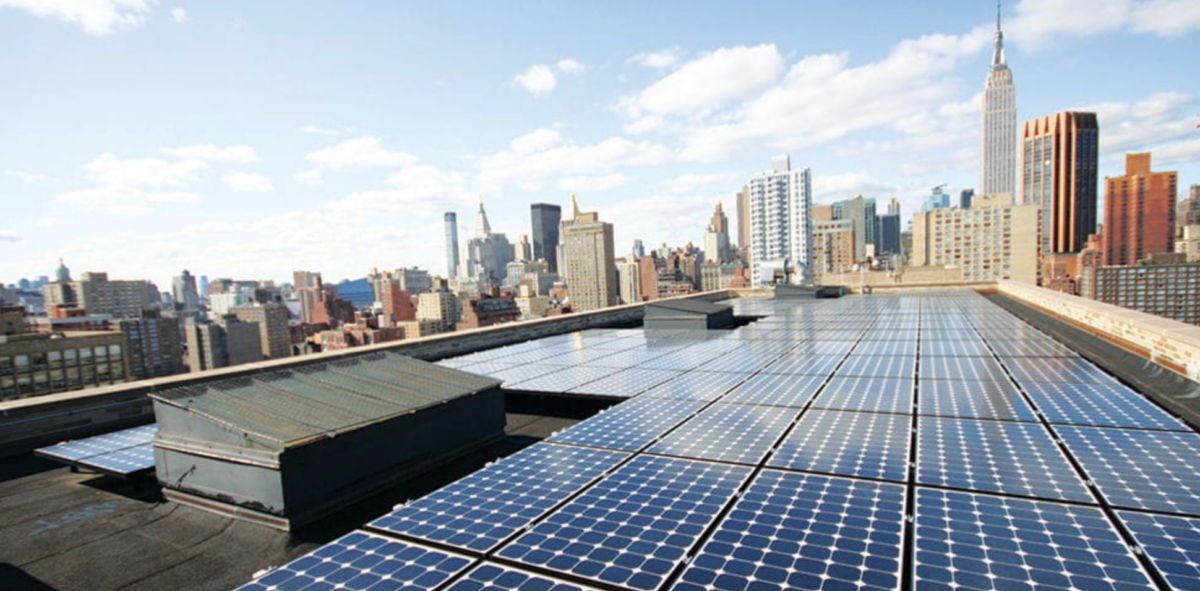
A US solar industry group has laid out a nine-point policy agenda calling on New York City’s new mayor to accelerate the deployment of rooftop solar and batteries to address risks to grid reliability, energy costs and climate goals.
The New York Solar Energy Industries Association did just that recommended nine ways for the administration of newly elected New York City Mayor Zohran Mamdani to accelerate the deployment of solar and storage in the city, in a “solar and storage playbook.”
The playbook’s main proposal is for the city of 8.5 million to increase its solar target to 2 GW by 2035 and create a new storage target of 2 GW by 2030. That “matters,” the playbook says, because the New York Independent System Operator (NYISO) predicts that New York City could have reliability gaps in the coming years, and distributed solar and storage “are our fastest and cheapest tools” to meet the city’s needs for clean, reliable energy.
The playbook calls on Mamdani to lift a “de facto ban” on residential batteries in the city by supporting a City Council bill that would align the city’s fire code with New York State’s recently enacted fire law. The bill would provide “safe housing and medium[-sized]” batteries that meet stringent UL safety standards and provide resilience in the event of a power outage, according to the playbook.
The playbook describes New York City as a “load pocket,” with high density and high peak electricity demand, and also calls on Mamdani to call on utility Con Edison to grant community-based batteries “transparent and fair access” to the distribution grid.
Solar energy on the roof
The city’s Department of Buildings, the playbook says, should allow large building owners to purchase renewable energy credits from small building owners who install solar energy, which would help the large building owners comply with the city’s Local Law 97, which requires them to reduce greenhouse gas emissions from their buildings.
To speed up electrical inspections for solar projects, the playbook says the Department of Buildings should either allow self-certification of projects or allow the use of special inspection agencies.
The playbook recommends detailed action items for each recommended policy. In two programmatic strategies, it recommends launching public education campaigns to promote the adoption and acceptance of clean energy, and scaling up solar plus storage in city-owned buildings.
Distributed solar and storage “will play a critical role” in the mayor-elect’s push for affordability, the report said. “These technologies reduce energy costs for families, improve resiliency to power outages, and advance climate goals – all while creating good-paying jobs in New York City.”
The NYSEIA report is titled “Leveraging Solar and Energy Storage to Power an Affordable, Resilient New York City.”
This content is copyrighted and may not be reused. If you would like to collaborate with us and reuse some of our content, please contact: editors@pv-magazine.com.
