

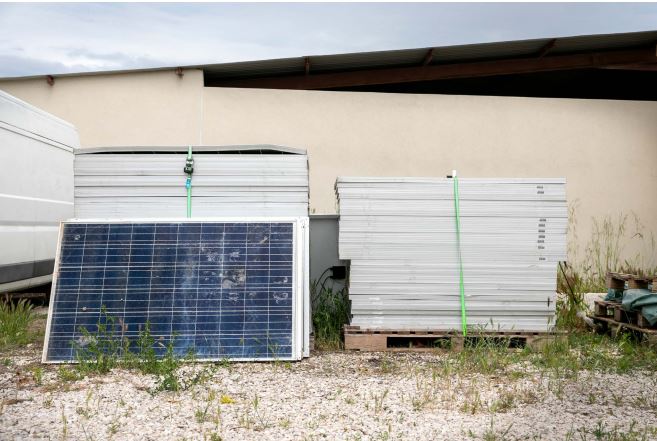
Researchers from the University of New South Wales (UNSW), Gdansk University of Technology and the Polish Academy of Sciences have collaborated to study the value of purifying key components of waste solar panels, ideal for reuse in the production of new solar panels.
Scientists Olivia Bowen, Anna Kuczynska-Lazewska, Rong Deng and Jacek Kluska investigated the differences in the composition of solar panels between different models and manufacturers to initially evaluate the power of the modules recycled.
“Dismantled silicon solar panels were collected from across Australia. Some modules were removed from the field due to technical failures or system upgrades, while the remaining panels were new panels donated to the study by solar manufacturers,” the scientists said.
The twelve modules made by German, Chinese, South Korean and American manufacturers were disassembled to sample the aluminum frame, glass and solar cell from the compositional analysis.
The research results, published in an article titled “Beyond assumptions: experimental characterization of the composition of end-of-life photovoltaic panels for recycling in Australia”, found that despite the variation in material composition between different panels, the major components are all recyclable, although there are important considerations.
They found that aluminum frames are suitable for recycling, potentially saving significant primary energy costs, but surface coatings containing large amounts of sulfur reduce purity and economic value.
The glass components meet the criteria for raw material for the production of new glass, despite trace elements of antimony, lead, chromium and iron.
“Antinomy, added to solar panel glass to improve light transmission, is classified as a hazardous substance subject to regulatory limits. The study found that antinomy levels in solar panels can exceed threshold limits and as a result, recyclers may require a special permit and monitoring process to safely handle antimony-containing glass,” the study concludes.
Laminate analysis also showed highly cross-linked ethylene vinyl acetate (EVA) with low crystallinity levels (less than 17%), indicating a continued protective function even in panels at the end of their life.
“Understanding the EVA structure and degree of cross-linking is also crucial for optimizing delamination methods for future research. It would be beneficial to the delamination process if the EVA analysis were performed earlier to determine the delamination approach,” the researchers said.
Finally, the composition of solar cells was found to vary significantly between manufacturers, with an industry trend of decreasing silver content in more recent panels.
“The copper content also varied depending on the cell technology of the panel. This trend warns recyclers of possible declines in future economic revenues as silver comprises up to 47% of the recoverable value of a panel,” they say.
The presence of lead and tin in all samples also underlined the need for careful handling of hazardous materials, especially during wastewater disposal.
Barriers
The study concluded that variability between panels produced by different manufacturers could pose barriers to effective commercial recycling processes.
“The recyclability of each of the components depends strongly on its composition, with both aluminum and glass devalued due to contamination with various impurities,” the researchers said. “Observed trends in the reduction of silver content in newer panels will impact recycling revenues and therefore recyclers should be aware of the changing revenue potential of the process as more low-silver panels are recycled.”
Glass recycling was found to be “highly dependent” on the glass not being contaminated with other metals. The researchers warned that breaking or milling panels is likely to contaminate the glass with silver and copper, reducing its value and potentially making the largest part of the panel unrecyclable.
Despite the variability between panels, the researchers recommend that simple mechanical removal of these components, “even ignoring the cell laminate would prevent large amounts of waste from going to the landfill.”
The researchers hope their extensive, experimentally derived data can inform researchers and companies designing recycling processes, as well as policy development, which they note is absent at the federal level in Australia.
The insights could optimize recycling strategies to assess the economic viability of recycling processes for the growing photovoltaic waste stream in the US Australia and similar markets.
