

Researchers in Iraq have developed biomimetic leaf vein-inspired fins for photovoltaic panels, with reticular (RET) veins reducing panel temperatures by 33.6 C and increasing efficiency by 18% using passive cooling. Their research combines 3D CFD simulations and electrical evaluations to optimize fin geometry, providing a sustainable alternative to conventional cooling methods.
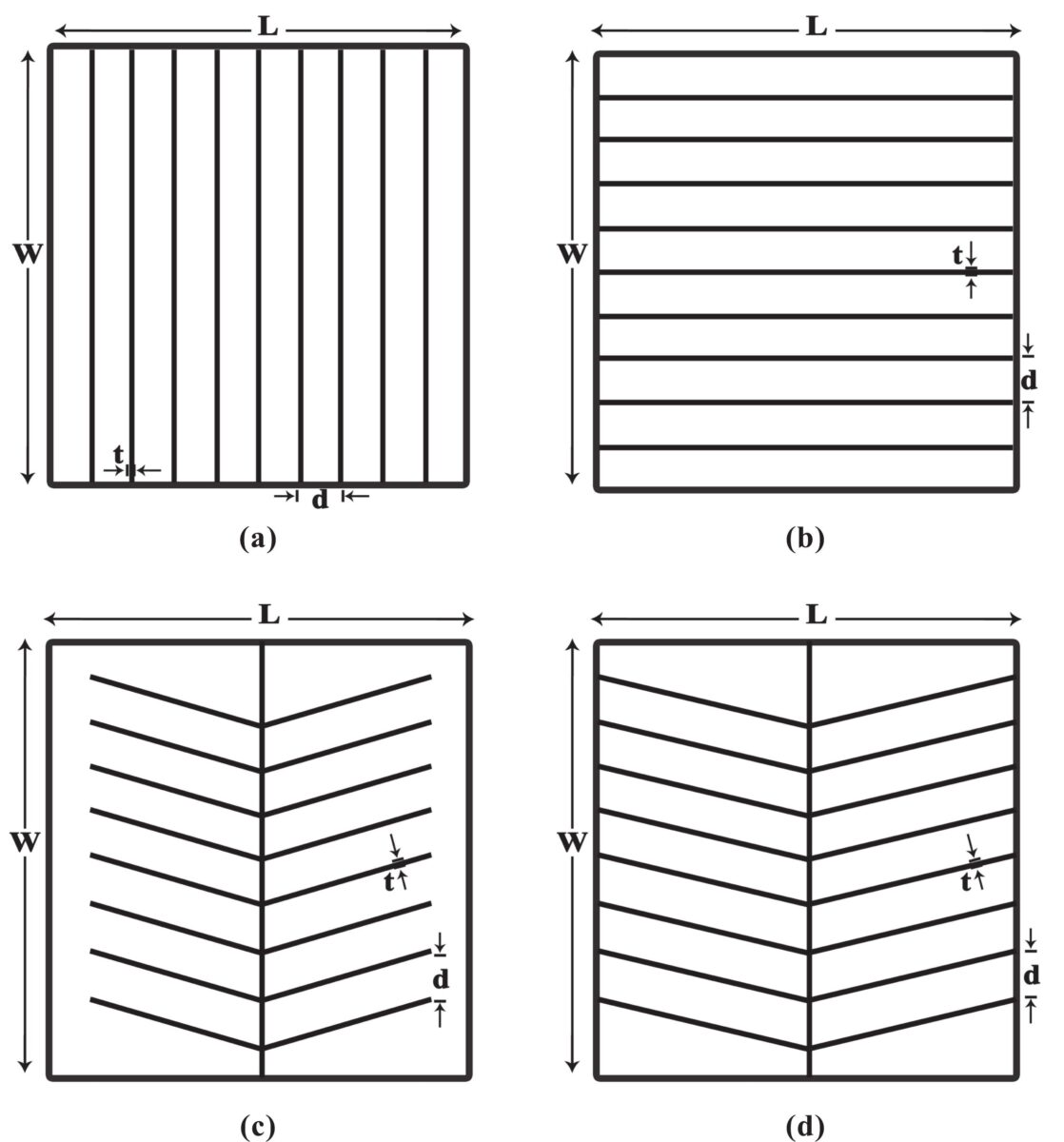
A research group from Iraq’s Al-Furat Al-Awsat Technical University has numerically investigated the thermal and electrical performance of PV panels integrated with leaf vein-inspired fins. They simulated four types of veins used by plants, namely pinnate veins (PIN), reticulate veins (RET), parallel veins along the vertical axis (PAR-I) and parallel veins along the horizontal axis (PAR-II).
“The main novelty of our research lies in introducing and systematically optimizing biomimetic leaf vein-inspired fin geometries as passive heat sinks for photovoltaic panels,” corresponding author Yasser A. Jebbar said. pv magazine. “While conventional cooling approaches rely on simple straight fins, liquids or active systems, our research is among the first to directly translate natural leaf vein patterns – specifically RET structures – into manufacturable backside fins specifically tailored to the thermal and electrical performance of PV.”
The team combined detailed 3D computational fluid dynamics (CFD) modeling with electrical efficiency analysis to identify geometries that maximize heat dissipation without additional energy input or water consumption. Next steps include experimental validation of the leaf vein fin designs under real outdoor conditions, especially in warm climates.
The simulated PV panel consisted of five layers: glass, two layers of ethylene vinyl acetate (EVA), a solar cell layer and a Tedlar layer, with a copper heat sink and fins attached. All fin configurations were initially 0.002 m thick, 0.03 m high, and spaced 0.05 m apart. The panels had a size of 0.5 m x 0.5 m, with an ambient air speed of 1.5 m/s and an incident radiation of 1,000 W/m².
RET fins outperformed all other designs, reducing operating temperatures by 33.6 C and increasing electrical efficiency from 12.0% to 14.19% – a relative improvement of 18% – compared to uncooled panels.
“This temperature reduction rivals, and in some cases exceeds, water-based or hybrid cooling methods, despite relying solely on passive air cooling,” Jebbar noted. The study also highlighted the significant impact of fin height, more than distance or thickness, on cooling performance.
The team further optimized the RET fins, varying the distance from 0.02 to 0.07 m, the height from 0.02 to 0.07 m and the thickness from 0.002 to 0.007 m. The optimal geometry (spacing of 0.03 m, height of 0.05 m and thickness of 0.006 m) achieved a maximum temperature reduction of 33.6 °C and an efficiency gain of 18%.
The new cooling technology was described in “Improving the thermal and electrical performance of PV panels using leaf vein fins”, published in Solar energy. Researchers from Iraq’s Al-Furat Al-Awsat Technical University, the University of Kerbala and Sweden’s University of Gävle took part in the study.
This content is copyrighted and may not be reused. If you would like to collaborate with us and reuse some of our content, please contact: editors@pv-magazine.com.
