

December 29, 2025
Data shows that agricultural voltaic energy benefits farmers by increasing yields and reducing water consumption, while encouraging rural participation in the renewable energy transition.
In the United States, energy demand is rising after decades of stagnant growth, driven by electrification efforts, data centers and artificial intelligence. As demand increases, the economy continues to favor wind and solar energy, which consistently rival gas and coal in terms of affordability. As rural communities look to increase renewable energy, a unique opportunity presents itself.
Flat, sunny and easily accessible land that is ideal for solar parks is often already in use for agriculture. A new report from the Institute for Energy Economics and Financial Analysis (IEEFA) highlights the opportunity to expand the use of agrivoltaic energy to boost renewable energy generation, reduce water use and increase yields – a win for renewable energy and agricultural communities.
Stakeholders benefit
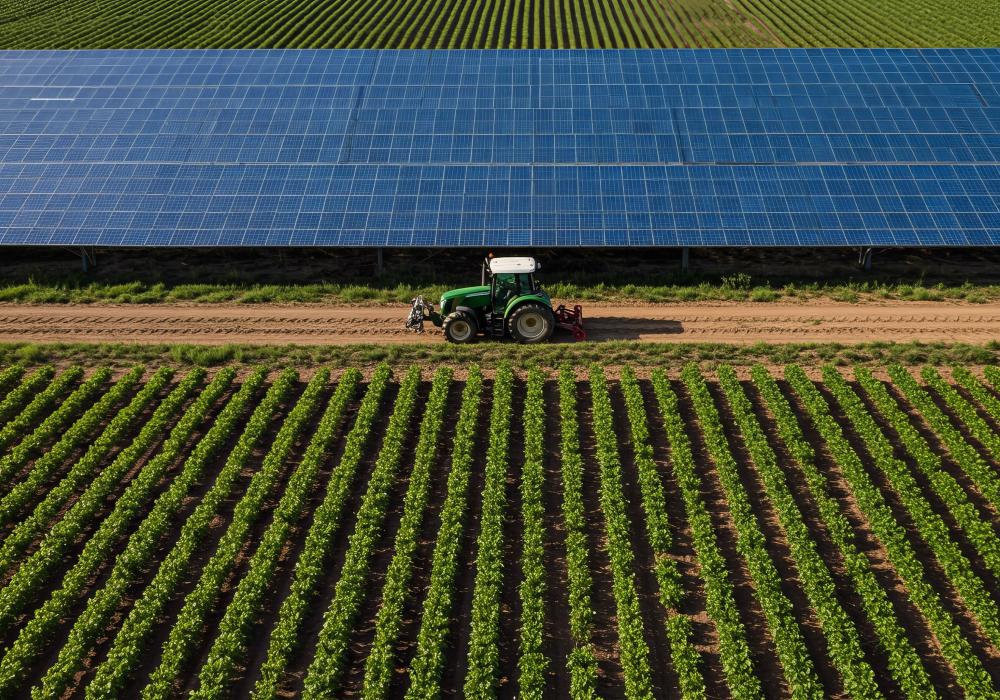
Agrivoltaic energy – the integration of solar panels and active agriculture on the same dual-use land – offers a solution that benefits all three key stakeholders. Landowners gain a new, steady income stream in a volatile industry while maintaining their land’s agricultural productivity; developers of solar projects gain access to viable locations with fewer permits; and communities maintain farmland in production while benefiting from local investments and tax revenues.
“Agrivoltaic technology shows that agricultural production and solar energy development can be complementary rather than competing land use options,” said Asher Salkin, former research intern at IEEFA and author of the report. “Our research shows that using agrivoltaic energy in agricultural environments increases crop yields in water-scarce areas, which not only reduces operating costs but also improves soil and ecosystem health.”
Although still not widespread, agricultural voltaic installations are expanding, from 27,000 hectares with a capacity of 4.5 GW in 2020 to more than 62,000 hectares and 10 GW in 2024. With supportive policies, the agricultural voltaic installation could help small farmers, meet growing electricity needs and involve more rural communities in the energy transition.
The full IEEFA report is available here: Agrivoltaic energy: an economic option for farmers, rural development
Tags: agriculture, agrivoltaic energy, commercial and industrial
