

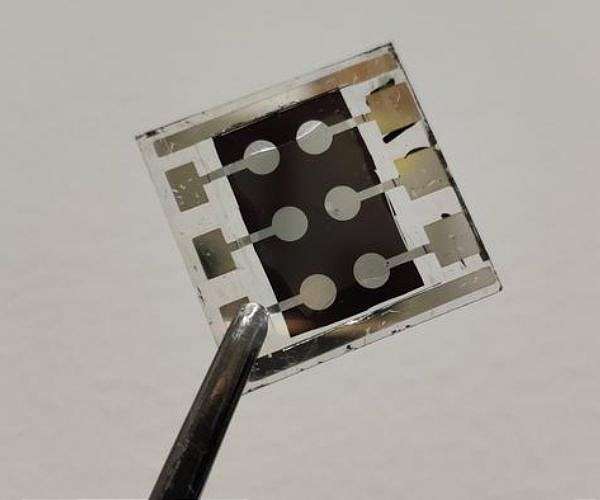
Researchers from Hong Kong are improving the efficiency and durability of solar cells
Photovoltaic (PV) technologies, which convert light into electricity, are increasingly used worldwide to generate renewable energy. Researchers from the Hong Kong University of Science and Technology (HKUST) have developed a molecular treatment that significantly improves the efficiency and durability of perovskite solar cells, potentially accelerating large-scale production of this clean energy source.
The research team identified critical parameters that determine the performance and lifetime of halide perovskites, a next-generation photovoltaic material known for its unique crystal structure. Their findings were published in Science.
Led by Assistant Professor LIN Yen-Hung from the Department of Electronic and Computer Engineering and the State Key Laboratory of Advanced Displays and Optoelectronics Technologies, the team investigated various passivation methods. Passivation is a chemical process that reduces or softens defects in materials, improving the performance and lifespan of devices. They focused on the molecular family of “amino-silane” for passivating perovskite solar cells.
“Passivation in many forms has been very important in improving the efficiency of perovskite solar cells over the past decade. However, passivation routes that lead to the highest efficiency often do not substantially improve long-term operational stability,” explains Prof. Lin.
The team showed for the first time how different types of amines (primary, secondary and tertiary) and their combinations can improve the surfaces of perovskite films where many defects arise. They used both “ex-situ” (outside the operational environment) and “in-situ” (within the operational environment) methods to observe the interactions of molecules with perovskites. This led to the identification of molecules that substantially increase photoluminescence quantum yield (PLQY), indicating fewer defects and better quality.
“This approach is crucial for the development of tandem solar cells, which combine multiple layers of photoactive materials with different bandgaps. The design maximizes the use of the solar spectrum by absorbing different portions of sunlight in each layer, leading to higher overall efficiency,” he says . Prof. Lin explained this.
In their solar cell demonstration, the team fabricated devices of medium (0.25 cm) and large (1 cm) sizes. The experiment achieved low photovoltage drop over a wide range of band gaps, maintaining a high output voltage. These devices achieved high open-circuit voltages above 90% of the thermodynamic limit. Benchmarking against approximately 1,700 data sets from the existing literature found that their results were among the best reported to date in terms of energy conversion efficiency.
The study also demonstrated remarkable operational stability for aminosilane passivated cells under the International Summit on Organic Solar Cells (ISOS)-L-3 protocol, a standardized testing procedure for solar cells. Approximately 1,500 hours after the cell aging process, maximum power point (MPP) efficiency and power conversion efficiency (PCE) remained high. The champion MPP efficiency and PCE were recorded at 19.4% and 20.1% respectively, one of the highest and longest metrics reported to date.
Prof. Lin emphasized that their treatment process increases the efficiency and durability of perovskite solar cells and is also compatible with industrial-scale production.
“This treatment is similar to the HMDS (hexamethyldisilazane) priming process commonly used in the semiconductor industry,” he said. “Such similarity suggests that our new method can be easily integrated into existing manufacturing processes, making it commercially viable and ready for large-scale application.”
The team consisted of PhD student CAO Xue-Li, senior manager of the State Key Laboratory of Advanced Displays and Optoelectronics Technologies Dr. Fion YEUNG, together with collaborators from the University of Oxford and the University of Sheffield.
Research report:Bandgap universal passivation enables stable perovskite solar cells with low photovoltage loss
