
Close Menu
  • News
  • Industry
  • Solar Panels
  • Commercial
  • Residential
  • Finance
  • Technology
  • Carbon Credit
  • More
    • Policy
    • Energy Storage
    • Utility
    • Cummunity
What's Hot

The UK government has urged to ensure that plug-in solar is properly regulated

July 22, 2026

Cornwall Insight cuts price ceiling forecast after Burnham’s VAT cut

July 22, 2026

SmartestEnergy, Greentech ink CfD PPA for the Kent solar project

July 22, 2026
Facebook X (Twitter) Instagram
Solar Energy News
Thursday, July 23
  • News
  • Industry
  • Solar Panels
  • Commercial
  • Residential
  • Finance
  • Technology
  • Carbon Credit
  • More
    • Policy
    • Energy Storage
    • Utility
    • Cummunity
Solar Energy News
Home - News - Saharan dust clouds are a growing risk for solar energy stability throughout Europe
News

Saharan dust clouds are a growing risk for solar energy stability throughout Europe

solarenergyBy solarenergyMay 7, 2025No Comments2 Mins Read
Facebook Twitter Pinterest LinkedIn Tumblr Email
Share
Facebook Twitter LinkedIn Pinterest Email

Saharan dust clouds are a growing risk for solar energy stability throughout Europe


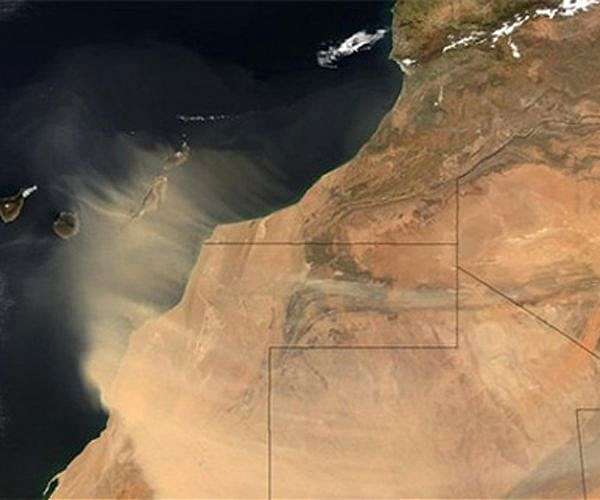
Since Europe is increasingly dependent on solar energy to achieve climate and energy independence goals, a persistent atmospheric issue of uncertainty is to the comparison: Saharan -material. Research presented on the European Geosciences Union General Meeting (EGU25) emphasizes how Windborne Mineral Dust from Noord -Africa has a significant influence on photovoltaic (PV) energy generation and complicating prediction models.

Dr. Gyorgy Varga and a team of researchers from Hungarian and other European institutions investigated data from more than 46 Saharan events that were registered between 2019 and 2023. Their findings cover both Central Europe, including Hungary, and South European countries such as Portugal, Spain, France, Italy and Greece. The researchers discovered that these dust intrusions disrupt the accuracy of conventional PV output prognoses, which are often dependent on fixed aerosol assumptions and do not respond dynamically to real-time atmospheric changes.

Every year the Sahara bumps billions of tons of fine dust in the air, with tens of millions of tons that reach Europe. These particles reduce the irradiation at the surface level by scattering and absorbing sunlight at surface level and by increasing the cloud formation, reducing the PV efficiency. According to the study, the current prediction systems lack the sensitivity to cope with these temporary events.

To improve predictive reliability, the researchers argue for the inclusion of real-time dust measurements and aerosol-cloud interaction data in solar prediction models. “There is a growing need for dynamic prediction methods that take into account both meteorological and mineralogical factors,” says VARGA. “Without them, the risk of underperformance and grid instability will only grow if solar energy becomes a larger part of our energy mix.”

See also  The soil microbe mineral battery stores sunlight to break down antibiotics in the dark

The study also highlights physical breakdown problems caused by dust, such as contamination and surface erosion of solar panels. These effects can reduce long -term efficiency and increase maintenance needs. The research is part of broader European and Hungarian initiatives to improve the adaptability of the climate and to optimize renewable energy systems, with the support of the National Research, Development and Innovation Office (FK138692), the Hungarian Academy for Sciences Laboratory.

Research report:The Shadow of the Wind: photovoltaic power generation under the dusty skies of Europe


Source link

clouds dust Energy Europe growing risk Saharan solar stability
Share. Facebook Twitter Pinterest LinkedIn Tumblr Email
solarenergy
  • Website

Related Posts

The UK government has urged to ensure that plug-in solar is properly regulated

July 22, 2026

SmartestEnergy, Greentech ink CfD PPA for the Kent solar project

July 22, 2026

Prime Minister reduces VAT on electricity, appoints new energy secretary

July 21, 2026
Leave A Reply Cancel Reply

Don't Miss
Solar Industry

Letter from Chinese PV Industry: CEEC Launches 15 GW Inverter Procurement Plan

By solarenergyAugust 2, 20240

Inverter manufacturers such as Sungrow, Huawei, Sineng, Growatt, Kstar and TBEA are all participating in…

Romania is progressing the development of municipal storage, a 500 MWh battery project – SPE

November 18, 2025

High rates initiated on solar cells and panels from Southeast -Asia

May 20, 2025

Germany records growth in self-consumption of solar energy – SPE

December 4, 2025
Stay In Touch
  • Facebook
  • Twitter
  • Pinterest
  • Instagram
  • YouTube
  • Vimeo
Our Picks

The UK government has urged to ensure that plug-in solar is properly regulated

July 22, 2026

Cornwall Insight cuts price ceiling forecast after Burnham’s VAT cut

July 22, 2026

SmartestEnergy, Greentech ink CfD PPA for the Kent solar project

July 22, 2026

Flexibility as an asset

July 22, 2026
Our Picks

The UK government has urged to ensure that plug-in solar is properly regulated

July 22, 2026

Cornwall Insight cuts price ceiling forecast after Burnham’s VAT cut

July 22, 2026

SmartestEnergy, Greentech ink CfD PPA for the Kent solar project

July 22, 2026
About
About

Stay updated with the latest in solar energy. Discover innovations, trends, policies, and market insights driving the future of sustainable power worldwide.

Subscribe to Updates

Get the latest creative news and updates about Solar industry directly in your inbox!

Facebook X (Twitter) Instagram Pinterest
  • Contact
  • Privacy Policy
  • Terms & Conditions
© 2026 Tsolarenergynews.co - All rights reserved.

Type above and press Enter to search. Press Esc to cancel.