

A group of researchers has proposed a new method for sizing PV systems that does not rely on an anti-dumping system and operates without the ability to inject power into the grid. The new approach requires an estimation of the annual hourly profile and the minimum required power, as well as the use of an irradiation meter and an electrical network analyzer.
Researchers from the Dominican research institute Instituto Especializado de Estudios Superiores Loyola (IEESL) have outlined a new methodology for sizing rooftop PV systems in markets without net metering or feed-in tariffs, where all energy produced by the solar panels must be self-consumed.
In the study “Sizing of photovoltaic systems for self-consumption without surpluses through on-site measurements: case study of the Dominican Republic”, published in Renewable energythe research team explained that their new approach is intended for small PV systems for 100% self-consumption without an anti-dumping system. In these systems, the output cannot exceed the electricity demand of a household, as no mechanism prevents injection into the electricity grid.
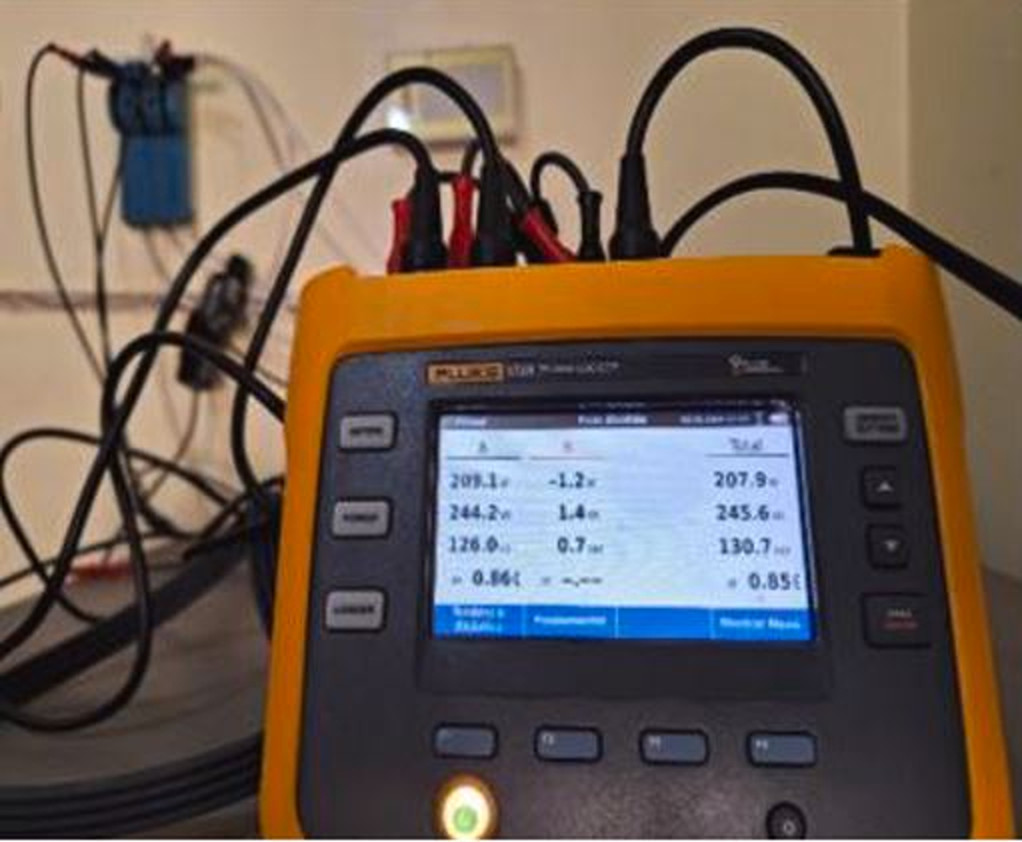
These systems require an estimate of the annual hourly profile and the minimum power demand, as well as the use of an irradiation meter and an electrical network analyzer. “The relevance of the proposed methodology lies mainly in the fact that the capital costs of the PV system without an anti-dumping system are lower compared to a system with an anti-dumping system and with conventional net metering systems,” the researchers explain.
Specifically, they used a Fluke IRR1-SOL Solar Irradiance Meter to measure irradiance and temperature, and the Fluke 1378 grid analyzer, which is often used for industrial applications where current flows are tens to hundreds of amperes. The modeling is carried out in an Excel spreadsheet on the monthly energy generated by the PV system over 25 years, taking into account the efficiency losses of the PV modules.
“In the step of analyzing your own PV consumption, the energy generated and the avoided CO2 are measured2 emissions, the energy demand of the electricity grid, the degree of self-consumption and self-sufficiency are calculated,” the academics emphasized. “In addition, in the final step, an analysis of the economic feasibility of the installation is carried out, using the net present value (NPV) method, return on investment (IRR) and payback period (PBT) as indicators for the case. study.”
The team tested the approach through a case study in the province of San Cristóbal, in the south of the country. The analysis took into account a household of two adults and three children and the deployment of a 1 kW PV system with a tilt angle of 20 degrees, with annual power production estimated by the PVwatts Calculator at 1,578.5 kWh.
Since the proposed method aims to identify the highest AC power that a PV panel can produce, measuring irradiance on a given day, the academics proposed a correction factor to estimate the maximum output power during the year. “In this case, the correction factor was 1.044, giving the maximum output power in the year 131.5 W out of 150 W,” they specified.
They also found that the 1 kW system without anti-dump was profitable, with a BPT of 4.57 years. The IRR was found to be 23.4% and the self-sufficiency rate (SSR) was estimated at 5.0%. “The deployment of this type of self-consumption is not feasible for customers with consumption less than 252 kWh/month,” they warned, noting that the selected household had an average demand of 394 kWh/month.
This content is copyrighted and may not be reused. If you would like to collaborate with us and reuse some of our content, please contact: editors@pv-magazine.com.
