

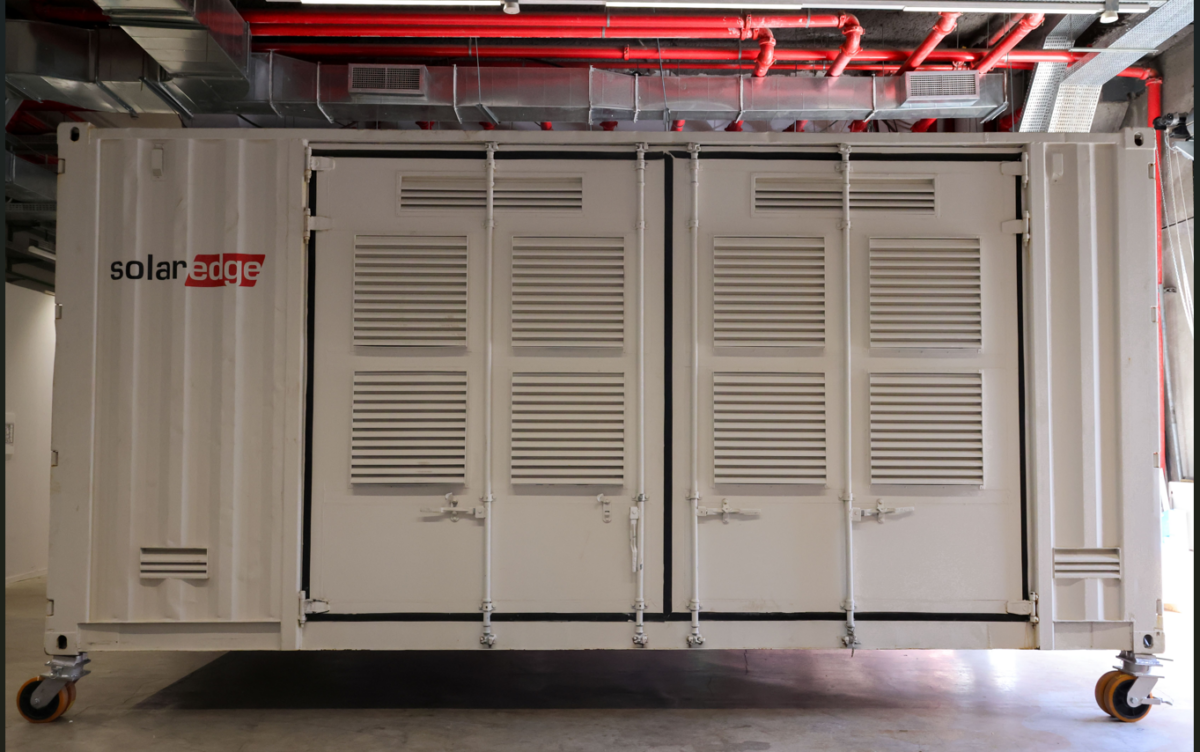
SolarEdge has outlined a transition path to integrated 800 V (DC) infrastructure for data centers, arguing that older alternating current (AC) systems introduce inefficiencies that could limit the growth of AI workloads. It says rising demand for computers and next-generation NVIDIA GPUs increases the urgency, with data centers losing an estimated 10% to 30% of input power through multiple conversion phases.
SolarEdge has published a white paper laying out a definitive strategy to address a major electrification challenge that could limit the growth of AI data centers.
The March 2026 report, “Powering the AI Revolution: A Maturity Roadmap to Integrated 800 V DC Infrastructure,” warns that the traditional AC-based setup may soon be unable to support the increasing compute needs of the data center and AI hyperscaler industries.
A complete switch to a DC setup is already too late, and many data center providers use intermediary solutions to switch from AC to DC within the data center. Dafna Granot, senior manager of strategy and innovation at SolarEdge, and co-author of the white paper, explained that “we live in a DC world, but we are artificially adding AC in between,” adding that the electricity system has not evolved to meet the power needs of today’s DC-based devices. What this means is that we are still translating existing AC power into DC power that the GPUs need to run the data center.
AC inefficiency
SolarEdge’s white paper shows that this system inefficiency is costing the industry a lot of money. AC-powered infrastructure systems impose what the authors call a “conversion tax” – with an estimated 10% to 30% of input power being wasted through multiple different conversion stages. To overcome these losses, the industry must accelerate the transition to 800 V (DC) architecture, the paper said.
Granot explained the white paper’s five-step plan pv magazineadding that SolarEdge is working with industry players and research partners to increase awareness and refine it for application.
Many companies that are aware of this problem have already started the transition. Granot said they fall under what SolarEdge’s whitepaper calls Stage 1 – which introduces 800 V (DC) racks while maintaining existing AC infrastructure. An AC/DC sidecar unit in the white room takes care of the conversion. According to SolarEdge, while this approach enables high-performance computing, it takes up valuable data center floor space and incurs significant cumulative conversion losses. Granot called it “a bandage” for the problem rather than a complete, permanent solution.
Phase 2 introduces some DC lines within the data center. “Here you still use the traditional AC chain in the beginning,” says Granot about the hybrid solution. “So you have the traditional transformer that takes the voltage from the electricity grid to the data center to a low-voltage alternating current, but you do introduce some direct current lines within the data center.”
Crucially, the Uninterruptible Power Supply (UPS) can now be placed on the DC side. Granot said every data center needs a UPS to ensure continuous power during outages.
In phase 0 and 1, the UPS is on the AC side. Because UPS systems contain storage and a battery, and batteries are inherently DC, this requires a double conversion: from AC to DC to charge the battery, then back to AC for distribution, and back to DC in the rack.
Placing the UPS on the DC line eliminates the extra conversions, improving efficiency to approximately 91% to 96%. However, in phase 2, a traditional transformer is still required to step down the mains power for use in the data center.
DC native
In phase 3, the transition becomes more important, according to Granot. “It’s a big change from the previous phases and you can get an efficiency from 94% to 97%,” she said. A solid-state transformer (SST) takes medium-voltage alternating current (MV) from the electricity grid, simultaneously reduces the voltage and converts it into direct current. The direct current is then distributed via the data center.
“It’s a great move, but it’s not the end of the game,” Granot said. This leads to phase 4 – a fully DC-native architecture – where efficiency increases to 99%, losses are minimized and more computing power can be added per rack. Higher overall efficiency could also reduce pressure on the electricity grid, she said.
“Our goal here is that a specific grid connection really gets the best out of it for the data center operator and ultimately for the users,” she explains. “The SST in Stage 4 is more efficient and can also be connected directly to the highest medium voltage range relevant for large industrial loads such as data centers, which is typically 34.5 kV.”
SolarEdge is building its own SST, which it plans to commercialize as part of its DC roadmap strategy.
“This white paper reveals our broader perspective, which is to deliver the entire solution, including the DC UPS, which is part of the system, and the SST, which will include an inherent DC distribution unit,” said Granot, adding that the system will handle distribution to the racks in the data center. She said smart algorithms will eventually be introduced to manage that distribution, including safety features.
Granot said the company will build on its experience as a global manufacturer of DC-coupled products such as batteries and inverters. “We’re the DC couple guys; we’ve been making DC couple systems for years,” she said. “Now we are just taking this knowledge and implementing it in the SST, but ultimately we will be able to provide our customers with the DC UPS connected to it that will go all the way from the grid to the highly relevant medium voltage distribution.”
This content is copyrighted and may not be reused. If you would like to collaborate with us and reuse some of our content, please contact: editors@pv-magazine.com.
